
Hawaii prices have been rough lately.
I’m a Certified Hawaii Destination Expert who has visited Hawaii 40+ times over 20 years.
I plan trips to these islands as a professional tourist. And even I wince at some of the price tags right now.
So when families come to me wondering if their budget is “enough,” I get why they’re nervous.
Flight prices alone can make you question everything. Then you start adding hotels and rental cars and activities and suddenly a week in Hawaii feels like it might require a second mortgage.
Here’s what I want you to know before we get into the numbers: a bigger budget does not automatically mean a better trip.
I’ve worked with families who spent $12,000 and came home exhausted and slightly resentful. And I’ve heard from families who spent $5,000 and said it was the best vacation of their lives.
What actually determines whether you have a great trip is whether your budget matches your expectations going in.
So let’s talk about what each budget realistically looks like in 2026.
One thing that changed in 2026 that affects every budget
Before we get into the tiers, there’s a 2026 update you need to know about.
As of January 1st, Hawaii’s lodging tax increased, and when you combine it with county taxes and the general excise tax, you’re looking at roughly 19% in total taxes on your room rate.
That $300/night hotel? It’s actually closer to $357/night once everything is added up.
That’s before resort fees, which can run $30-50 per night on top of the room rate at many properties.
This matters a lot when you’re budgeting because most people calculate based on the rate they see at booking, not the total they pay at checkout. Budget for the real number.
What a $5,000 Hawaii Trip Actually Looks Like
I’m going to be straight with you: $5,000 for a family of four is tight in 2026. It’s absolutely doable, but it requires a specific mindset and specific planning.
This budget works best if you’re flying from the West Coast (roundtrip flights for four from California can run $1,800-$2,500 depending on timing), you’re flexible on travel dates, and you genuinely don’t mind a slower, simpler trip.
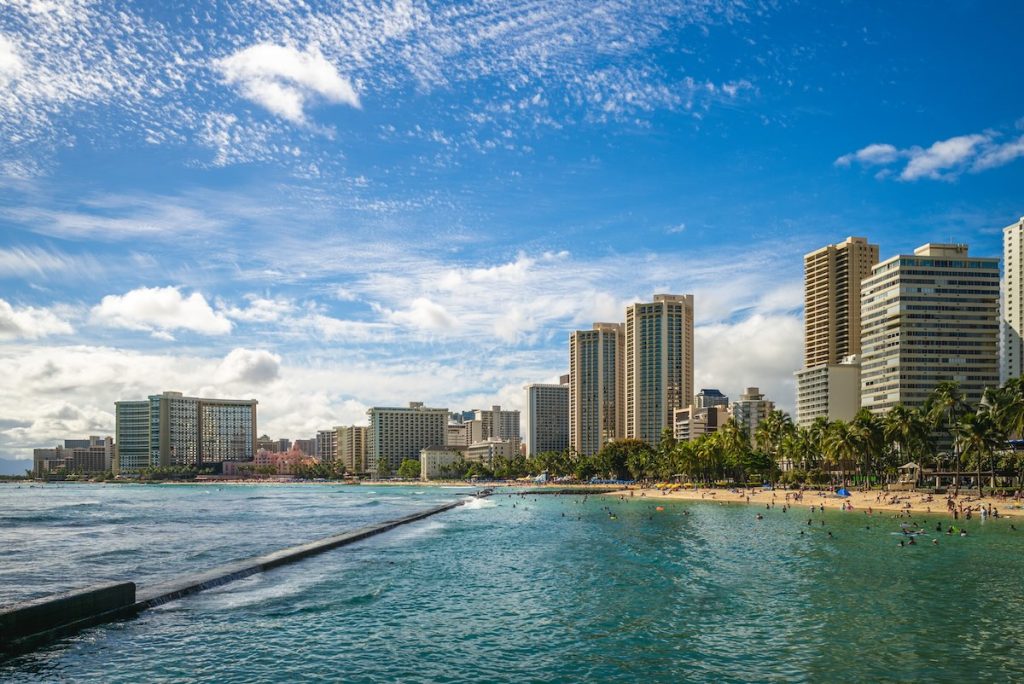
If that’s you, Oahu is almost always the right island at this budget. It’s consistently the most affordable of the major islands, and it’s the one place where you can actually get by without a rental car if you’re staying in Waikiki.
Skipping the car saves you $600-$1,200 on the rental alone, plus gas (currently $4.70+ per gallon on Oahu) and daily parking fees that can hit $80 at some properties.
At $5,000 for the week, your lodging is going to be a basic hotel or older condo, not the Instagram-worthy resort.
Grocery store breakfasts are happening. You’re probably eating out once a day at most.
Your activities are going to be mostly free: beaches, hikes, scenic drives, tide pools.
And here’s what nobody tells you about that version of a Hawaii trip: kids actually love it.

My own kids have never once asked to go back to a specific hotel room. But they’ve talked about certain beaches for years. The slower, beach-heavy version of a Hawaii trip is often what kids enjoy most anyway.
There’s no pressure to maximize every hour because you’re not trying to justify $300 activity bookings. You just go to the beach.
Where families run into trouble at this budget is expectations.
If you’ve told yourself this is a “do everything” trip and you’re imagining luaus and snorkel tours and helicopter rides, you’re going to spend the whole week feeling like you’re missing out.
That’s not a budget problem. That’s an expectations problem.
Go in knowing this is a simple, beach-focused trip. Then it can genuinely be wonderful.
My free 5-day email course on how to save money in Hawaii was basically written for this budget. It covers specific strategies that actually work, not generic advice.
What an $8,000 Hawaii Trip Looks Like
For a lot of families, $8,000 is the sweet spot.
This is the budget where you stop agonizing over every decision. You can afford a decent mid-range hotel or a well-located condo with a kitchen.
You have a rental car for the week without doing math every time you need to fill the tank. You can mix grocery meals with real restaurant dinners.
And you can say yes to one or two paid experiences without it wrecking everything.

At this level I usually tell families: you can do a luau or a snorkel tour or whale watching (if you’re going in season), but probably not all three. Pick the one that matters most to your family and do it well.
One thing I see constantly at this budget level is overscheduling. If you’re not sure whether that’s you, my $50 Hawaii itinerary review will catch it.
Families have a little breathing room, so they feel like they should fill every day with something.
By day four, everyone’s exhausted and short-tempered and spending money on things nobody’s even that excited about anymore.
The $8,000 budget gives you options. Use them selectively.
A family I worked with last year came in with $8,000 and a list of eight paid activities they wanted to do. We sat down and cut it to three.
They came home saying it was the most relaxed Hawaii trip they’d ever taken. The free days at the beach ended up being their kids’ favorites anyway.
If you’re trying to decide between a resort and a vacation rental condo at this budget, I have a whole post on Hawaii vacation condos vs. hotels that breaks down when each one actually saves you money.
Spoiler: condos with kitchens often win for families, but not always.
For island-specific planning at this budget, grab whichever of my travel guides fits where you’re going:
- Maui Travel Guide for Families
- Oahu Travel Guide for Families
- Kauai Travel Guide for Families
- Big Island Travel Guide for Families
They’re built around real family trips, not just a list of everything possible to do on each island.

What a $12,000 Hawaii Trip Looks Like
At $12,000, Hawaii becomes a lot more about comfort and a lot less about tradeoffs.
You’re booking flights at times that actually work for your family instead of waking up at 4am for the cheapest option.
You’re staying somewhere with a pool and on-site amenities, which matters more than people realize when you’re traveling with kids and don’t want to drive somewhere every single day.
You’re eating out because you want to, not because you’re running the math on whether you can afford it.
Car rental prices in Hawaii have stayed higher than pre-pandemic levels, and at $12,000 you can budget for a comfortable rental plus gas plus resort parking without it stressing you out.
That’s worth something after a long travel day with kids.
You can do multiple activities. A luau, a boat tour, maybe a road trip day with some paid stops. You have the flexibility to pivot when plans change or someone wakes up sick and needs a slower day.
Where I see families struggle at this budget is the feeling that they have to justify every dollar.
They overschedule because a $12,000 trip feels like it should be packed with experiences. Then the trip feels like work.
The $12,000 budget is one of the best things you can spend it on is actual downtime. Pool time. A long beach morning with nowhere to be. A shave ice stop that turns into an hour of the kids playing in the water.
If you want help building an itinerary at this level that balances the splurges with the slower days, a one-on-one Hawaii travel consultation is honestly the most efficient use of an hour.
We’ll look at your specific family, your island, your dates, and put together a plan that fits both your budget and how your kids actually travel.

The thing about Hawaii that no budget can buy
After 40+ visits to Hawaii and years of helping families plan their trips as a Hawaii travel expert, the pattern I keep seeing is this: the memories that stick aren’t the expensive ones.
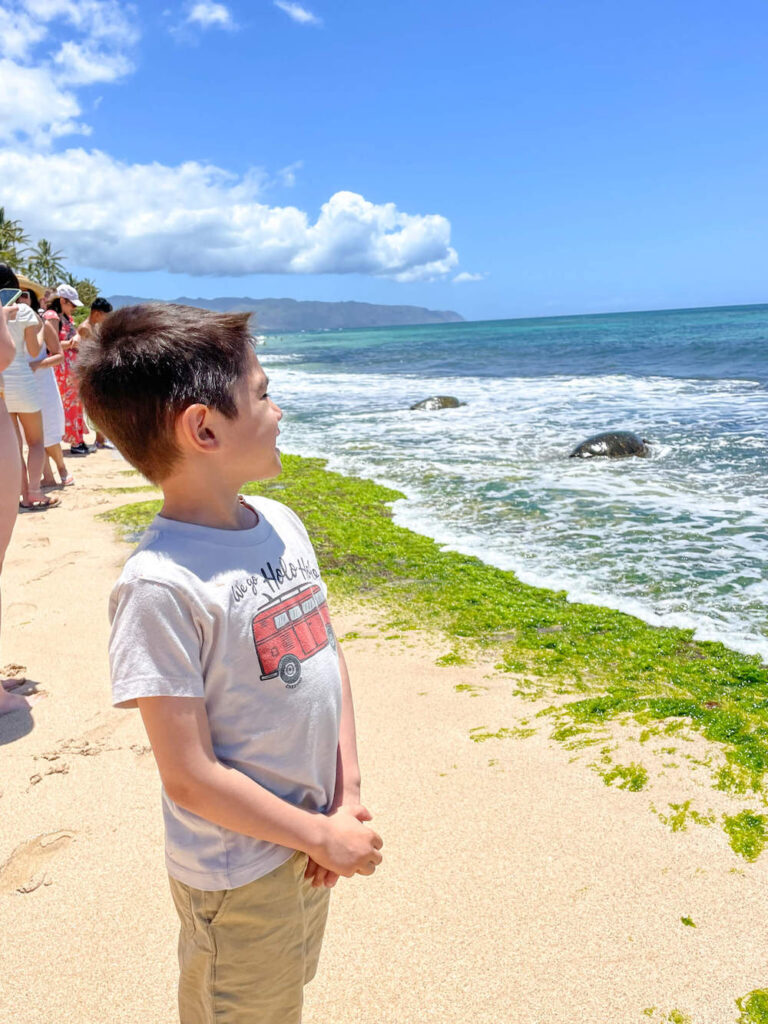
My kids remember the sea turtle we spotted at a free beach on Oahu. They remember shave ice and body surfing and that one tide pool where they found a tiny octopus. None of that cost anything meaningful.
Kids don’t remember how nice the hotel room was. They remember how the trip felt.
A $5,000 trip with good pacing and realistic expectations can genuinely beat a $12,000 trip where everyone’s rushing and nobody’s present. I’ve seen it happen.
Your budget determines what’s logistically possible. Your planning determines whether the trip is actually good.
What to figure out before you book
A few questions worth answering honestly before you start looking at flights:
Are you okay with slower days? If your family needs constant activities to feel like the trip is “worth it,” build in budget for that. If your kids are happy at a beach for four hours, a lower budget works fine.
How do you handle eating out every meal? Dining in Hawaii runs roughly $210/day for a family of four when eating out regularly. If grocery runs and simple meals sound miserable to you, add that into your budget.
What time of year are you going? Peak season (summer, holiday weeks) costs significantly more. If you can travel in September, October, or late January through early March, you’ll often find rates 20-40% lower.
Which island actually fits your budget? Oahu is generally the most affordable. Maui is beautiful but pricier. Kauai and the Big Island have great budget options if you know where to look.
If you want to think through all of this with someone who has done this a lot, my free 7-day Oahu email course and free 7-day Maui email course both walk through planning for each island step by step.
They’re free and they’ll save you a lot of the overwhelm.
I also cover real budget scenarios in my podcast, Hawaii Travel Made Easy. It’s made for families who want honest, practical guidance without the fluff.
The short version
$5,000: Tight but doable. Fly West Coast, stay on Oahu, skip the rental car, embrace free beaches, set realistic expectations.
$8,000: The sweet spot for most families. One or two paid experiences, decent accommodations, less stress. Don’t overschedule.
$12,000: More comfort, more flexibility. The risk here is overspending on experiences just because you can. Build in slow days.
None of these budgets guarantee a great trip. Planning does.
If your family is still figuring out what’s realistic for your specific situation, that’s exactly what my Hawaii travel consultations are for. One hour together and you’ll know exactly what your budget can handle and where to focus it.
Hawaii is worth it. You just have to plan it right for your family, not for someone else’s Instagram.
FAQ
Is $5,000 enough for a family of four to go to Hawaii?
It can be, but it requires real planning. Fly from the West Coast, choose Oahu to skip the rental car, stay in a basic hotel or condo, and focus on free activities.
Go in expecting a simple beach trip, not a packed itinerary, and it can be a great week.
How much does a family of 4 spend per day in Hawaii in 2026?
Roughly $210/day on food alone if you’re eating out regularly.
Add lodging ($350+ per night for a basic hotel before taxes, which now total nearly 19%), transportation, and activities, and most families are spending $700-$1,200+ per day depending on their choices.
What is the cheapest Hawaiian island for families?
Oahu is generally the most affordable. Hotel rates run about 30% below the statewide average, and it’s the one island where families can realistically skip a rental car and use public transit or rideshares from Waikiki.
What hidden costs do families forget to budget for in Hawaii?
The two biggest ones are taxes and resort fees. Hawaii’s lodging tax plus county and excise taxes now total nearly 19%, and resort fees can add another $30-50 per night on top of the rate you see when booking.
Budget for what you’ll actually pay at checkout, not the room rate you see advertised.
When is the cheapest time to visit Hawaii with kids?
September through mid-November and late January through March (excluding spring break) are typically the best value windows. Rates during these shoulder seasons can run 20-40% lower than summer or holiday travel.
 | About the author: Marcie Cheung is a Hawaii travel consultant for families who has visited Hawaii more than 40 times. She is the founder of Hawaii Travel with Kids and host of the Hawaii Travel Made Easy podcast. She offers one-on-one Hawaii trip planning consultations and itinerary reviews for families, couples, and honeymooners. |