
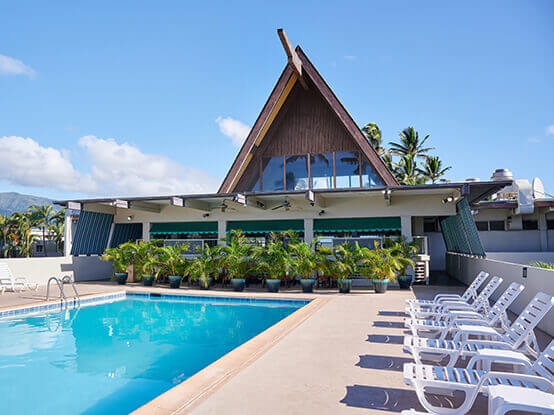
Finding the right place to stay in Hawaii is crucial for a fun vacation. Let’s break down the differences between renting a Hawaii vacation condo vs hotel. Scroll down for all the tips!
This hotels vs. condos post was written by Hawaii travel expert Marcie Cheung and contains affiliate links which means if you purchase something from one of my affiliate links, I may earn a small commission that goes back into maintaining this blog.
Okay, let’s talk about one of the biggest Hawaii trip decisions you’ll make: hotel or condo?
I’ve been visiting Hawaii for over 40 times since I was 10, and as a professional tourist and Certified Hawaii Destination Specialist, I’ve stayed in both. A lot. And I have opinions.
Here’s the thing that nobody tells you when you’re scrolling through gorgeous photos on Expedia or vrbo: both options have hidden pros and cons that’ll affect way more than just your nightly rate.
I’m talking about your food budget, your stress level, and whether you’ll actually feel like you’re on vacation.
A couple years ago, my friends and I rented a house on Kauai. Sounds dreamy, right?
Wrong.
We spent the first hour arguing about who got which bedroom. Some people got their own rooms, others had to share beds, and there was one room with bunk beds that nobody wanted.
Then came the kitchen drama. Where do shoes go? Who’s cleaning the dishes? Why is there sand everywhere?
These are conversations you don’t have in separate hotel rooms.
But I also get why people love condos. My friends with big families swear by them because cooking meals saves them hundreds of dollars.
So let’s break down what you actually need to know.
What Makes Hotels Worth It (Even with All Those Fees)
I’m just going to say it: I prefer hotels. They make me feel like I’m actually on vacation instead of just relocating my regular life to a prettier location.
You Get to Outsource Everything
Hotels handle everything. Someone makes your bed. Someone brings fresh towels. Someone cleans up after you.
Most hotels have pools (some are incredible), restaurants, bars, spas, and activities all in one spot.

You can literally roll out of bed, grab coffee, hit the pool, and never leave the property if you don’t want to.
Some even have kids clubs where your little ones can do crafts and make friends while you get a massage or nap by the pool. Here are some of my favorite Hawaii resorts with the best kids clubs.
Just remember that not everything is included. Hawaii doesn’t have truly all-inclusive resorts, so that spa treatment? Extra charge. Certain restaurants? Extra charge.
But at least you have options without leaving the property.
Hotels Usually Have Prime Locations
Most Hawaii hotels are right on the beach or in the middle of resort areas where everything is walkable.
Waikiki hotels put you steps from the beach, restaurants, and shopping. Wailea and Kaanapali hotels are similar. You’re in the thick of it.

And yes, I know all Hawaii beaches are public, so hotels don’t technically “own” the beach in front of them.
But having direct access from your room is still pretty convenient when you’re hauling beach gear and sunburned kids.
Want to compare Maui’s two main resort areas? I break down the differences in my podcast episode: Maui Resort Showdown: Wailea vs Kaanapali in Under 10 Minutes.
You Don’t Lift a Finger for Cleaning
This is huge for me. When I’m in Hawaii, I want to eat shave ice and watch sea turtles. I don’t want to vacuum or figure out where the cleaning supplies are.
Hotels clean your room daily (or every other day, depending on the property). Fresh towels, made beds, trash removed. You just exist and enjoy your vacation.
But Here’s What Hotels Will Actually Cost You
Let’s talk money. Because hotels have some sneaky costs that can double your bill.
Eating Out Gets Expensive Fast
Most hotel rooms don’t have kitchens. Maybe you’ll get a mini fridge and a Keurig if you’re lucky.
This means every single meal is a restaurant meal. Breakfast, lunch, dinner, snacks.

For a family of four, you’re looking at $150-300 per day just on food. For a week, that’s $1,000-2,000 on top of your room rate.
Hotel restaurants are convenient but pricey. A basic breakfast buffet can run $40 per person. Even “grab and go” options at the hotel shop cost twice what you’d pay at a grocery store.
Resort Fees Are Still a Thing in 2026
Okay, this is where hotels get really annoying.
Thanks to a new FTC rule in 2025, hotels now have to show you the total price upfront including mandatory fees.
So at least you’re not surprised at checkout anymore. But the fees themselves? Still very much alive and well.
Resort fees in Hawaii currently range from $40 to $75 per night. Per room. So if you book two rooms for a week, that’s an extra $560-1,050 on top of your room rate.
These fees supposedly cover pool access, WiFi, gym use, beach towels, and other stuff that should honestly just be included.
Some hotels say it covers “cultural activities” like lei making or ukulele lessons. Cool, but did I ask for that?
A few hotels skip resort fees entirely. Disney’s Aulani doesn’t charge one. The Surfjack Hotel in Waikiki got rid of theirs. But most hotels are still charging them.
I talked about this whole mess in my podcast episode: Resort Fees Explained: The Hawaii Hotel Costs They Don’t Advertise.
Parking Can Cost More Than Your Rental Car
If you rent a car (which you probably should for most islands), parking at your hotel will cost you.
Current parking fees in Hawaii run $40-$60 per night. Some hotels only offer valet parking, which means you’re expected to tip on top of the daily fee.
Do the math: $50 parking x 7 nights = $350 just to park your car.
Some budget-friendly hotels include parking, but most don’t. Always check before you book.
Hotel Rooms Run Small
Most standard hotel rooms have one bedroom, one bathroom, and maybe 350-450 square feet of space. You get a bed (king or two queens), a desk, a chair, and that’s about it.
For big families, you’ll need multiple rooms. And since you’re paying per room with all those fees multiplied, costs add up fast.
One family of five might need two rooms at $300/night each, plus resort fees ($50 x 2), plus parking ($50 x 2). That’s $800 per night before you’ve eaten a single meal. Before you book two rooms, see my list of Hawaii hotels with rooms for a family of 5 or 6.
Why Condos Make Sense (Especially for Longer Stays)
Condos get a lot of love from families, and I get why.
You Can Actually Cook (If You Want To)
Condos come with full kitchens. Stove, oven, fridge, dishwasher, pots, pans, utensils, everything you need to cook.
This is where you save money. Instead of dropping $200 on dinner, you can grill mahi mahi from the local fish market and make a salad.

Many condo complexes have BBQ grills you can use. There’s something really nice about grilling fresh fish while watching the sunset.
Check out my guide to cooking in Hawaii on a budget if you go this route.
But here’s my honest take: when I stay in condos with extended family, there’s always this pressure to cook because we HAVE a kitchen.
Everyone gets assigned a night to make dinner for the whole group. Sounds nice in theory, but it’s also kind of stressful when you’re supposed to be on vacation.
And we always end up with so much leftover food that goes to waste because everyone bought groceries for their assigned night.
Part of the fun of Hawaii for me is trying local restaurants and eating foods I can’t get at home. When I’m cooking, I miss out on that.
You Get Way More Space
Even a one-bedroom condo gives you a living room, full kitchen, bedroom, and usually a lanai (balcket).

Two or three-bedroom condos can sleep bigger groups comfortably. Everyone gets actual beds instead of someone getting stuck on a pullout sofa.
Plus you have space to spread out. Kids can watch TV in the living room while adults relax on the lanai. You’re not all on top of each other like in a hotel room.
The Price You See Is (Usually) What You Pay
Most condos don’t charge daily resort fees. Some charge a one-time cleaning fee at the end, which is way more reasonable than $50 per night for a week.
Parking is often free or way cheaper than hotels. I’ve stayed at condos with free covered parking, which is a huge savings.
A $250/night condo might actually cost $250, not $250 + $50 resort fee + $50 parking like a hotel.
But watch out! Some vacation rental communities DO charge extra fees.
I’ve heard from friends who got hit with surprise charges at check-in for things like “pool access,” “amenity fees,” or “parking passes” that weren’t disclosed upfront. It feels like a resort fee by another name.
Always ask about ALL fees before you book. Get it in writing. Some vacation rentals charge cleaning fees (usually one-time at the end), some charge “community fees,” and some even charge for parking even though they’re condos.
The Downsides of Condos Nobody Tells You About
Condos aren’t perfect. Here’s what you need to know.
Location Can Be a Problem
Condos are often farther from the beach and main resort areas than hotels.
You might be a 10-minute walk to the beach instead of 30 seconds. Or you might need to drive to restaurants and shops instead of walking out your hotel door.
Some condos are in random residential neighborhoods where you’re not near anything touristy. Great if you want to live like a local, not great if you want easy access to activities.
Before booking, look at the map. How far to the nearest beach? Grocery store? Restaurants? Are you okay driving to everything?
Condos Have Way Fewer Amenities
Most condo complexes have a pool and that’s about it. It’ll be a basic pool, nothing fancy.
You’re not getting restaurants, bars, spas, kids clubs, activities, or any of that hotel stuff.
For some families, a simple pool is perfect. For others, especially those with kids who’d love a kids club, it’s a dealbreaker.
You’re Responsible for Cleaning
Once you check in, you’re on your own.
No daily cleaning service. No fresh towels delivered. No one making your bed.
Most condos have a washer and dryer, so you can do laundry. But you’re doing your own laundry on vacation, which… not exactly relaxing.
Some condos will arrange a mid-stay cleaning for an extra fee, but it’s rare and you have to request it specifically.
And at the end of your stay? Many condos require you to do basic cleaning before checkout. Take out trash, run the dishwasher, strip the beds.
Nothing crazy, but still, it’s one more thing to do when you’re trying to catch a flight.
How to Actually Decide: Hotels vs Condos in Hawaii
Here’s how I think about it:
Choose a hotel if:
- You want to feel pampered and on vacation
- You’re staying less than 5 days
- You love resort amenities (nice pools, restaurants, spas)
- You don’t mind eating out for every meal
- You want beachfront location
- You’re okay paying extra for convenience
Choose a condo if:
- You’re staying a week or longer
- You have a big family or group
- You want to cook some meals to save money
- You need more space
- You’re okay being a bit farther from the action
- You prefer a quieter, more residential vibe
I talk through this exact decision in my podcast episode: Resort vs Vacation Rental: The 5-Minute Decision Guide That Could Save You Thousands.
Honestly? I usually do hotels. I know I just spent 2,000 words telling you about condos, but when I’m in Hawaii, I want someone else to worry about everything. I want to eat at local restaurants and try different foods. I want fresh towels every day.
But I have friends with families of 5+ who only book condos because it’s the only way they can afford Hawaii. They cook breakfast and pack lunches, then splurge on one nice dinner out. It works for them.
A Few More Things to Know for 2026
About Maui
If you’re looking at Maui accommodations, know that West Maui is still recovering from the August 2023 Lahaina fires.
The historic downtown Lahaina hotels like Best Western Pioneer Inn and Plantation Inn were destroyed.
But hotels in Kaanapali, Kapalua, and Napili areas were not affected and are fully open.
Some hotels were used to house displaced families for over a year, so availability in West Maui has been tighter than usual. Visitor numbers are slowly recovering but still down from pre-fire levels.
Wailea and other parts of Maui were completely unaffected. South Maui, East Maui, and Upcountry are all operating normally.
When to Visit
The best time to find deals on both hotels and condos is during shoulder season: mid-April through June, or September through mid-December. You’ll find lower rates, fewer crowds, and great weather.
Peak season (December-March and summer) means higher prices and less availability for both hotels and condos.
Booking Tips
Whether you’re booking a hotel or condo, use Expedia to compare prices across different properties. For tours and activities, check out Viator, Get Your Guide, or Hawaii Tours.
If you’re renting a car (which I recommend for most islands except maybe Waikiki), use Discount Hawaii Car Rental to find the best rates.
And here’s a fun one: if you want professional vacation photos without the awkward selfies, use Flytographer. You can save $20 when you use my link.
They’ll connect you with a local photographer who knows the best spots and lighting. Way better than blurry phone pics.
Need Help Deciding What’s Right for Your Family?
Look, I get it. Planning a Hawaii vacation is overwhelming. Hotels vs condos. Which island. Where to stay. What to do. How to stick to a budget without missing out.
As a Hawaii travel expert who’s been visiting these islands for 40+ years, I’ve made every mistake in the book so you don’t have to.
If you’re still not sure whether a hotel or condo makes sense for YOUR specific trip, or if you want help planning your whole Hawaii vacation, book a one-on-one Hawaii travel consultation with me.
I’ll walk you through everything based on your family size, budget, and priorities.

For more Hawaii planning help, check out my free email courses:
- How to Travel to Hawaii Like a Pro (5-day course)
- How to Save Money in Hawaii (5-day course)
- How to Plan a Trip to Oahu (7-day course)
- How to Plan a Trip to Maui (7-day course)
- How to Plan a Trip to Kauai (7-day course)
- How to Plan a Trip to Big Island (7-day course)
And if you want even more detailed help planning your trip, grab my comprehensive travel guides:
- Maui Travel Guide for Families
- Oahu Travel Guide for Families
- Kauai Travel Guide for Families
- Big Island Travel Guide for Families
Each guide includes detailed daily itineraries, kid-friendly activities, where to eat, where to stay, and all my insider tips from 40+ visits.
Listen to my podcast Hawaii Travel Made Easy for more tips like these. I drop new episodes every week covering everything from how to save money to which beaches are best for kids.
Here’s my final advice: there’s no wrong choice between hotels and condos. There’s only what works best for YOUR family, YOUR budget, and YOUR idea of a vacation.
Some people need daily cleaning and room service to relax. Others need a full kitchen and extra space. Both are valid. Both can be amazing Hawaii experiences.
The important thing is knowing what you’re getting into BEFORE you book, so you’re not shocked by fees or disappointed by the reality.
Whatever you choose, you’ll be waking up in Hawaii. And that’s pretty incredible.
Looking for more Hawaii accommodation help? Check out these related posts:
- Cheap Big Island Hotels
- Cheap Hotels on Oahu
- Cheap Places to Stay on Maui
- Cheap Places to Stay on Kauai
 | About the author: Marcie Cheung is a Hawaii travel consultant for families who has visited Hawaii more than 40 times. She is the founder of Hawaii Travel with Kids and host of the Hawaii Travel Made Easy podcast. She offers one-on-one Hawaii trip planning consultations and itinerary reviews for families, couples, and honeymooners. |