
If you’re planning a Hawaii trip and thinking about booking a vacation rental, there’s something you need to know before you put down a deposit.
Hawaii just passed a law that will phase out thousands of vacation rentals over the next several years.
The law is real, the timeline is set, and it’s already creating chaos for property owners, legal uncertainty for travelers, and a lot of bad information floating around online.
I’ve been to Hawaii more than 40 times over 30 years.
As a Certified Hawaii Destination Expert and a self-described professional tourist, I’ve watched this situation unfold in real time.
I’ve talked to families in my consultations who are worried about bookings they’ve already made, and spent a lot of time sorting through what’s actually true versus what’s being sensationalized.
So let me give you the real picture, because it’s more complicated than the headlines suggest, and the risk level is very different depending on which island you’re visiting.
What’s Happening With Hawaii Vacation Rentals
Hawaii has decided they have too many vacation rentals and not enough housing for residents. Which, fair enough.
Housing costs in Hawaii are absolutely insane, and a lot of that is because property owners can make way more money renting to tourists than to locals.
So the counties are cracking down. Hard.
Each island is handling it differently, the rules keep changing, and in some cases, the regulations aren’t even finalized yet but they’re already fining people.
Maui is where this gets the most complicated.
In December 2025, Maui Mayor Richard Bissen signed Bill 9 into law. It phases out roughly 7,000 apartment-zoned vacation rentals, known as Minatoya List properties, that have operated under a decades-old legal exemption.
The phase-out deadlines are January 1, 2029 for West Maui and January 1, 2031 for the rest of the county. So nothing is being immediately shut down in 2026.
But here’s why I’m still telling my consultation clients to be careful right now: the situation is actively in flux.
In February 2026, the Maui Planning Commission rejected a proposal that would have allowed about 4,500 of those units to keep operating under new hotel zoning.
Two lawsuits challenging the law are currently working through the courts. Some property owners are already pulling their rentals off the market rather than wait out the uncertainty.
And because the Minatoya List may not even be complete, you genuinely may not be able to tell whether a specific property is affected.
West Maui and South Maui have the heaviest concentration of affected properties.
If you’re booking a condo in Kihei or anywhere in West Maui, you need to do extra verification right now, even though the phase-out deadline is still years away.
Resort-zoned condos, timeshares, hotels, and licensed short-term rental homes in single-family zones are not affected by Bill 9. But you need to confirm which category your rental falls into before you book.
The Big Island is fining vacation rental owners up to $10,000 per day for not complying with registration laws.
The catch? Those registration laws aren’t even finalized yet.
Owners are trying to comply but don’t know how, getting massive fines while they wait for the county to figure out what the actual requirements are. It’s chaos.
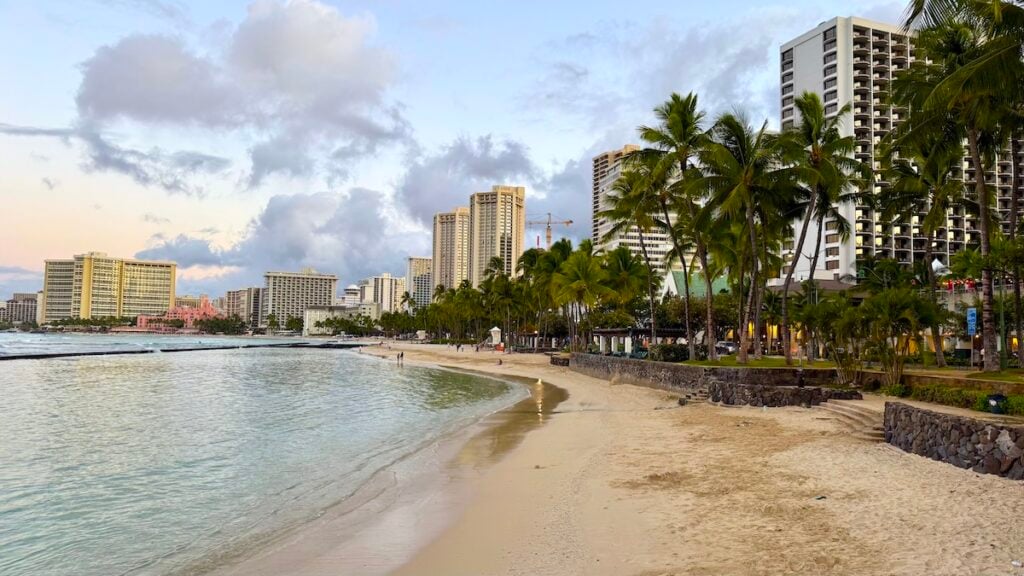
Honolulu and Oahu are also enforcing stricter regulations, though not quite as severe as Maui.
They’re requiring vacation rentals to be properly zoned and registered, and shutting down the ones that aren’t.
At least on Oahu you have way more hotel options, so if you can’t find a legal rental, you’re not stuck.
Kauai has had tight vacation rental rules for a while, so this isn’t as new there. But they’re also getting stricter about enforcement.
The big picture is this: Hawaii wants fewer vacation rentals overall. They’re not going to suddenly reverse course and make it easier. This is the new reality.
How to Tell If a Vacation Rental Is Actually Legal
If you’re still considering a vacation rental, here’s how you verify it’s legal to operate. Do not skip these steps. Seriously. I cannot stress this enough.
Ask the owner or property manager for their permit or license number before you book anything.
Every legal vacation rental in Hawaii is required to have one. If they can’t give you a number immediately, that’s a huge red flag. Don’t book.
Once you have the number, check it yourself. Each county has a database where you can verify vacation rental permits.
On Maui, check the County of Maui’s website.
On the Big Island, go through Hawaii County.
On Oahu, check the City and County of Honolulu website.
On Kauai, use the County of Kauai planning department.
I know this sounds like a pain, but it takes five minutes and could save you thousands of dollars and a massive headache.
Just search up “verify vacation rental permit” plus whichever island you’re looking at, and the county website should come up.
Read recent reviews, like within the last three months. Look for any mentions of the property still being operational. I
f reviews from six months ago say everything was great, that doesn’t tell you anything about whether it’s legal now. Things are changing that fast.
Book through established property management companies instead of individual owners on Airbnb or VRBO.
The big management companies have legal teams making sure their properties are compliant.
Random person renting out their condo? They might not even know their property is about to be shut down.
If you’re booking on Airbnb or VRBO, look at the cancellation policy carefully.
Some platforms are offering more flexible cancellation if your rental gets shut down by the county, but it varies. Read the fine print.
If the rental seems too cheap for what it is, or if the owner is being vague about the permit number, just walk away. It’s not worth the risk.
Which Islands Are the Most Risky Right Now
I’m going to be really clear about where the biggest problems are, because it matters a lot which island you’re looking at.
Maui requires the most homework right now. Not because rentals are being shut down today, but because the legal situation is actively unsettled.
Bill 9 passed in December 2025, lawsuits are pending, and the list of affected properties is still being disputed.
As a Hawaii travel expert who works with families on this island constantly, I’m not recommending Maui vacation rentals to my consultation clients unless they’re in a verified hotel-zoned building with a current permit number in hand.
The phase-out deadlines aren’t until 2029 at the earliest, but owner behavior is already changing ahead of that clock, and you don’t want to be caught in the middle of it.
The Big Island is the second most complicated. Those $10,000 per day fines are real, and owners are freaking out.
Some are just shutting down their rentals entirely rather than risk the fines. Others are operating in a gray area while they wait for the registration rules to be finalized.
If you book on the Big Island, you absolutely must verify the permit number yourself. Don’t trust what the listing says.
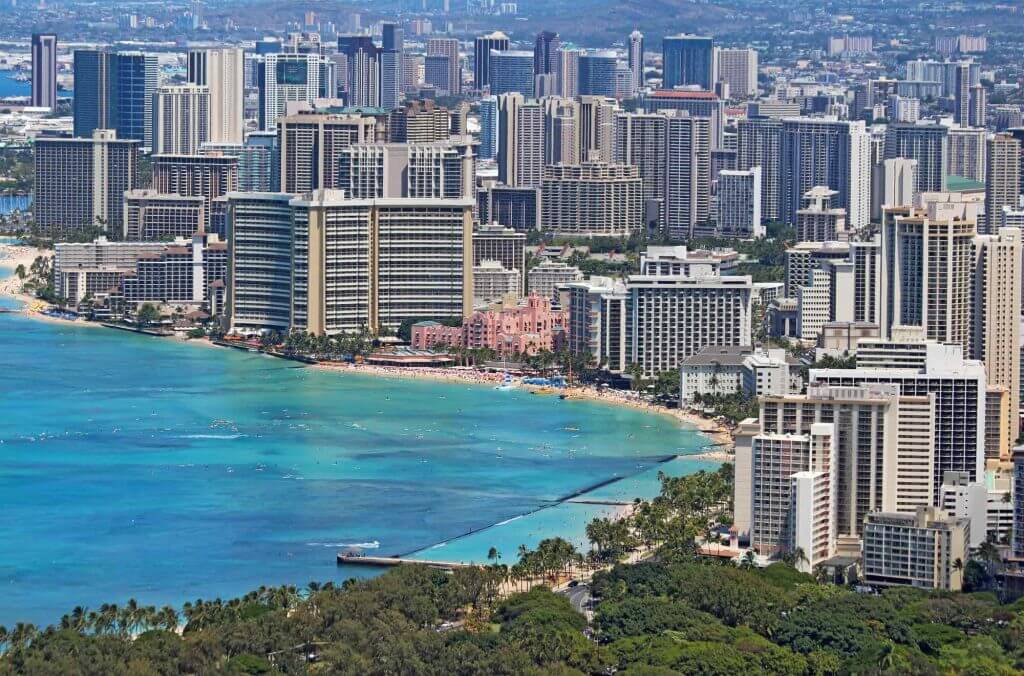
Oahu is less risky because there are so many hotel options that even if vacation rentals get more restricted, you’re not stuck. Waikiki is basically all hotels anyway.
The vacation rental issues on Oahu are more concentrated in residential neighborhoods where locals don’t want tourists.
At least if your rental falls through, you can find a hotel room pretty easily.
Kauai has had strict rules for years, so the legal vacation rentals there have already been through the wringer.
If it’s operating on Kauai in 2026, it’s probably actually legal. But there aren’t that many vacation rentals on Kauai to begin with, and they’re expensive.
Why Hotels Are Looking Like the Smarter Choice
I never thought I’d be the person saying “just book a hotel,” because I’ve spent years telling families that vacation rentals save money and give you more space.
But in 2026, the math and the risk level have both changed.
Hotels are guaranteed to be there when you arrive. You’re not going to show up and find a county notice on the door.
You’re not going to get an email two weeks before your trip saying the property can’t host you anymore because it lost its permit. The certainty alone is worth something.
The price difference isn’t as big as it used to be. With vacation rental taxes and cleaning fees and all the extra charges, plus the fact that legal vacation rentals are becoming scarce so prices are going up, hotels are becoming more competitive on price.
Especially on Oahu where hotel competition keeps rates reasonable.
You get daily housekeeping, which matters more when you have kids making a mess every single day. You don’t have to worry about washing all the towels and dishes before you check out.
Someone else deals with the maintenance if something breaks.
Hotels have pools and sometimes kids’ programs and other amenities that keep your children entertained when you need a break. With a vacation rental, you’re on your own for entertainment.
Hotels have staff who can help you if something goes wrong. Your rental car breaks down? Hotel front desk can help. You need a doctor for your kid? They know where to send you. Vacation rental owner? They might be on the mainland and can’t do anything.
On Oahu specifically, Waikiki hotels are your best value in Hawaii right now. The competition between hotels means you can find deals, especially if you’re flexible on whether you need an ocean view.
Decent hotels for $200-250 a night during non-peak times is completely reasonable when you factor in no cleaning fees, no extra guest charges, and daily housekeeping.
If you want to compare hotel prices and find the best deals, I recommend using sites like Discount Hawaii Car Rental, which also does hotel bookings and often has package deals that save you money.
Hotels.com is another good option because their rewards program gives you a free night after ten stays.
For families who really need multiple bedrooms, look at hotel suites or condo hotels. These are hotel buildings where each unit has a kitchen and separate bedrooms, but you still get hotel services and you know it’s legal.
Examples are the Embassy Suites in Waikiki, or the Castle Resorts properties, or Aston Hotels. You get the space of a vacation rental with the security of a hotel.

What About Condos vs Vacation Rentals
People get confused about this, so let me clarify.
A condo can be a legal vacation rental if it’s in a building that’s zoned for short-term rentals. Not all condos are vacation rentals, and not all vacation rentals are condos.
The buildings that are hotel-zoned and have always operated as vacation rentals are generally fine.
These are places like the Royal Kuhio in Waikiki, or the Kona Coast Resort on the Big Island. They’re condo buildings, but they’re zoned for short-term stays and they’re managed by companies that handle all the legal stuff.
What’s getting shut down are condos in residential buildings where the homeowners association allows vacation rentals but the county zoning doesn’t.
Or single-family homes in residential neighborhoods that have been operating as vacation rentals.
If you’re looking at a condo, make sure it’s in a building that’s actually zoned for vacation rentals. Ask what zone the building is in. Ask if the HOA allows short-term rentals. Get the permit number. Do your homework.
What If You Already Booked a Vacation Rental
If you already booked a rental for 2026 and now you’re panicking, take a breath. You might be fine. But you need to verify.
Contact the owner or property manager right now and ask for the permit number. If they can’t provide it, or if they’re vague about it, that’s a problem. Check the permit number yourself on the county website to make sure it’s valid.
Look at the cancellation policy for your booking. If it’s through Airbnb or VRBO, check if they have any protection for properties that get shut down.
Some platforms have added policies specifically for this situation where they’ll refund you if the rental loses its permit.
Consider getting travel insurance if you don’t have it already. Make sure it covers accommodation issues, not just medical emergencies or flight cancellations.
Read the policy carefully because some travel insurance won’t cover “change of mind,” but they might cover situations where the rental becomes unavailable due to government action.
Have a backup plan. Seriously.
Look at what hotel options are available near your rental for the same dates. Price them out. Know what it would cost if you had to switch at the last minute. This way you’re not scrambling in a panic if something goes wrong.
Keep all your communication with the owner or property manager. If they told you the rental was legal and it turns out it wasn’t, you’ll need that documentation to try to get your money back.
The Questions I’m Getting Asked Most
“Should I just wait until 2027 when things settle down?”
Honestly, things might not settle down. This isn’t a temporary crackdown that’s going to blow over.
Hawaii has decided they want fewer vacation rentals, and that’s the long-term direction. Waiting probably won’t help unless you’re hoping hotel prices come down, which I wouldn’t count on.
“Are Airbnb and VRBO doing anything about this?”
They’re trying, but they’re also in a tough spot. Some of the listings on their platforms are illegal, but they don’t have a way to verify every single property in real-time as county rules change.
They’ve added some protections for guests, but ultimately you need to do your own verification.
“What if I have a timeshare in Hawaii?”
Timeshares are generally fine because they’re in buildings that are zoned for vacation use. But you should still verify with your timeshare company that there aren’t any new restrictions affecting your particular property.
“Can I just book a rental and hope for the best?”
You could, but I wouldn’t recommend it. The risk is too high.
If you show up and your rental is shut down, you’re looking at paying last-minute hotel rates during peak season, which could be double or triple what you budgeted.
Plus you’ve lost whatever you paid for the rental if you can’t get a refund.
“Which vacation rental companies are the most trustworthy?”
On Oahu, I’d look at Castle Resorts, Aston Hotels, or Aqua-Aston Hospitality. On the Big Island, South Kohala Management and Knutson & Associates are established companies.
On Maui, I’m honestly not recommending vacation rentals at all right now unless it’s through a major management company in a clearly hotel-zoned building. On Kauai, Parrish Kauai has been around forever and knows the rules.
What This Means for Your 2026 Trip
Vacation rentals have been the go-to for families for years, and I understand the appeal completely.
More space, a kitchen to save money on food, separate bedrooms so the kids aren’t waking you up at 6 AM.
I’ve stayed in plenty of them across the islands. But the landscape has genuinely changed, and families need to plan accordingly.
The risk of booking a vacation rental in Hawaii in 2026 is higher than it’s ever been.
And the price difference between rentals and hotels isn’t as significant anymore, especially when you factor in the stress and potential disaster of your rental being illegal.
For most families, hotels are the safer choice right now. Especially on Oahu where you have tons of options at competitive prices.
You sacrifice the full kitchen and maybe some space, but you gain peace of mind and zero risk of showing up to a shuttered property.
If you absolutely need a vacation rental because you have a big family or you need the kitchen for dietary reasons or whatever, fine.
But do your homework. Verify everything. Have a backup plan. And seriously consider getting travel insurance.
This isn’t the Hawaii vacation rental market from three years ago. Things changed, and families need to change their planning to match the new reality.
How I Can Help
This is exactly the kind of situation where a one-on-one consultation saves you money and stress.
The rules are different on every island, things are still changing, and one wrong booking decision can cost you hundreds or thousands of dollars at the worst possible time.
In a 60-minute consultation, I can walk you through which islands are safest for vacation rentals right now, how to verify permits yourself, which property management companies I trust, and whether a hotel makes more sense for your specific family’s needs and budget.
Book a consultation here. It’s $149 for 60 minutes, and families tell me it pays for itself many times over.
You might also want to check out my podcast Hawaii Travel Made Easy. I cover Hawaii planning topics like this regularly, and it’s a great free resource while you’re in the research phase.

Bottom Line
Hawaii vacation rentals aren’t disappearing overnight.
But the legal landscape shifted significantly in late 2025, and the risk of booking the wrong property is higher than it’s ever been.
Maui is the most complicated island right now. The Big Island is introducing new compliance rules mid-2026. Oahu and Kauai have options, but you still need to verify.
If you book a vacation rental, verify the permit number yourself. Have a backup plan. Read the cancellation policy carefully. And consider travel insurance that covers accommodation disruptions, not just flights and medical.
After 40+ visits to Hawaii and years of helping families navigate exactly these kinds of planning curveballs, my honest take is this: for most families in 2026, hotels are the lower-stress choice.
Not because vacation rentals are gone, but because the peace of mind of knowing your accommodation is definitely there when you land is worth a lot.
Don’t let the planning derail the trip. Hawaii is still worth every bit of the effort.
 | About the author: Marcie Cheung is a Hawaii travel consultant for families who has visited Hawaii more than 40 times. She is the founder of Hawaii Travel with Kids and host of the Hawaii Travel Made Easy podcast. She offers one-on-one Hawaii trip planning consultations and itinerary reviews for families, couples, and honeymooners. |