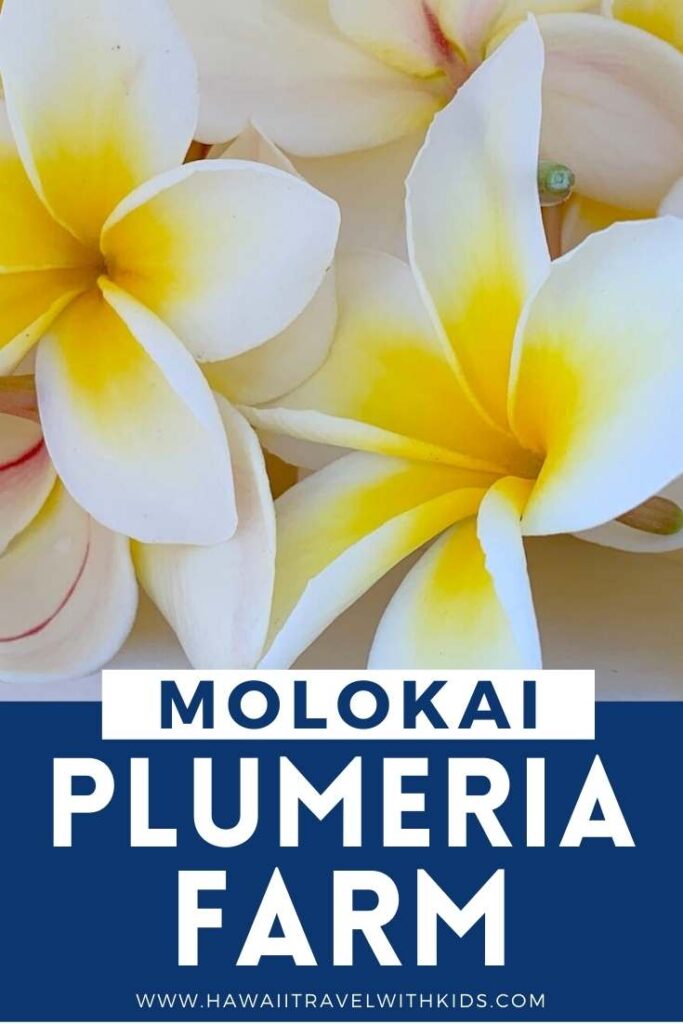
Are you looking for fun things to do on Moloka’i with your family? Keep scrolling to find out whether or not the Moloka’i Plumeria Farm is worth visiting.
This review of the Moloka’i Plumeria Farm was written by Hawaii travel expert Marcie Cheung and contains affiliate links which means if you purchase something from one of my affiliate links, I may earn a small commission that goes back into maintaining this blog.
When my mom and I did a day trip to Molokai from Maui last March, learning to make a plumeria lei at Molokai Plumerias was hands down one of my favorite experiences.
And I say that as someone who’s been to Hawaii 40+ times and considers herself a professional tourist.
There’s something really special about wandering through rows of fragrant plumeria trees, picking your own flowers, and learning an authentic Hawaiian tradition from people who’ve been growing these iconic blooms for over 40 years.
If you’re planning a trip to Molokai and want to do something that’s genuinely cultural (not just touristy), this is it.
I’m going to walk you through exactly what to expect, how to book, and why you should absolutely add this to your itinerary.
Wait, Are Plumeria Actually Hawaiian?
So here’s something that surprises most people. Even though plumeria are THE flower everyone thinks of when they picture Hawaii, they’re not actually native to the islands. They were brought here from Mexico, Central America, and the Caribbean.
But they’ve become so woven into Hawaiian culture that honestly, it doesn’t matter where they came from originally.
Plumeria symbolize positivity, new beginnings, and love. You’ll see women wearing them tucked behind their ears (the side matters for relationship status, by the way) and they’re the go-to flower for making lei.
Most plumeria trees bloom from late spring through fall, with peak season running April through August.
We visited in early March, which was right at the start of blooming season. The farm owner, Dick, mentioned they’d had a drier than usual winter, so the trees weren’t as full as they’d normally be by then.
But we still had zero problems filling our bags with gorgeous flowers.
Where is Molokai Plumerias?
The farm sits at 1342 Maunaloa Highway, just a couple minutes west of Kaunakakai (Molokai’s main town). It’s on the main road, but I’ll be honest, the entrance is kind of tricky to spot at first.
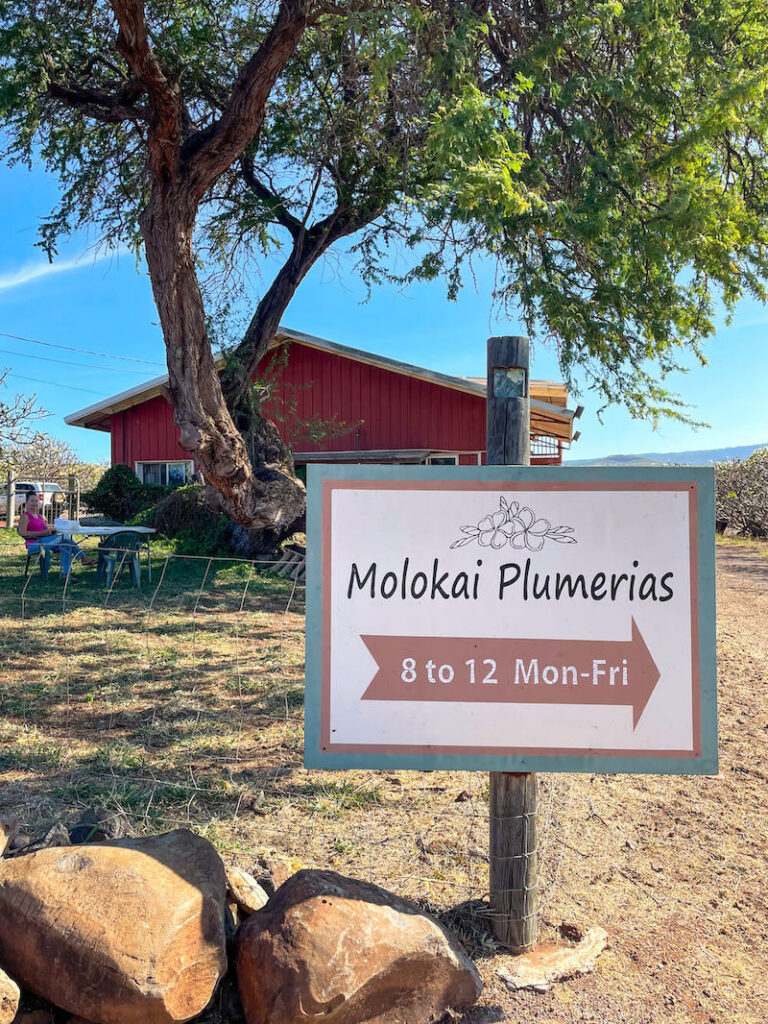
Look for a dirt driveway in front of a red-clay colored building. The Molokai Plumerias sign is pretty close to the building itself, so you’ll want to drive slowly and keep your eyes peeled. Once you see it, you’ll know you’re in the right place.
Parking is super easy. There’s plenty of space right there, and you’ll be surrounded by plumeria trees as soon as you step out of your car.
Booking Your Tour
You’ll want to email ahead to book your tour. We reached out about six weeks before our trip, but you can probably book with less notice depending on the season.
Tours are available Monday through Saturday from 8am to noon, and they’re affordable (contact the farm directly for current pricing since it can change).
The great thing about Molokai Plumerias is they’re really flexible with timing. Since it’s a working farm, they prefer that you make a reservation rather than just showing up, but they’ll work with your schedule.
One tip from Dick: if you can swing it, book your tour for late afternoon. That’s when the flowers are freshest and most fragrant.
We did ours at 9am (because that’s what worked with our Maui to Molokai day trip schedule), but he mentioned afternoon is ideal.
Getting Around Molokai
Real talk: you’re going to need a rental car for Molokai. Unless you have a friend picking you up at the tiny airport, there’s really no way around it.
The good news? Renting a car on Molokai is way easier than you’d think. We booked through Discount Hawaii Car Rental (which saved us some money) and picked up our car at Alamo, which is literally steps away from the airport terminal.
It was honestly the fastest and easiest car rental pickup I’ve ever experienced in Hawaii.
If you’re staying on Molokai for a few days, you’ve got some other accommodation options to consider beyond just renting a car for the day.
The Tour Experience: Picking Plumeria
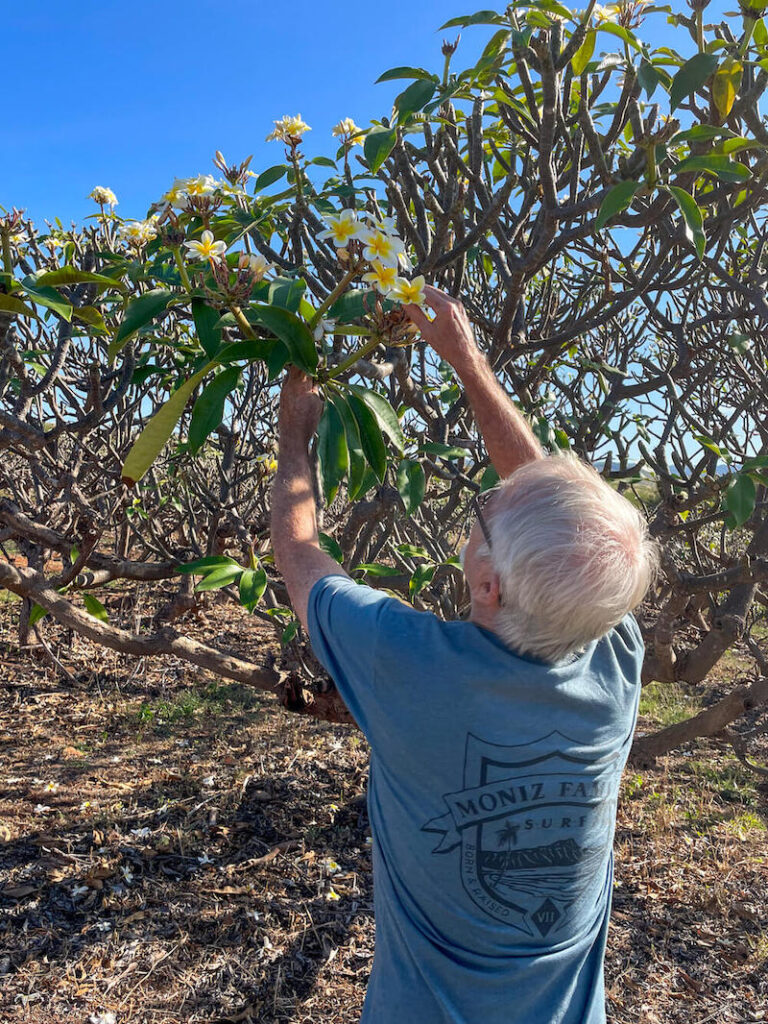
Dick greeted us as soon as we parked. He’s this tall, soft-spoken guy who clearly loves what he does. First thing he did was walk us out into the plumeria grove to show us how to pick flowers properly.
The trees aren’t super tall, and the branches are surprisingly flexible. Dick demonstrated how to gently pull a branch down toward you without damaging it.
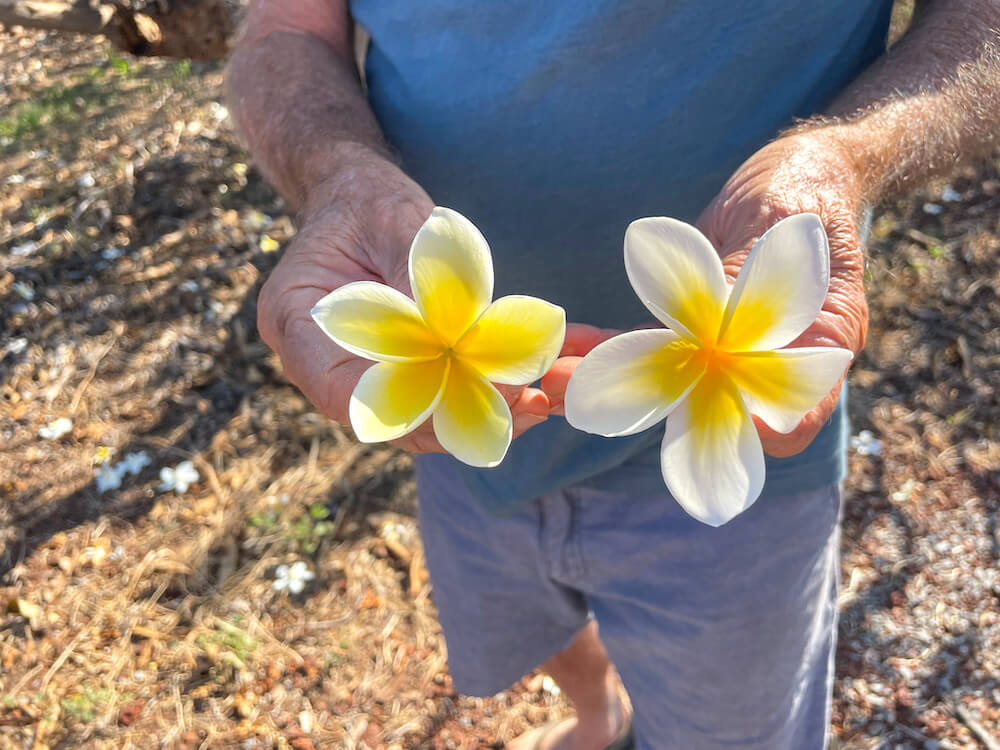
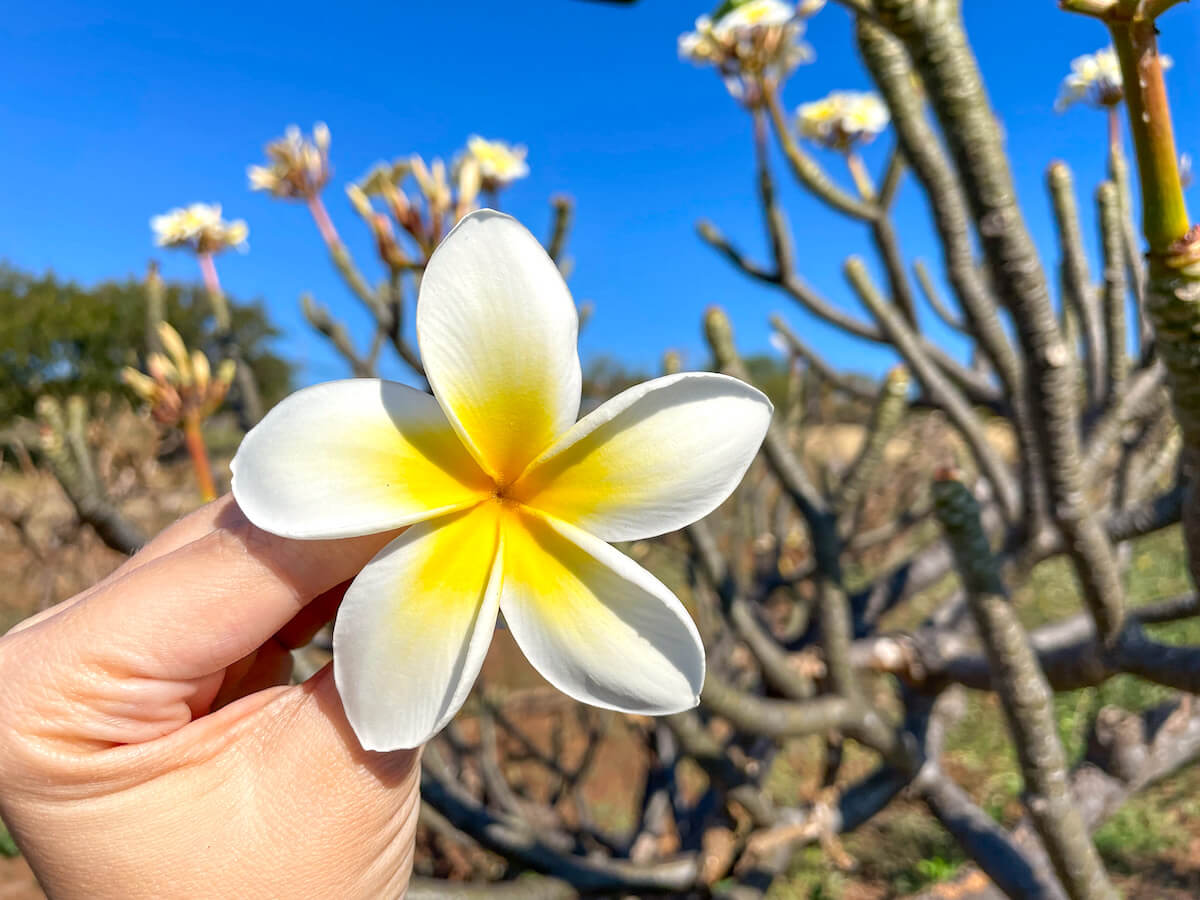
Then he showed us two different plumeria blooms, one early in its cycle (more yellow) and one later (more white around the edges). Both work great for lei making.
The only flowers you don’t want are the ones with brown edges. Dick joked that we’d “lose points” if he saw any of those in our bags.
He handed us white paper bags and told us to fill them about a third of the way. That’s roughly 50 flowers, which is what you need for a standard greeting-length lei. Then he basically let us loose in the fields.
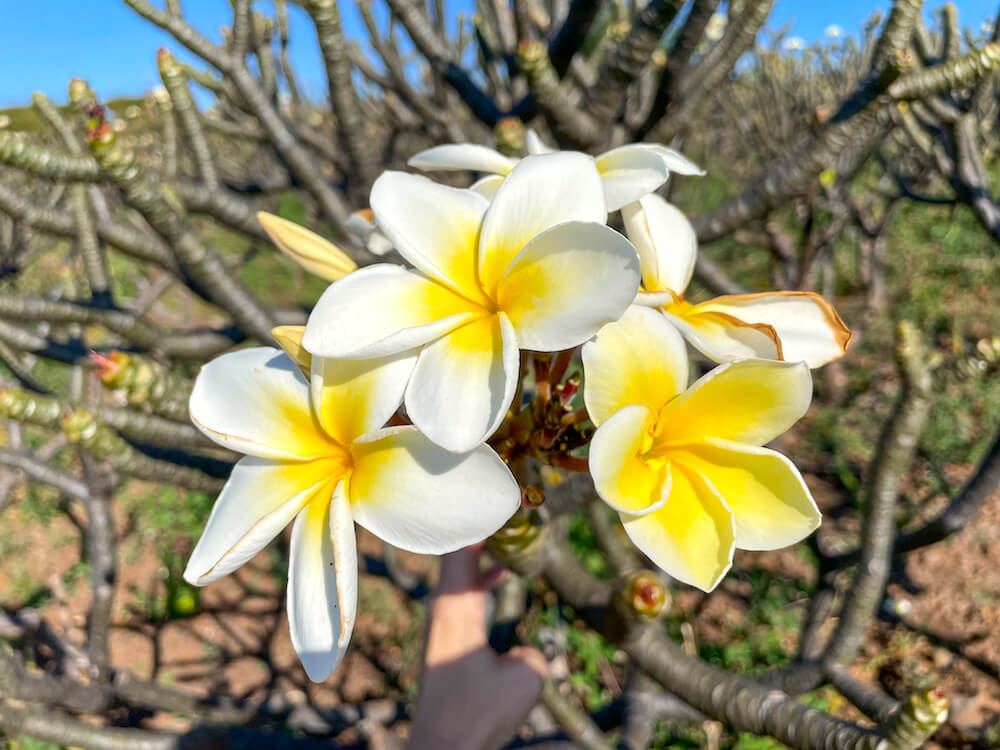
This was my favorite part. Just wandering between the rows of plumeria trees, picking flowers, with my mom on the other side of the grove doing the same thing. It’s so peaceful.
The trees smell amazing, and there’s something meditative about searching for the perfect blooms.
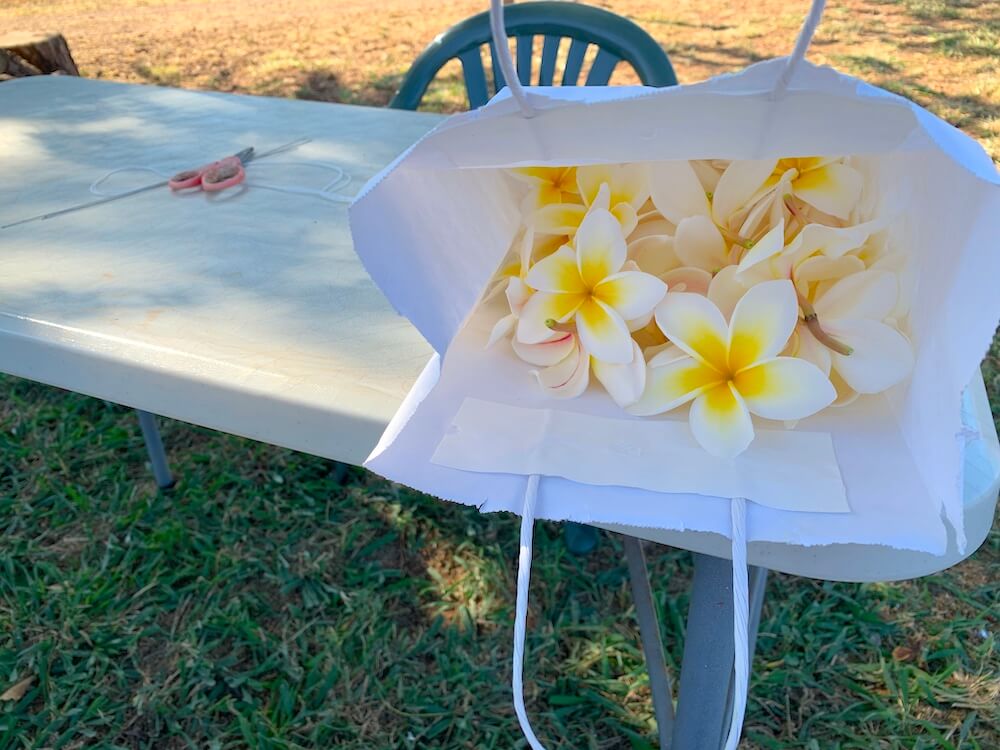
I thought I’d picked plenty of flowers, but I ended up about 7-8 short when it came time to string my lei.
Luckily, Dick had some extras sitting in cold water that he’d picked earlier, so I borrowed a few to finish mine.
Learning to String a Lei
Once we had our flowers, Dick took us to the lei-making table. They use hook needles there, which are different from the closed-eye needles you might see other lei makers use (or even just a regular long sewing needle).
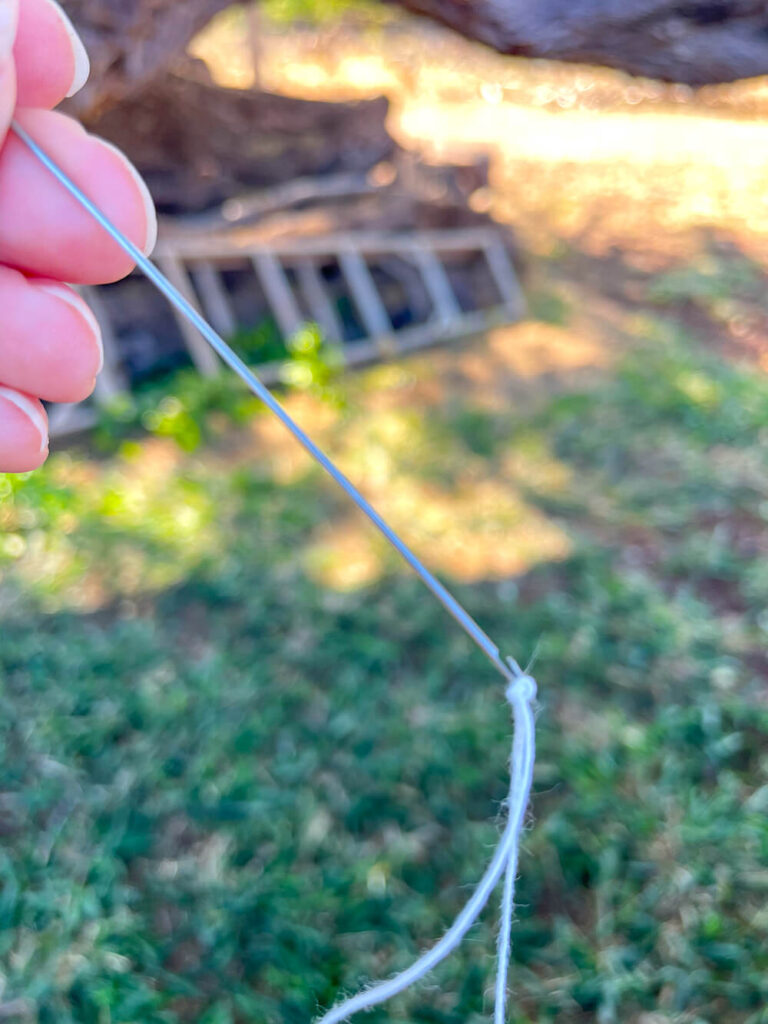
You tie a knot about an inch from the end of your string, loop it through the hook, and you’re ready to go.
Making a plumeria lei is honestly so simple. You just pierce the needle through the center of each flower, and it automatically goes through the stem.
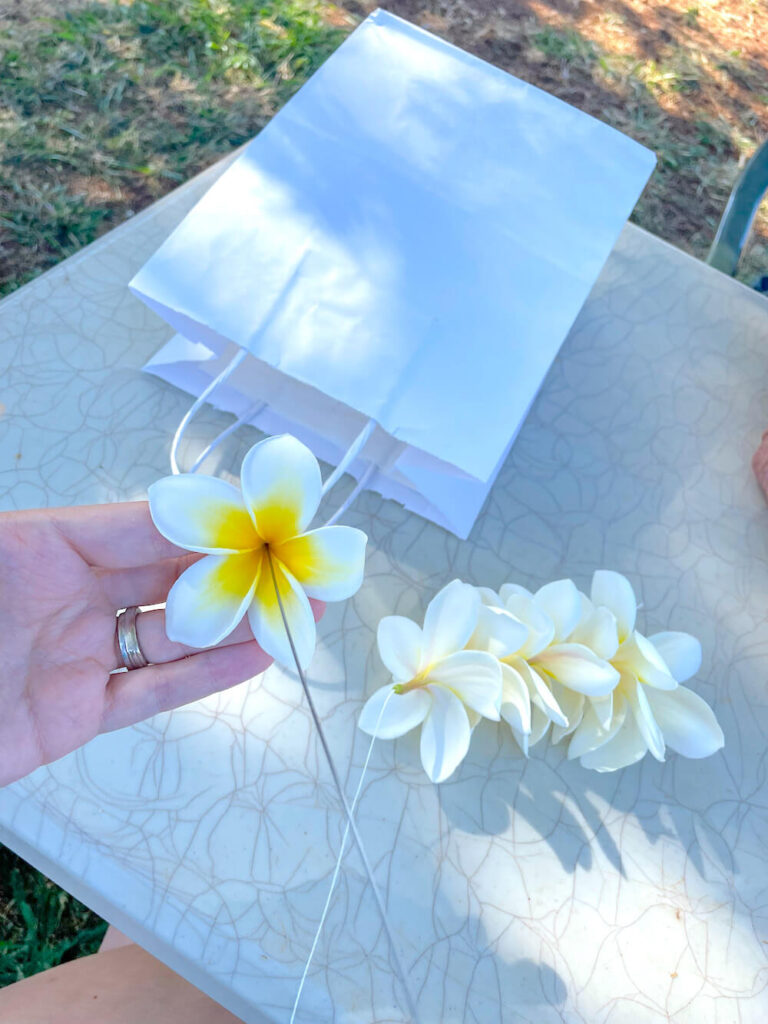
The key is getting the flowers as close together as possible. Some people string them one at a time. Others load 4-5 onto the needle and push the whole group down at once.
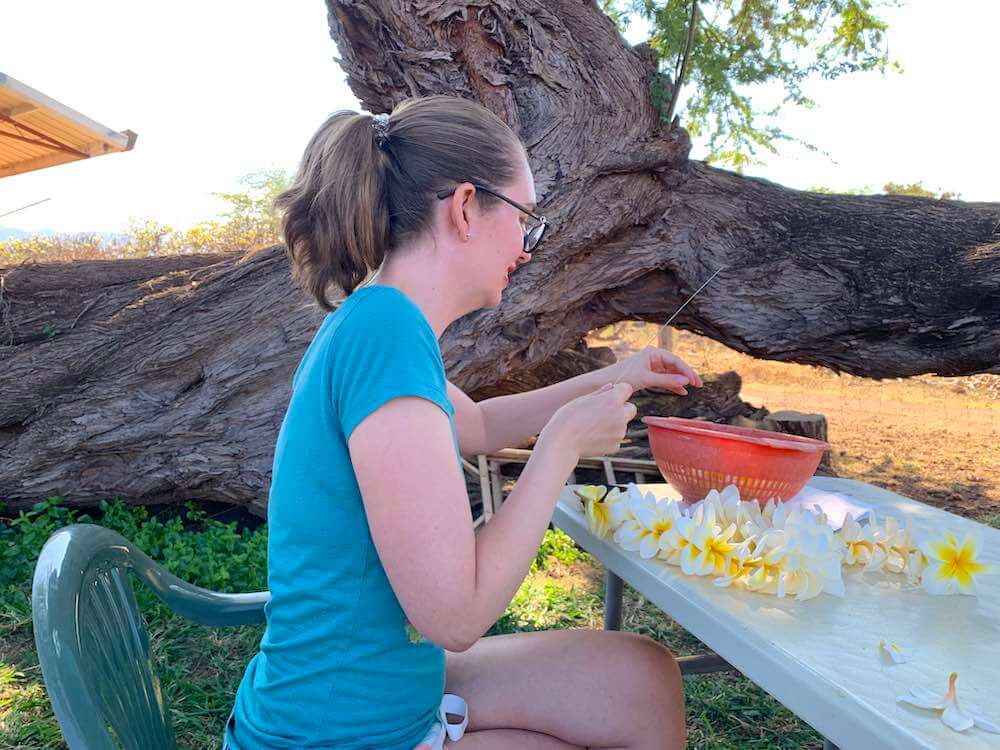
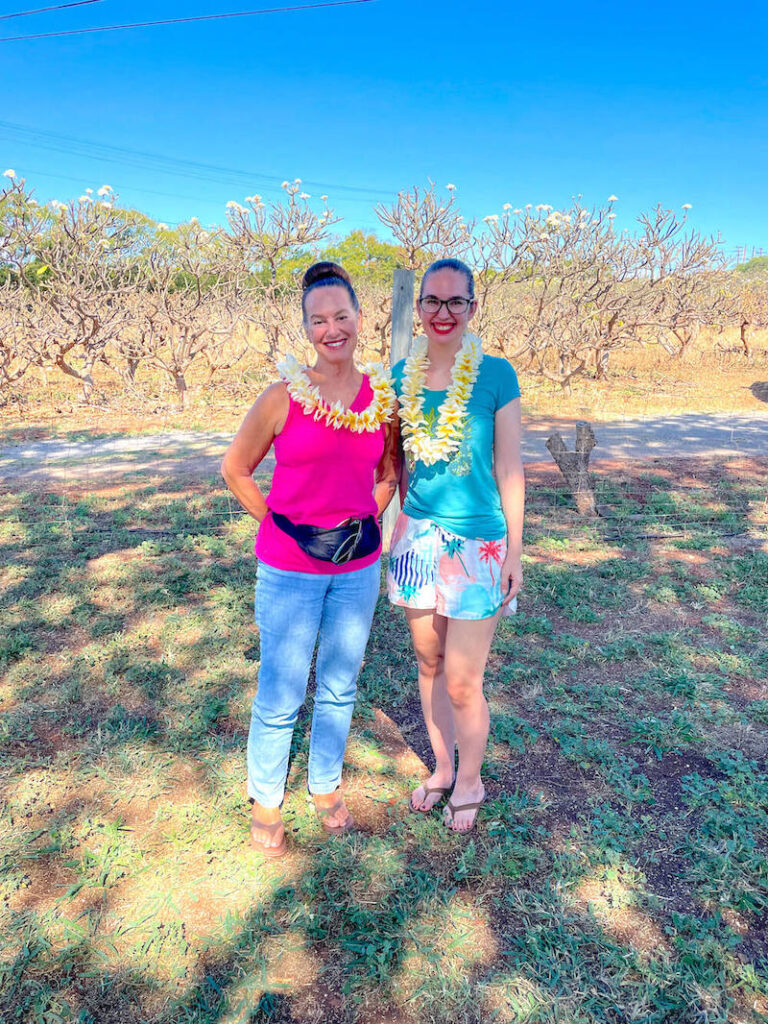
The finished leis looked exactly like something you’d buy at a lei stand or airport. I genuinely couldn’t believe how professional they turned out. As a former hula dancer who’s worn countless lei over the years, I was pretty proud of myself.
What to Bring and Wear
I wore a t-shirt and shorts and was totally comfortable. You could wear sunglasses if you want, but I chose not to because I wanted to see the true colors of the flowers. A sun hat is a smart idea since you’ll be walking around in direct sunlight.
Definitely wear sunscreen. You’re outside for most of the tour, and even though we were there in the morning, the Hawaiian sun is no joke.
If you’re planning to drive around after your tour, bring a cooler bag with ice and some plastic bags to keep your lei fresh. Plumeria are more delicate than those purple dendrobium orchid lei you get at luaus, so they need to stay cool.
One more thing: if you have pollen allergies like I do, consider bringing wet wipes. I noticed some hives on my arm later in the day from handling all those flowers. A quick rinse cleared it right up, but wipes would’ve been handy.
Keeping Your Lei Fresh
Plumeria lei need to stay cool to last more than a day. The ideal temperature is 50-60 degrees.
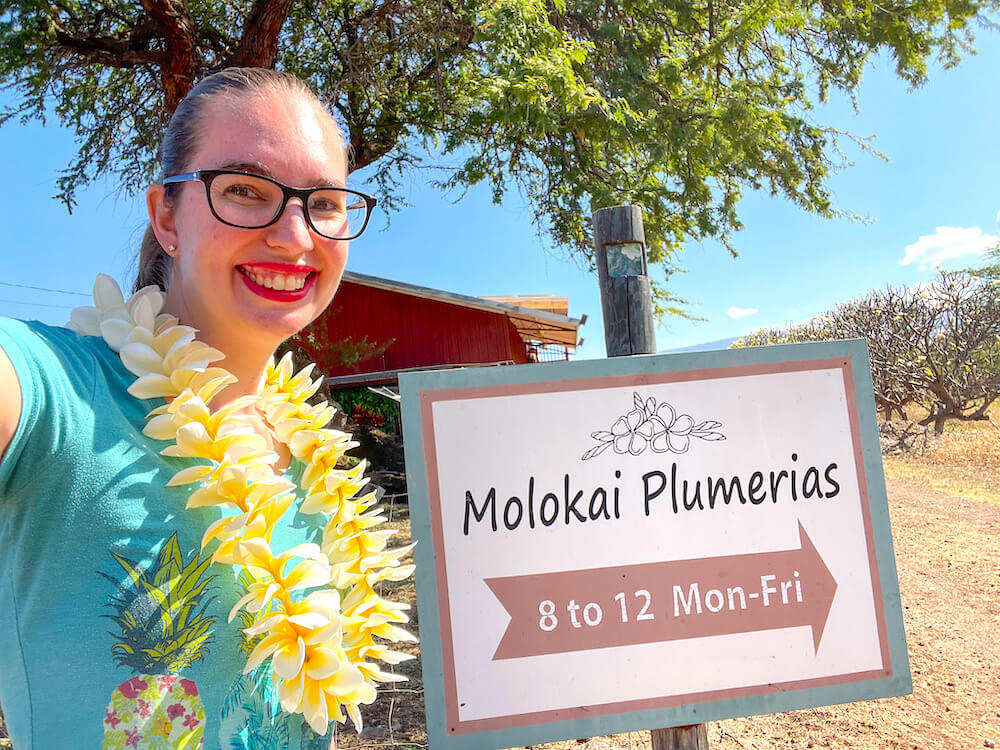
Your best bet is keeping them in a cooler bag with ice. If you’re staying at a hotel, you can stash them in the mini-fridge (or a regular fridge). Another option is to fill your sink with cold water and float them in there until you want to wear them.
Just know that these aren’t going to last as long as those hardier orchid lei. Plumeria are special because they’re actually grown in Hawaii, but they’re definitely more fragile. That’s part of their charm, though.
Is It Worth It?
Absolutely, 100%. If you’re someone who likes experiencing things rather than just sightseeing, Molokai Plumerias is perfect. It’s laid-back, educational, and you leave with something you made yourself.
After 20+ years of hula dancing and more Hawaii trips than I can count, learning to make a traditional lei from someone who’s been growing plumeria since 1982 felt really meaningful.
It’s one of those experiences that connects you to Hawaiian culture in a tangible way.
And honestly? It’s just fun. My mom and I had a blast, and I’m already planning to bring my kids next time we visit Molokai.

More Ways I Can Help You Plan Your Molokai Trip
If you’re feeling overwhelmed trying to figure out what else to do on Molokai (or anywhere in Hawaii), I offer one-on-one Hawaii travel consultations where we can map out your entire trip together.
As a Certified Hawaii Destination Specialist and Hawaii travel expert, I’ll help you create an itinerary that actually fits your family.
Looking for more Molokai resources? Check out my complete Maui to Molokai day trip guide (where I share everything we did in one day), my Hotel Molokai review (the only hotel on the island), and my guide to the cheapest places to stay on Molokai.
If you’re planning a bigger Hawaii trip and want to explore multiple islands, grab my Hawaii Island Hopping Guide for all the logistics and tips.
Or if you’re just getting started with your planning, my free 5-day email course on how to travel to Hawaii like a pro covers everything from flights to accommodations to packing.
Trust me, Molokai is worth the extra effort. It feels like stepping back in time to a quieter, simpler Hawaii.
And learning to make a lei at Molokai Plumerias? That’s the kind of memory that sticks with you long after your tan fades.
Looking for more Moloka’i Travel Resources? Check out how to do a Maui to Moloka’i day trip, the cheapest places to stay on Moloka’i and my Hotel Moloka’i review.
 | About the author: Marcie Cheung is a Hawaii travel consultant for families who has visited Hawaii more than 40 times. She is the founder of Hawaii Travel with Kids and host of the Hawaii Travel Made Easy podcast. She offers one-on-one Hawaii trip planning consultations and itinerary reviews for families, couples, and honeymooners. |