Are you looking for kid-friendly Hawaii Big Island national parks? Keep scrolling to read my tips for exploring Kaloko-Honokohau National Historical Park with kids.
This post about Kaloko-Honokohau National Historic Park was written by Hawaii travel expert Marcie Cheung and contains affiliate links which means if you purchase something from one of my affiliate links, I may earn a small commission that goes back into maintaining this blog.
Okay, so I took my 5-year-old to see sea turtles at this little park near Kona airport, and we counted at least a dozen just hanging out in this gorgeous cove.
Best part?
Totally free.
And most people have no idea it even exists.
Kaloko-Honokohau National Historical Park is literally 5 minutes from the airport. You’ve probably driven right past it.
Why I Keep Coming Back Here
I’ve been to Hawaii over 40 times as a professional tourist, and this spot still makes my top favorites list for families.
Zero cost. No entrance fee, no parking fee, nothing.
The sea turtles? They’re EVERYWHERE.
During my last visit with my youngest (he was 5 at the time), we counted at least a dozen honu just chilling on the lava rocks and swimming in the shallow cove. He was absolutely mesmerized.
We spent nearly two hours just watching them pop up for air and nibble on seaweed.
But what really gets me is that you’re not just visiting a pretty beach.
You’re walking through an actual ancient Hawaiian settlement where families survived and thrived on this harsh lava coastline for centuries.
The engineering alone? Mind-blowing.
These massive fishponds that early Hawaiians built are still standing. Still functional. They knew exactly what they were doing.
What’s Actually There
So the canoe house was honestly my main reason for visiting.
The Canoe House
So the canoe house was honestly my main reason for visiting.
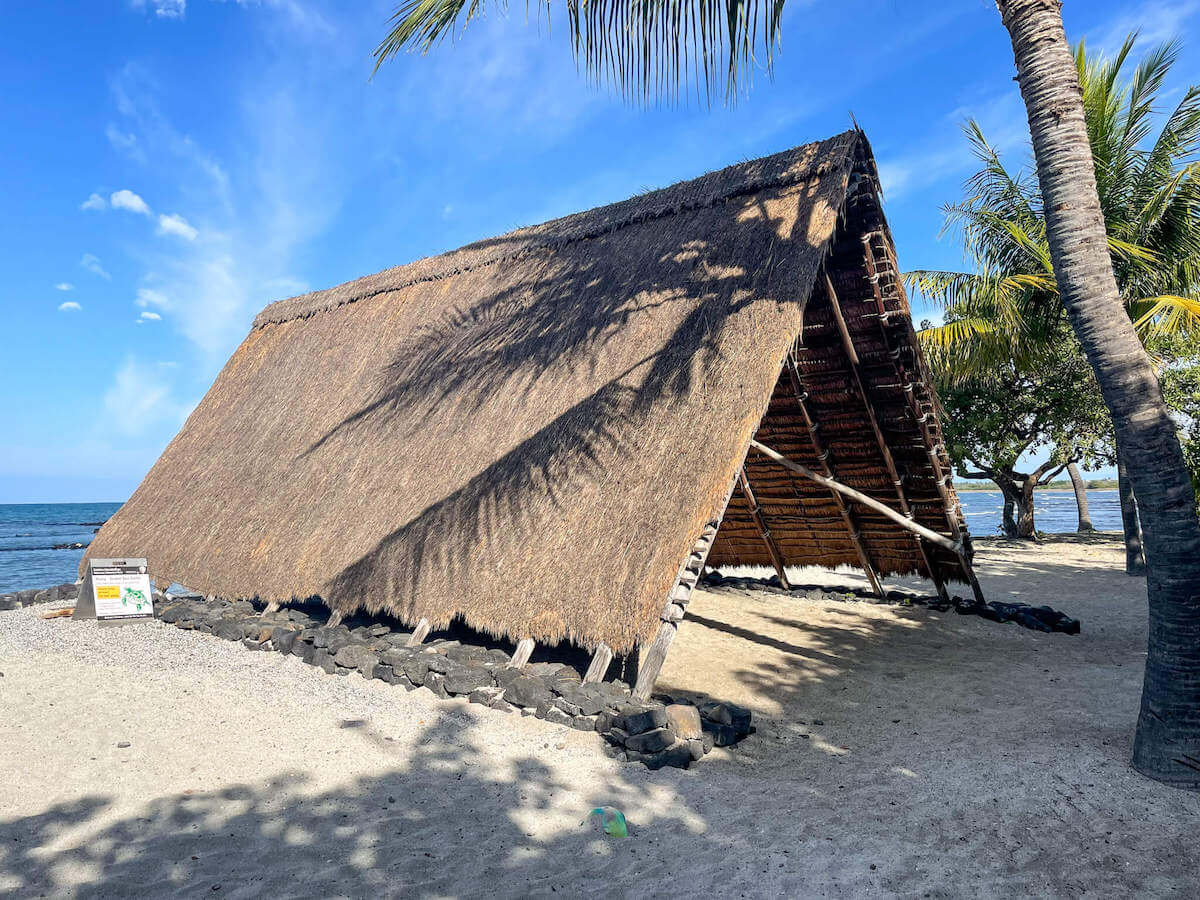
This huge traditional Hawaiian canoe house sits right on the beach, and you can walk through it.
My son literally ran towards it squealing (this is the stuff kids remember years later).
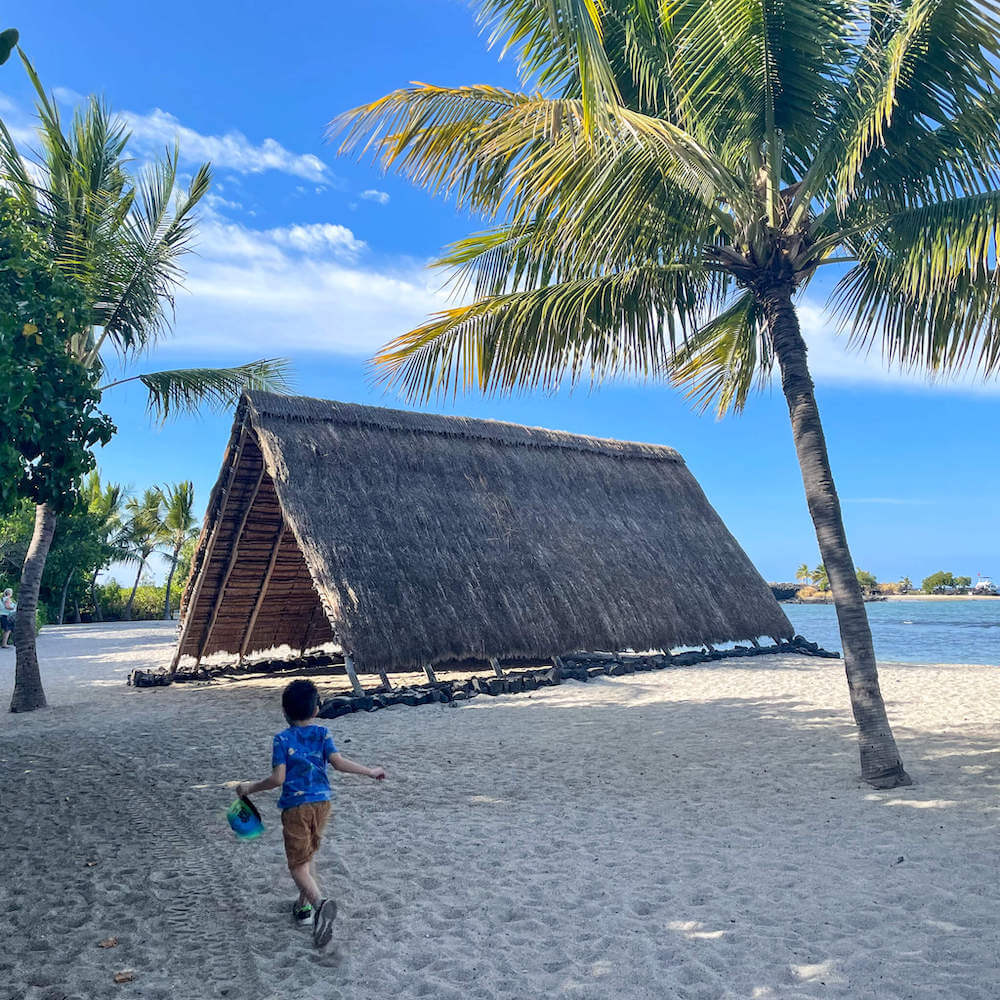
The structure itself is fascinating. You can see exactly how ancient Hawaiians lashed everything together.
Plus, the photos here are incredible. If you want that perfect Big Island shot, this is it.
Speaking of photos, I always tell people to book Flytographer for their Hawaii trip.
You save $20 with my link, and having professional photos at spots like this canoe house beats selfies every single time.
Trust me, years from now you’ll be so glad you did.
The Sea Turtles
Go at low tide if you can. The honu come to shore to eat algae growing on the lava flats, and they’re pretty chill about people being nearby.
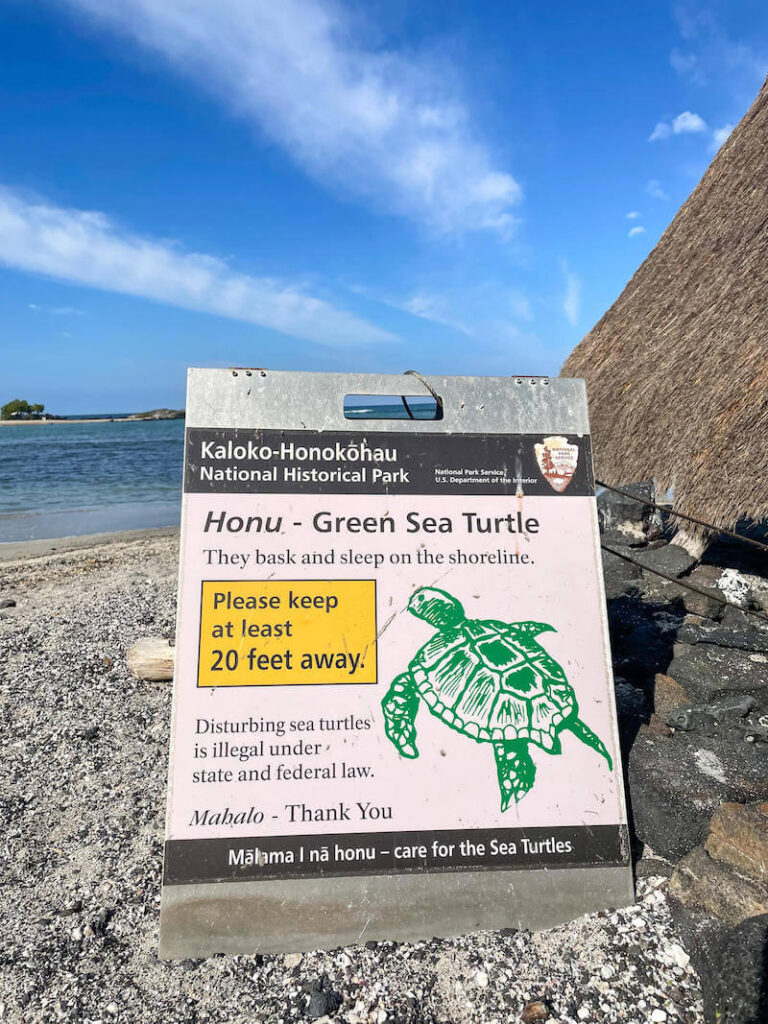
Just remember the golden rule: stay at least 15 feet away. These turtles are federally protected, and honestly, they’re safer and happier when we give them space.
My 5-year-old was so excited that he kept whispering “Mom, look! Another one!” every few minutes.
It was the highlight of his entire Big Island trip, which is saying something because we did a LOT that week.
The Ancient Fishponds
This is where you really get it. The Hawaiian ingenuity, I mean.
The Kaloko and Aimakapā fishponds are massive. They show just how sophisticated early Hawaiian aquaculture was. These weren’t random ponds.
They were carefully engineered to manage fresh and brackish water flow, creating the perfect environment for raising fish.
Walking around these ponds gave me such a different view of Hawaiian history.
This wasn’t some primitive society. These were brilliant engineers who figured out how to thrive in one of the harshest climates on the island.
The Walk In
If you park at Honokohau Harbor (which I totally recommend with little kids), it’s only a 5-minute walk to the beach.
You’ll walk over volcanic rock, through this little forest section, then boom, you’re on this gorgeous sandy coastal trail.
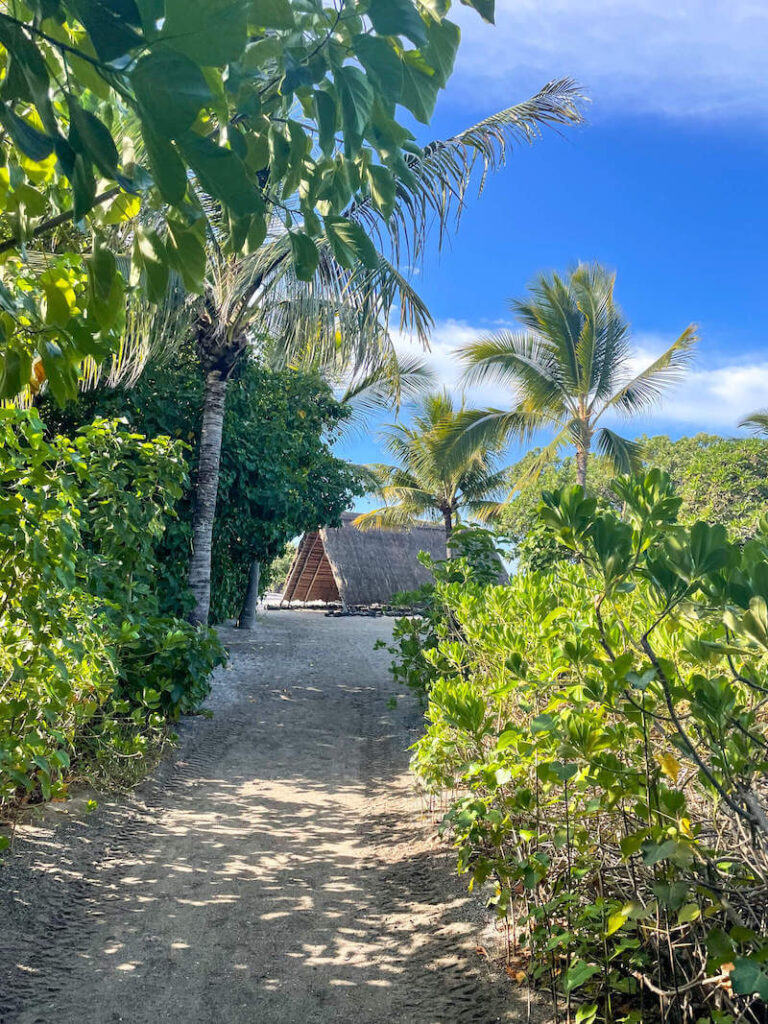
Easy enough for young kids but interesting enough that older kids won’t whine about it.
There’s a longer hike option from the visitor center if you’re feeling ambitious.
That’s about 20 minutes and takes you through more of the park. Totally doable.
But with a tired 5-year-old? The harbor route was the move.
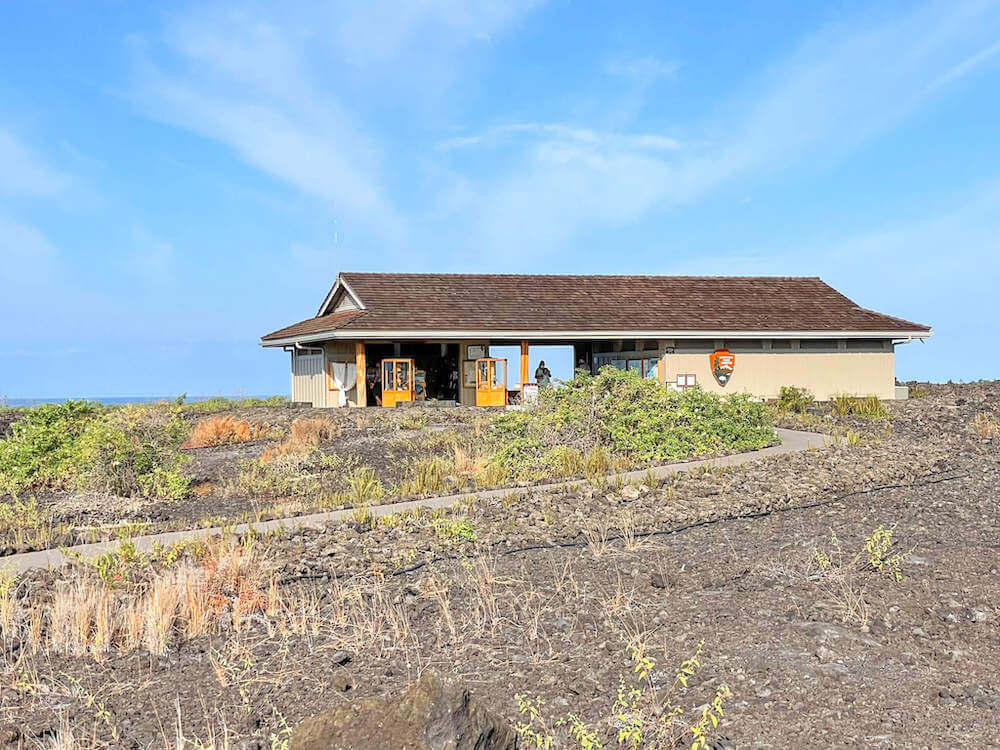
The Visitor Center
Start here. Seriously.
The park rangers are incredibly helpful and will give you a map showing exactly where everything is.
There’s also a short interpretive walk with signs explaining Hawaiian culture and history.
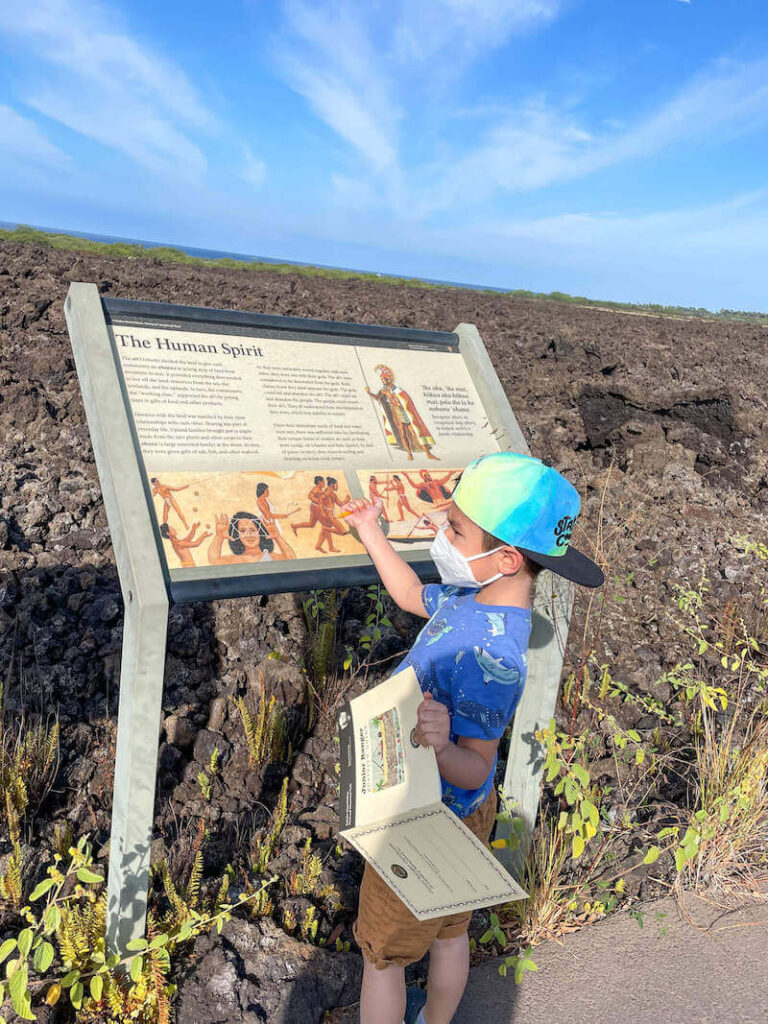
If your kids are participating in the Junior Ranger program (and they should be!), you’ll need to stop here first to get the booklet.
The visitor center has bathrooms and a water refill station too, which you’ll definitely need because it gets HOT out there.
Getting There
The address is 73-4786 Kanalani St. #14, Kailua-Kona, HI 96740.
From Kona airport? You’re 5 minutes away. Head north on Queen Kaahumanu Highway and watch for the brown National Park Service signs.
Three different ways to enter this park:
Main Visitor Center: Turn toward the ocean just south of mile marker 97. This is where you get Junior Ranger booklets and talk to rangers. Open 8:30am to 4pm daily.
Kaloko Road: This unpaved road takes you to the Kaloko fishpond. Gate’s open 8am to 5pm daily.
Honokohau Harbor: My favorite with little kids. From the highway, turn at the Honokohau Harbor sign, take your first right, and follow the road to the Kona Sailing Club. Super short walk to the beach from there.
Need a rental car? I always book through Discount Hawaii Car Rental.
They consistently have the best Big Island rates, plus two free additional drivers. When you’re traveling with family, that flexibility matters.
When to Go (Timing Matters Here)
Between 10am and 2pm, this place gets absolutely packed. Also? The sun is brutal, and you’re standing on black lava rocks that feel like they’re radiating heat from hell itself.
Go early. Like 8:30am when gates open.
Or go late afternoon. Way more space, better lighting for photos, and it’s actually pleasant. The sunset views from the harbor? Gorgeous.
We went around 9am and basically had the beach to ourselves for the first hour. By 11am when we were leaving, it was getting noticeably more crowded.
What to Bring
This isn’t your typical beach day, so pack smart.
Bring way more water than seems reasonable. There’s a refill station at the visitor center, but once you’re out on the trails, that’s it.
Wear shoes that can get wet and handle rough terrain. Lava rocks, potentially some shallow water if you want to explore the fishpond areas. Flip flops won’t work.
Reef-safe sunscreen is required. You’re going to be in full sun with very little shade, and those sea turtles depend on us using products that won’t trash their habitat.
If you think you might want to hang at the beach longer, bring snacks and beach stuff.
The water’s calm enough for kids to play in the shallows, and once you see how beautiful it is, you might not want to leave.
My complete Big Island packing list has everything you need so you don’t forget anything important.
The Junior Ranger Thing
If your kids are 6-12, grab a Junior Ranger booklet from the visitor center.
My son takes this program ridiculously seriously. He spent the entire visit reading every single sign and filling out his booklet.
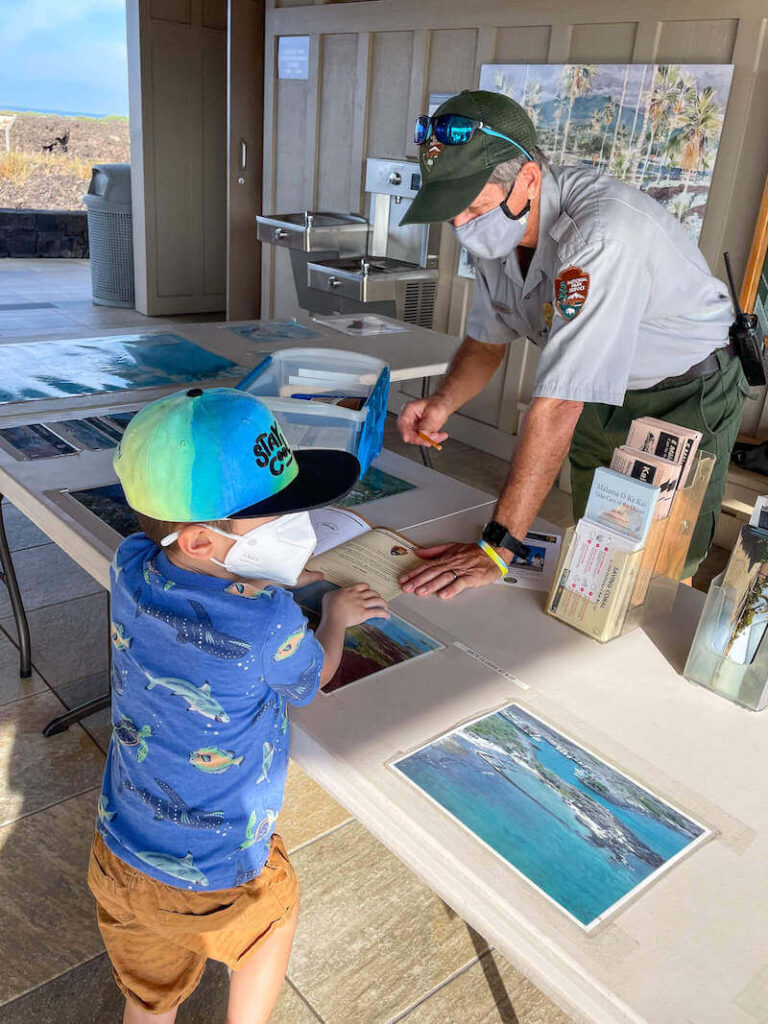
The park ranger who reviewed it with him was amazing. He spent like 10 minutes chatting with him about what he learned, and he was beaming when he got his badge.
They have an easier version for kids 5 and under too, which is clutch if you have multiple kids at different ages.
The booklet questions will take you to different parts of the park, so it’s actually a good way to make sure you see everything.
Plus kids have a sense of purpose beyond just “walking around looking at rocks.”
Other Big Island National Parks
Kaloko-Honokohau is one of several national park sites on the Big Island. If you’re into this stuff (and you clearly are since you’re still reading), check out the others too.
Hawaii Volcanoes National Park
This is THE reason many people come to the Big Island.
You can often see active lava (depending on whether Kilauea’s erupting), explore lava tubes, and walk across landscapes that look like Mars. It’s incredible.
Spend at least one full day here. If you can swing it, book a night at the historic Volcano House Hotel. Waking up with caldera views? Unforgettable.
My full guide to Hawaii Volcanoes National Park has all the details.
Puuhonua o Honaunau National Historical Park
Also called the Place of Refuge. Absolutely fascinating.
You’ll see massive tiki statues, traditional Hawaiian structures, and learn about the ancient practice of seeking refuge when someone broke a kapu (taboo). The cultural significance here runs deep.
Bonus: it’s right next to Two-Step Beach, one of the best snorkeling spots on the island. Easy to make this a full day.
My complete guide to the Place of Refuge has everything you need to know.
Puukohola Heiau National Historic Site
This massive temple was built by King Kamehameha I. It played a huge role in unifying the Hawaiian Islands.
It’s not as visitor-friendly as the others (you can’t walk on the heiau), but the history here matters if you’re interested in Hawaiian culture and how these islands became one kingdom.
If You Want a Guide
Kaloko-Honokohau is totally doable on your own, but some families like having a local guide to explain the history and point out stuff you’d otherwise miss.
I found several Big Island tours on Viator that include Kaloko-Honokohau along with other Kona spots like coffee farms, Kealakekua Bay, and the Place of Refuge.
Good option if you’re on a tight schedule and want to hit multiple places in one day.
The reviews consistently mention how much their understanding of Hawaiian culture deepened with a knowledgeable guide.
Worth considering if you’re the type who wants to absorb everything.
Quick Questions Answered
Is there an entrance fee?
Nope. The park is completely free. No entrance fee, no parking fee. Honestly one of the best free activities on the entire Big Island.
What are the park hours?
Visitor center: 8:30am to 4pm daily. Vehicle access via Kaloko Road: 8am to 5pm. You can still get in from Honokohau Harbor after hours, but the main parking areas close.
How much time should I plan?
We spent about 2 hours and saw everything at a comfortable pace with our 5-year-old. If you’re really into it, you could easily do half a day exploring all the trails and fishponds. Minimum? Plan for at least an hour.
Are there restrooms?
Yes. Bathrooms at the visitor center and at the Kaloko Road trailhead.
What does Honokohau mean?
In Hawaiian, it means “the bay where waters congregate.” Makes perfect sense when you see the naturally curved shoreline where fresh and saltwater mix.
Can I swim here?
Yep. The beach area’s calm and perfect for kids to play in the shallows. Just watch for sea turtles and give them space.
Planning Your Full Big Island Trip
As a professional tourist who’s been to Hawaii 40+ times and as a Certified Hawaii Destination Specialist, I can tell you places like Kaloko-Honokohau are the hidden gems that make the Big Island special.
Sure, everyone goes to Hawaii Volcanoes National Park (and you should).
But these quieter spots where you can watch sea turtles in peace and really connect with Hawaiian history? That’s the good stuff.
If you’re feeling overwhelmed by planning, I get it. The Big Island is huge, and figuring out where to stay, what to see, how to organize your days… it’s a lot.

I created my Big Island Travel Guide for Families for parents who want a detailed, day-by-day itinerary that actually works with kids.
Kid-friendly activities, restaurant recommendations, all the insider tips I’ve learned from decades of visiting.
Or if you want personalized help, I do one-on-one Hawaii travel consultations where we talk through your family’s specific needs and create a custom itinerary together.

I also share tons of Big Island tips on the Hawaii Travel Made Easy podcast.
Episode 51 walks through exactly how to plan a Big Island trip, including which areas to base yourself in and how to organize your days by region.
Want the quickest crash course? Grab my free 7-day email course on planning a Big Island trip. One email per day with actionable tips you can use right away.
More Kona Beach Ideas
Kaloko-Honokohau isn’t the only great beach park around. Old Kona Airport Beach has amazing sunsets and tons of space. Magic Sands Beach Park is perfect for a full beach day with facilities and lifeguards.
More Big Island stuff I love:
- Top Big Island waterfalls (some need hiking, others are drive-up)
- How to tour a macadamia nut factory (free samples)
- Aloha Adventure Farms ATV Tour (so much fun)
- Best Big Island Instagram spots (that canoe house made the list)
My Take
Kaloko-Honokohau surprised me in the best way. I expected a quick box-check stop.
What I got was watching my son’s face light up every time another sea turtle popped up, learning about ancient Hawaiian engineering that still amazes me, and experiencing Hawaiian history in a way that felt real and meaningful.
The fact that it’s free, uncrowded if you time it right, and minutes from the airport makes it even better.
First-day activity after landing? Last-morning stop before your flight? It fits perfectly anywhere in your Big Island itinerary.
Go early, bring lots of water, give yourself more time than you think, and prepare to be amazed by both the sea turtles and the people who made this harsh coastline their home centuries ago.
You’ll be glad you went. Promise.
 | About the author: Marcie Cheung is a Hawaii travel consultant for families who has visited Hawaii more than 40 times. She is the founder of Hawaii Travel with Kids and host of the Hawaii Travel Made Easy podcast. She offers one-on-one Hawaii trip planning consultations and itinerary reviews for families, couples, and honeymooners. |