
Are you planning a trip to Maui and want to know some fun facts about Maui? Keep scrolling to find out interesting facts about Maui that will surprise you!
This list of fun facts about Maui was written by Hawaii travel expert Marcie Cheung and may contain affiliate links, which means if you click on the link and purchase the item, I will receive an affiliate commission at no extra cost to you. All opinions remain my own.
Planning a Maui trip and want to get your family excited?
I’ve been visiting Maui for over 20 years, and I’m still learning new things about the Valley Isle.
These facts about Maui go way beyond the typical travel guide stuff.
Whether you’re trying to decide if Maui is right for your family or just want to dive deeper into what makes this island special, these surprising tidbits will help you see Maui through fresh eyes.
Some of these even surprised me as a Hawaii travel expert!
Maui Has Wild Weather Changes
Think Hawaii means endless sunshine? You’re mostly right, but Maui’s weather can surprise you.
As Hawaii’s second-largest island, you can experience completely different climates just by driving 20 minutes.
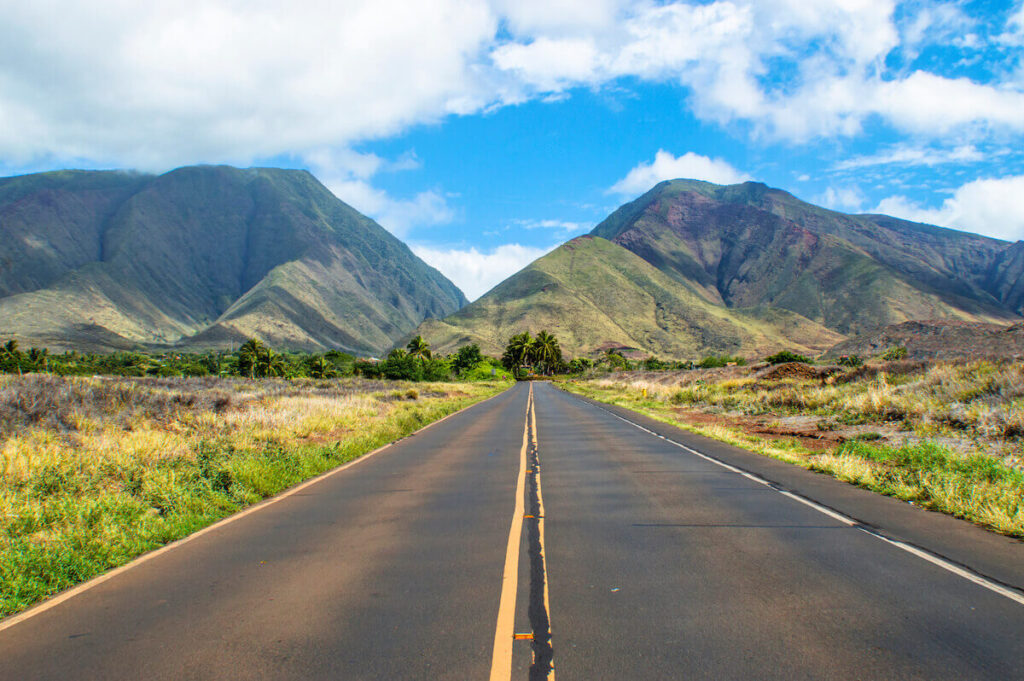
West Maui and South Maui get the driest, sunniest weather, which is why you’ll find most resorts there.
But here’s the wild part: the West Maui Mountains get some of the heaviest rainfall on Earth. We’re talking over 400 inches annually in some spots.
Maui actually has 10 of the 14 climate zones found on the planet.
One day you’re lounging on warm golden beaches, the next you’re hiking through rainforests, and if you drive up to Haleakala summit, you might see snow. Yes, snow in Hawaii!
This weather variety is actually perfect for families because you can switch up your activities based on how everyone’s feeling.
Beach day? Head south. Want cooler temps and gorgeous scenery? Drive upcountry.
If you’re planning your Maui trip and feeling overwhelmed, I offer personalized Hawaii travel consultations where we can map out the perfect itinerary for your family’s interests and energy levels.
The Demigod Behind the Name
Ever wonder why the island is called Maui? The story goes two ways, and honestly, both are pretty cool.
In Polynesian mythology, Maui was this clever demigod who supposedly pulled the Hawaiian Islands from the ocean using his fishing hook.
The legend says he even lassoed the sun from the top of Haleakala to slow it down, giving islanders more daylight for fishing and farming.
The other version? A brave fisherman and adventurer named Hawaii-Loa discovered the islands and named this one after his son Maui (who was named after the demigod).
Either way, this island carries some serious legendary energy.
Road to Hana: The Numbers Are Crazy
The Road to Hana is one of Maui’s most famous experiences, and the stats alone are mind-blowing.
This scenic drive takes you along Maui’s North Shore through rainforests, past waterfalls, and over more than 50 one-lane bridges.
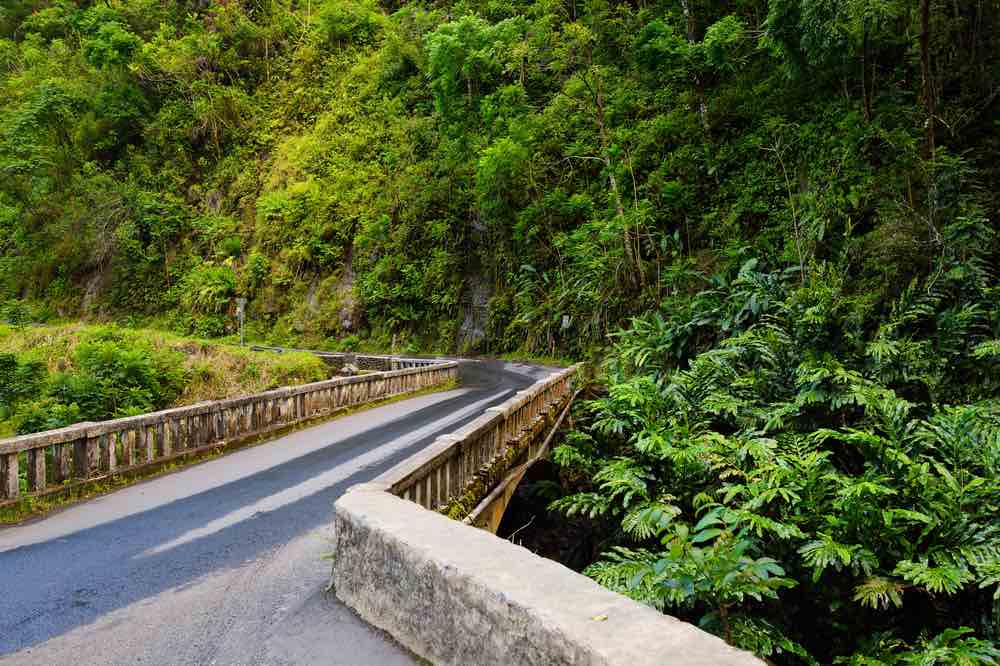
You’ll wind through about 620 curves over roughly 52 miles.
Along the way, there are dozens of waterfalls (some sources count 18-20 major ones, but honestly, it feels like there’s one around every corner), hiking trails, swimming holes, food stands, and gorgeous coastal views.
My favorite stop? Halfway to Hana for their banana bread. It’s usually still warm when you buy it, and trust me, it’s worth every calorie.
You can also explore bamboo forests, check out the Garden of Eden botanical gardens, and end up in the small town of Hana itself.
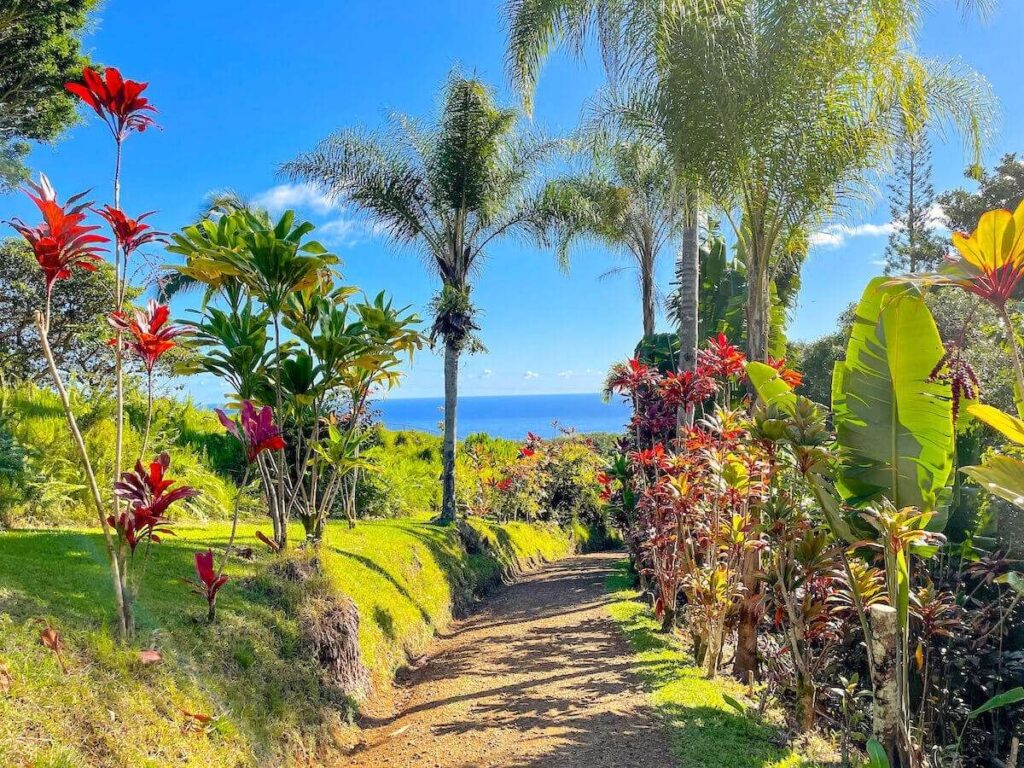
Most people make it an all-day adventure. If you keep going past Hana, you’ll find even more spectacular sights, but eventually you’ll turn around and head back the way you came.
For families who want the Road to Hana experience without the stress of driving those curves themselves, I highly recommend booking a tour through Viator or Get Your Guide.
The guides know exactly where to stop and can share local stories you’d miss on your own.
Banana Bread is Basically a Food Group Here
Speaking of banana bread, let’s talk about why it’s such a big deal in Maui.
During the Great Depression, banana bread became popular across the US because it was cheap, easy, and delicious.
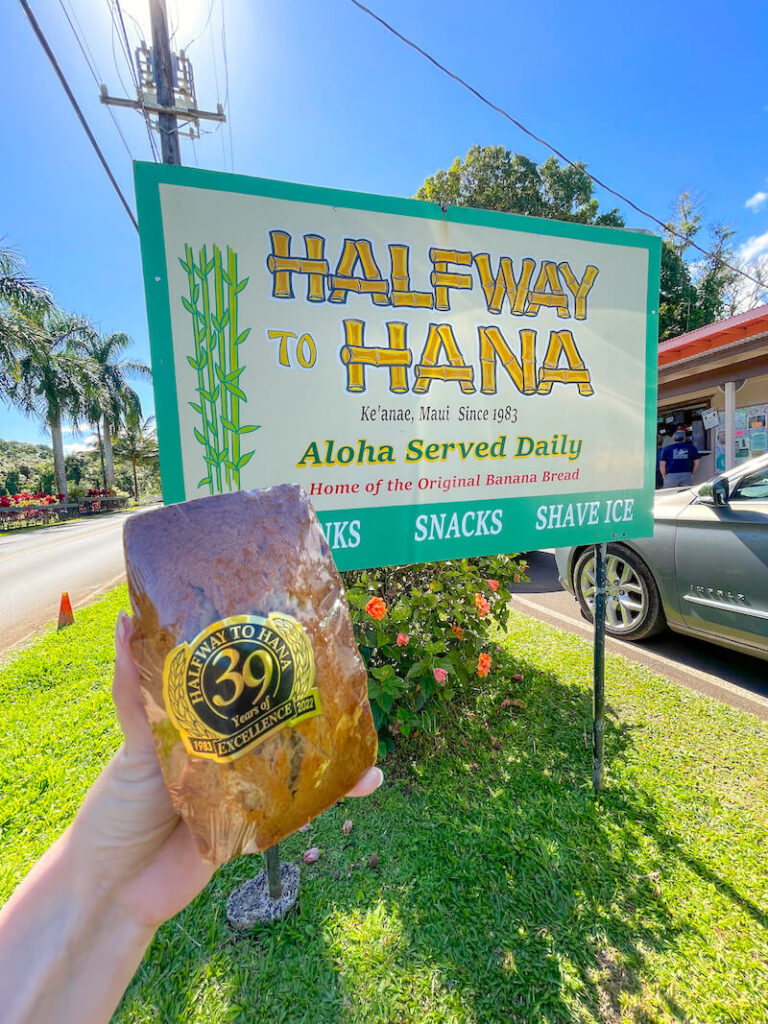
In Hawaii, where bananas grew abundantly, it became a staple.
Fast forward to today, and you’ll find banana bread at almost every Maui gift shop, bakery, and farmers market.
But here’s the secret: Maui banana bread often uses smaller, sweeter Apple Bananas instead of the Cavendish variety you get at mainland grocery stores.
Add in local ingredients like macadamia nuts or fresh mango, and you’ve got something truly special.
The Halfway to Hana stand is my go-to, but honestly, I’ve never met a Maui banana bread I didn’t like. Just be prepared to want it for breakfast every day of your trip.
Maui Gold Pineapples Are in a League of Their Own
If you think you’ve tasted good pineapple, wait until you try a Maui Gold.
Haliimaile Pineapple Company grows these beauties on the slopes of Haleakala, and they’re sweeter and less acidic than typical pineapples.
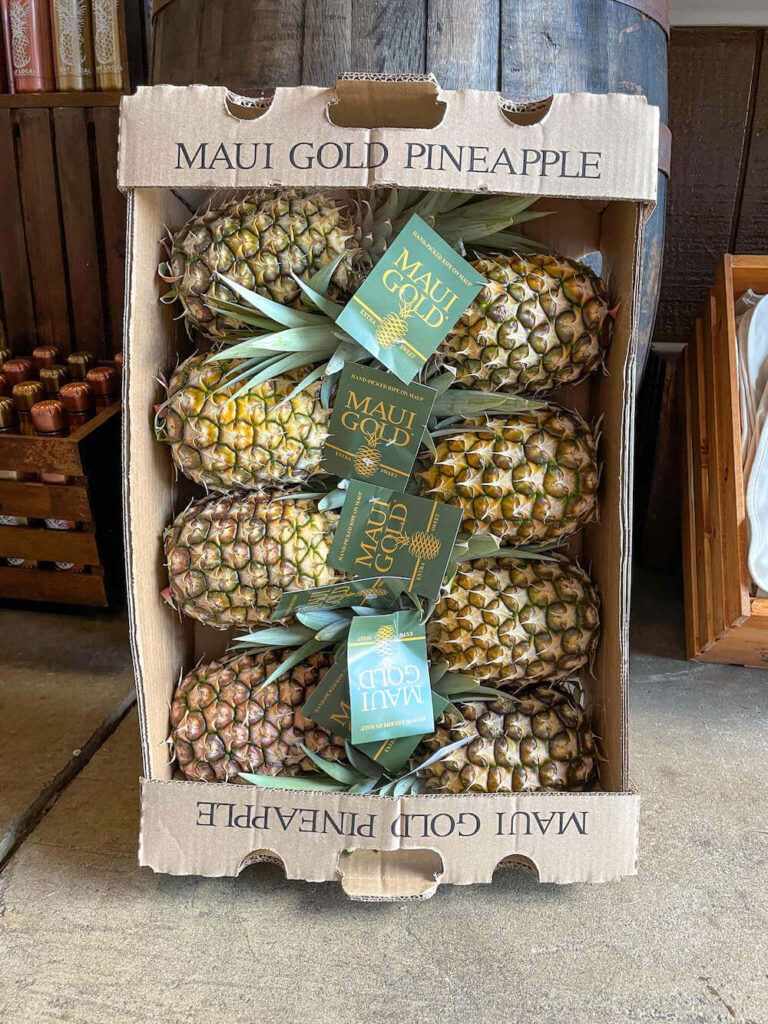
Most Maui Golds stay in Hawaii, so you’ve probably never had one before.
You can find them at stores and fruit stands across the island, but here’s something fun: you can actually tour the pineapple plantation.
The Maui Pineapple Tour takes you through working fields where you’ll learn about cultivation techniques and taste fresh-picked pineapple.
Plus, every guest gets a free pineapple packaged for air travel. My kids still talk about how different it tasted compared to grocery store pineapples back home.
Looking for other family-friendly Maui activities? Check out my free 7-day email course on planning a trip to Maui. It’s packed with insider tips and daily planning guides.

The Best Place in Hawaii to See Whales
Maui is hands-down the best Hawaiian island for whale watching.
From December through April, humpback whales migrate to the warm waters of the South Pacific to give birth and care for their calves.
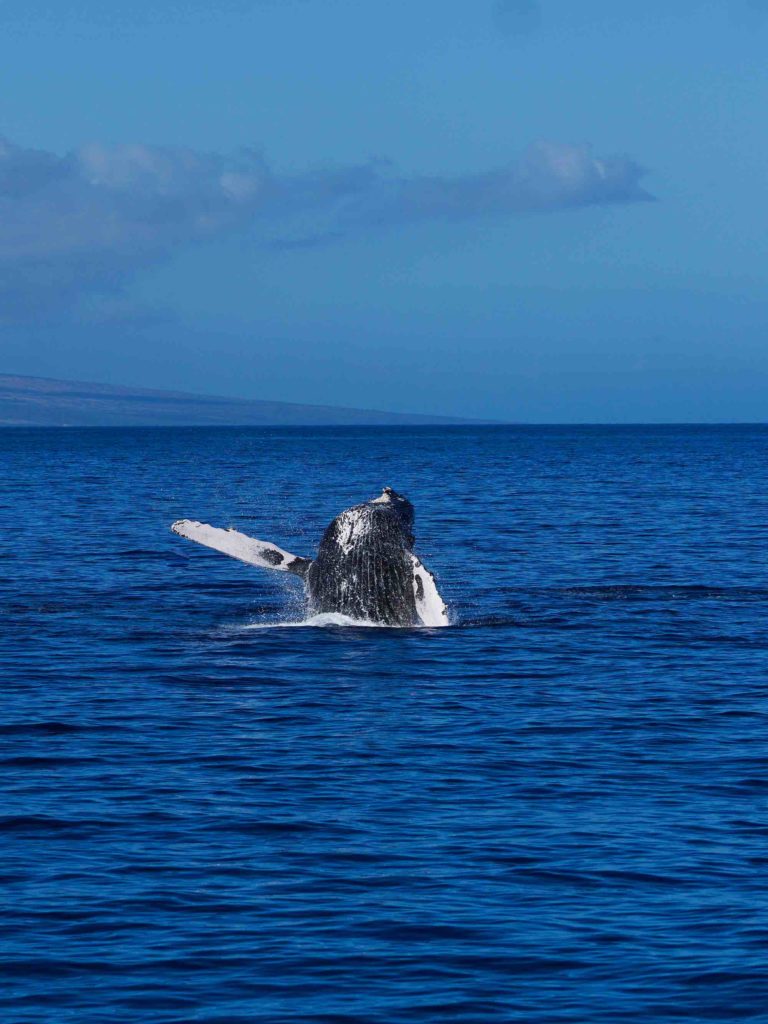
These massive creatures especially love the protected Maui Nui Basin between West Maui and neighboring Lanai.
Researchers estimate around 10,000-12,000 humpback whales visit Hawaiian waters each winter, and Maui sees the highest concentration.
I’ve seen whales from Lahaina and Kaanapali beaches just while grabbing lunch, but my most memorable sighting was when we took the ferry to Lanai.
We saw SO many whales breaching right from the boat!
Another time, I flew on Mokulele Airlines from Molokai to Maui and spotted tons of whales from the air, which was absolutely amazing.
Most people book whale watching tours leaving from West Maui. February is typically peak season, but you can spot whales throughout the winter months.
Book tours through Viator or Hawaii Tours for guaranteed sightings.
Want to learn more about planning your perfect Maui vacation? Listen to my podcast episode How to Plan a Trip to Maui on Hawaii Travel Made Easy.
Spinner Dolphins Year-Round
Can’t make it during whale season? Don’t worry! You can see Spinner Dolphins around Maui all year long.
Your best chance is booking a Molokini Crater snorkel tour or spending time at Makena Landing south of Wailea.
Just remember that Spinner Dolphins are protected under the Marine Mammal Protection Act and spend their days resting in shallow waters before feeding at night.
It’s actually illegal to swim with or approach within 50 yards of spinner dolphins in Hawaii.
When they’re resting during the day, disturbing them can disrupt their sleep patterns and harm their health.
Those famous spins and acrobatic jumps usually happen in late afternoon when they’re becoming active, not while they’re sleeping.
Watch from a respectful distance and you’ll still have an amazing experience seeing these beautiful creatures!
Book Molokini snorkel trips through Get Your Guide for the best rates and tour options.
The World’s Largest Dormant Volcano
One of my family’s absolute favorite Maui experiences is watching sunrise from Haleakala.
This dormant volcano is the world’s largest, rising over 10,000 feet above sea level. You can see the peak from almost every part of Maui.
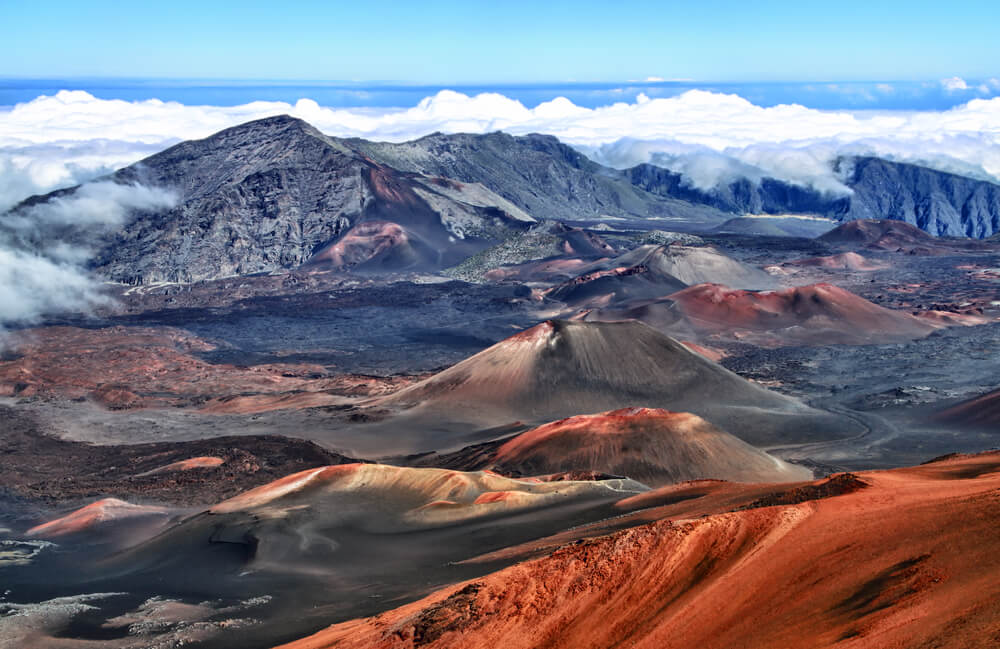
Haleakala means “House of the Sun” in Hawaiian, which connects back to that legend about the demigod Maui lassoing the sun to slow its path across the sky.
The summit offers incredible hiking, otherworldly lava fields, and much cooler temperatures than the beaches (bring layers because it can get cold, even with occasional snowfall!).
You can hike partway into the volcanic crater for a truly unique experience. Haleakala is also home to the prestigious Haleakala High Altitude Observatory, though it’s not open to the public.
Important planning note: To watch sunrise from Haleakala summit, you need advance reservations.
The park requires reservations for any vehicle entering between 3am-7am.
You can book up to 60 days in advance through Recreation.gov for $1 per vehicle (plus the park entrance fee). These reservations sell out quickly, so book as soon as you know your dates.
My Maui Travel Guide has detailed info on sunrise timing, what to wear, and how to plan your Haleakala visit.
Beaches with Every Color of Sand
Maui’s beaches aren’t all the same! The sand color comes from pulverized lava rock that’s made its way from the mountains to the coast, and the mineral content determines the color.
Black Sand Beach at Waianapanapa State Park near Hana is probably the most famous.
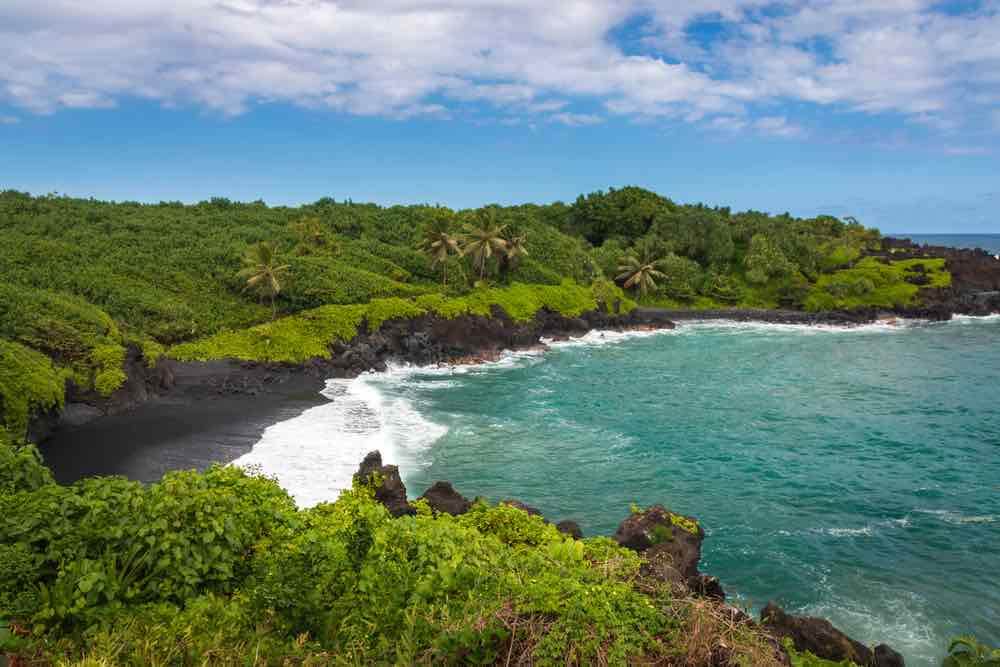
The striking black sand is ground-up volcanic rock, and it’s absolutely stunning against the blue ocean. Note that you need advance reservations to visit this beach.
Just down the coast is Kaihalulu Beach with its red sand. The high iron content in the volcanic material creates this gorgeous red-orange color. It’s a must-see, though the trail can be a bit challenging.
For classic white sand, head to Napili Bay Beach where oceanic materials like crushed shells and coral create the beautiful pale sand.
Or visit Kaanapali in West Maui and Wailea in South Maui for those postcard-perfect golden sand beaches.
More Parks Than You Can Explore
Maui has 94 county parks with playgrounds, picnic areas, walking paths, and community centers.
Plus 10 state parks across nearly every region. And one national park: Haleakala, which is actually the only volcanic park in the entire United States National Parks system.
Here’s something important that surprises many visitors: all Maui beach parks and beach fronts are public and free. None are private.
You never have to pay to access a beach in Hawaii.
You might pay for parking or camping fees at some parks, but the beaches themselves are always open to everyone.
This is perfect for families on a budget. We often pack lunch and spend the day at a beach park rather than paying for expensive resort access.
My free email course on how to save money in Hawaii shares tons of tips like this for cutting costs without missing out on amazing experiences.
Amazing Farmers Markets Everywhere
Maui has over a dozen established farmers markets ranging from small weekend community gatherings to huge flea market-style events.
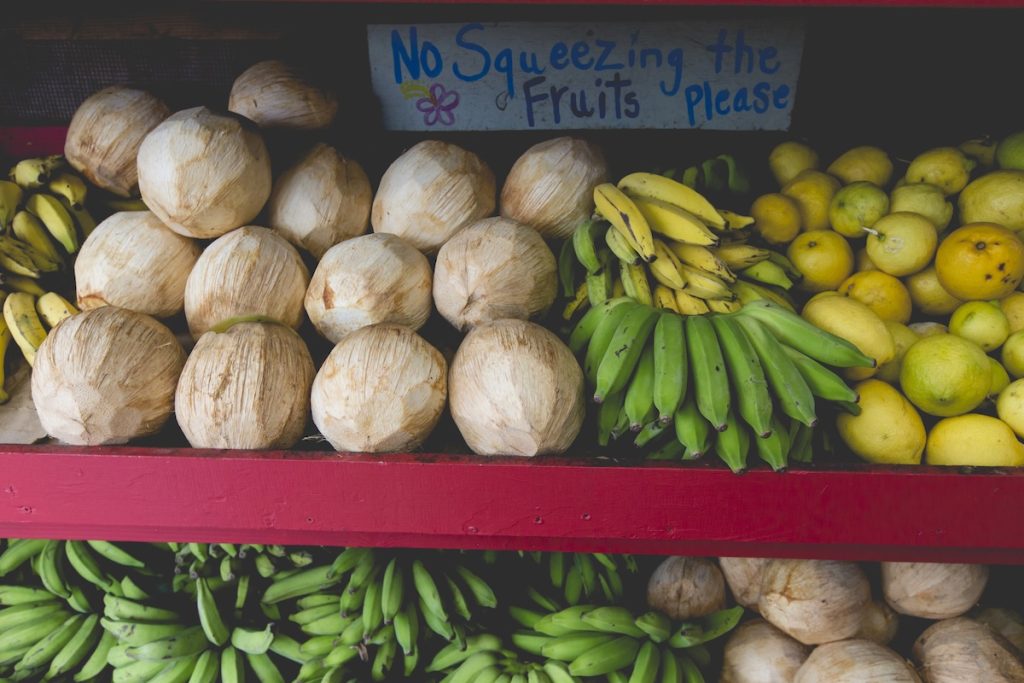
They really embody the Aloha Spirit and give you a chance to support local farmers, bakers, artists, and small businesses.
You’ll find fresh produce, local honey, homemade jams, unique crafts, and food you won’t find anywhere else. Many markets have live music, kids’ activities, and that authentic local vibe you just can’t get at tourist shops.
Some markets are open daily, others only on weekends. It’s a fantastic way to experience the less touristy side of Maui and pick up some truly special souvenirs.
Check out my post on the best Maui farmers markets for schedules and what to look for at each one.
Bonus Fact: Hawaii Banned Billboards
Here’s something you might not notice until someone points it out: Hawaii has no billboards.
That’s right, Hawaii is one of only four states (along with Vermont, Maine, and Alaska) that banned billboards to preserve the natural beauty.
So when you’re driving around Maui, you get uninterrupted views of mountains, ocean, and rainforests.
It makes the whole island feel more peaceful and beautiful. You won’t see any giant ads blocking those sunset views!

Ready to Experience Maui?
These facts barely scratch the surface of what makes Maui so special. Every visit teaches me something new about the island’s culture, history, and natural wonders.
Whether you’re planning your first Maui trip or your tenth, taking time to learn about the island deepens your connection to the place.
Your family will get so much more out of the experience when you understand the stories behind the landscapes.
Need help planning your perfect Maui vacation? Grab my comprehensive Maui Travel Guide for Families with daily itineraries, restaurant recommendations, and all my insider tips from 40+ trips to Hawaii.
Or check out these helpful resources:
- Best things to do in Paia
- Amazing Road to Hana tours worth booking
- How many days in Maui do you need
Happy planning, and I can’t wait for you to experience the magic of Maui!
Save on Your Maui Trip:
Find hotels and vacation rentals on Expedia
Rent a car through Discount Hawaii Car Rental for the best rates
Capture professional family photos with Flytographer (save $20 with my link!)
 | About the author: Marcie Cheung is a Hawaii travel consultant for families who has visited Hawaii more than 40 times. She is the founder of Hawaii Travel with Kids and host of the Hawaii Travel Made Easy podcast. She offers one-on-one Hawaii trip planning consultations and itinerary reviews for families, couples, and honeymooners. |