Families can be respectful visitors in Hawaii by shopping at resident-owned businesses, tipping, staying patient when things run slow, keeping their distance from sea turtles and monk seals, and leaving the sand, rocks, and shells where they found them.
You don’t have to stop being a tourist to do any of it. Touristy isn’t a bad word.
This post about how to be a good tourist in Hawaii was written by Hawaii travel expert Marcie Cheung and contains affiliate links which means if you purchase something from one of my affiliate links, I may earn a small commission that goes back into maintaining this blog.
I’ve been dancing hula for over 20 years, and I wrote my honors thesis at Washington State University on how hula changed from ancient times to modern day, including what tourism did to it.
These days I’m a Hawaii travel consultant for families and host of the Hawaii Travel Made Easy podcast, and my two boys have been coming to Hawaii with me since they were babies.
I’m not a Hawaii resident. I like to call myself a professional tourist. I don’t speak for the people who live in Hawaii. I try to speak for and to other tourists.
So this post is the list of rules my own family follows, with my reason for each one.
This episode adds something I only touch on here, which is why I’ve gotten more careful about the places I share with a big audience.
Is “touristy” a bad thing in Hawaii?
No. Just about anything you do in Hawaii is going to be touristy, because you are by definition a tourist visiting a place where you don’t live.
That’s what I tell clients when they say they don’t want to do anything touristy. Sometimes they say they just want to do what the people who live there do. So I gently explain that a lot of residents have multiple jobs. They spend their days working and taking care of home and family stuff, the same as my clients would be doing at home. They aren’t at Instagrammable cafes, or on a snorkeling boat tour, or hanging at a resort pool.
I personally LOVE luaus. Yes, they’re touristy. But I’m a tourist, and I love experiencing Polynesian culture when and where I can. If you’re on the fence about one, here’s my take on whether a luau is worth it with kids.
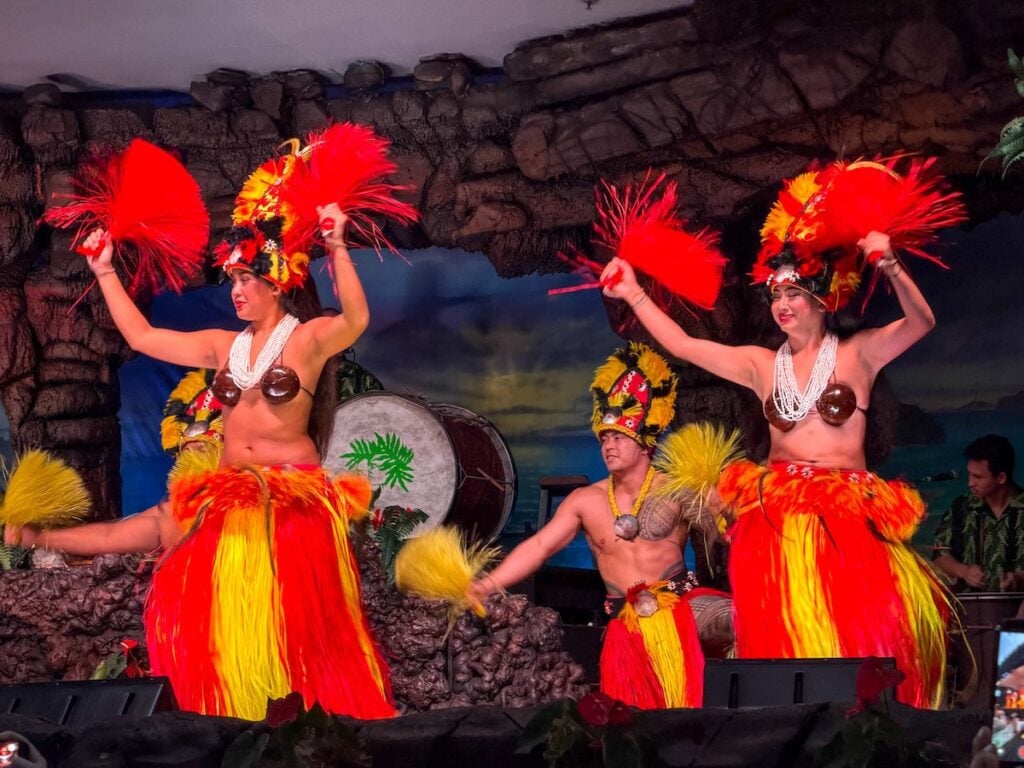
My thesis covered how hula got to this point. The missionaries tried to squash Hawaiian culture, and thankfully it survived. Then the tourism industry shifted hula from a sacred practice to primarily a source of entertainment.
I wrote about Elvis, too. He came to Hawaii and made Blue Hawaii (1961) and Paradise, Hawaiian Style (1966). Both movies featured hula and showcased it to American audiences. They made people want to travel to Hawaii and watch “exotic” hula dancing.
Over the past couple of decades, I think the people and organizations running luaus have done a good job of portraying Polynesian cultures in a respectful way. They’re trying to educate tourists instead of only entertaining them.
So I won’t tell you to avoid the tourist stuff. I also won’t promise you hidden gems, because social media ended those.
What are the rules for being a good tourist in Hawaii?
These are the 11 rules my family follows in Hawaii. Each one is a single sentence, and my reason is next to it.
| The rule | Why I follow it |
|---|---|
| Call yourself a tourist and enjoy the touristy stuff. | You’re visiting a place where you don’t live, so nearly everything you do there is touristy anyway. |
| Shop and eat at resident-owned businesses. | The money you spend goes to people who live in Hawaii. |
| Tip, and let your kids hand over the cash. | I want my boys to get used to tipping when people do things for them. |
| Stay patient when a restaurant is slow or a food truck is closed. | Small businesses are dealing with higher food costs and not enough staff. |
| Stay at least 10 feet from sea turtles and 50 feet from monk seals. | They’re protected animals, and those are NOAA’s viewing distances as of October 2026. |
| Leave the sand, rocks, dirt, and shells in Hawaii. | Everything in Hawaii needs to stay in Hawaii, and state law bans taking sand, rocks, and dead coral from the shoreline. |
| Stay off private property and behind every no-trespassing sign. | Trespassing is disrespectful to the people who live there and own the land. |
| Ask permission and give thanks before you walk into a heiau or other sacred place. | It’s the tradition, and it was good for my son to watch a guide do it. |
| Don’t geotag roadside pull-offs, places with limited parking, or residential areas. | People in Hawaii should get to have some (mostly) tourist-free areas. |
| Watch the dancers at a luau or hula show instead of talking through it. | Dancers get their energy from the audience. |
| Pack mineral sunscreen. | Hawaii banned the sale of sunscreens with oxybenzone and octinoxate in 2021, and Maui County doesn’t allow non-mineral sunscreen without a prescription. |
How do I find resident-owned businesses in Hawaii?
If the owner is there in person, it’s probably resident-owned.
I also stalk businesses on Instagram before my trips to get the vibe. Then I check their websites to see if there’s an About Us section. If a business is resident-owned, it’s usually pretty clear from both.
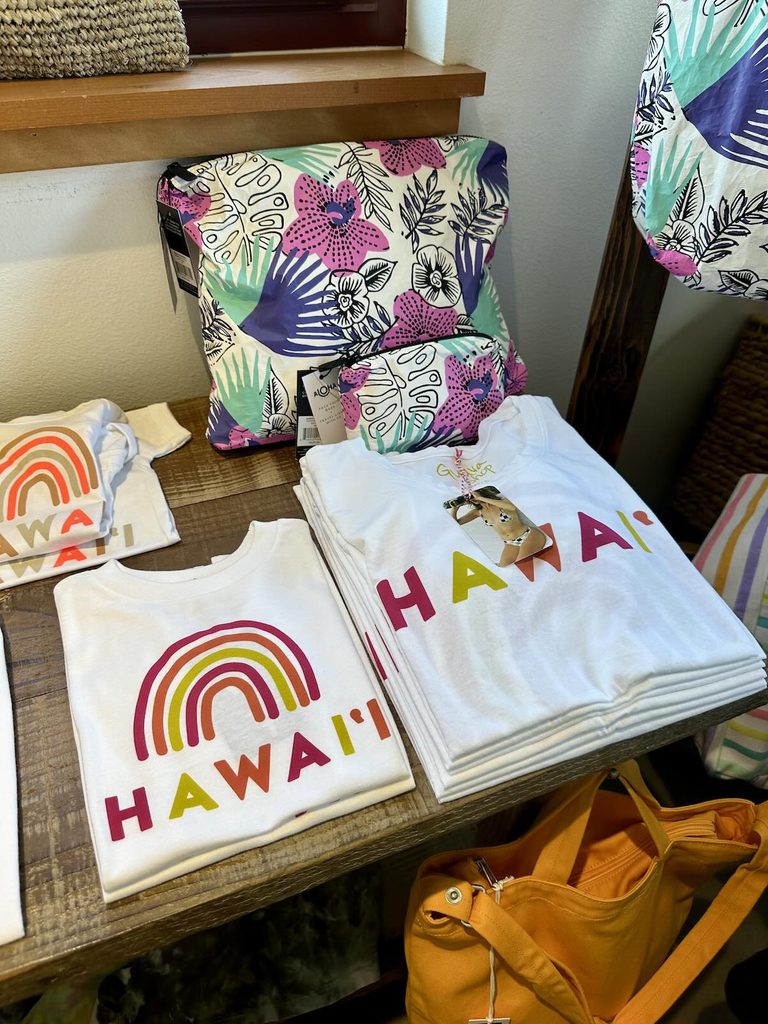
These are the ones I go back to.
| Island | Where I shop | What I get |
|---|---|---|
| Oahu | Guava Shop in Haleʻiwa | The cutest tees for me and my boys. I always stop here. |
| Oahu | Kahuku Farms in Kahuku | Food items to bring home to Seattle |
| Maui | Holoholo Surf in Makawao | Cute Hawaiian dresses |
| Maui | Maui Kuʻia Estate Chocolate in Lahaina | Chocolate. I love it. Their website says they donate 100% of their net profits to Maui nonprofits. |
| Kauai | Warehouse 3540 in Lāwaʻi | Lots of small businesses are housed there, so I can shop several in one stop. |
| Big Island | Two Ladies Kitchen in Hilo | Mochi. I always grab some. |
On a Kauai trip right after Covid, we mostly drove around and shopped at resident-owned places, and Warehouse 3540 was one of them.
For gift ideas, I have a list of the best Hawaii souvenirs.
How much should I tip in Hawaii?
I don’t have a set number. As of October 2026, my family usually tips about $5 a day for housekeeping, $5 for valet, and about $20 per person on a boat tour.
Housekeeping gets more if we make a mess. The boat tour tip depends on the cost of the tour.
At a luau, I tip $5 to $10 at the bar if I’m going up to get drinks or having them delivered to my table. Usually I just have the free mai tai when I walk in and don’t really drink anything else, so I don’t tip.
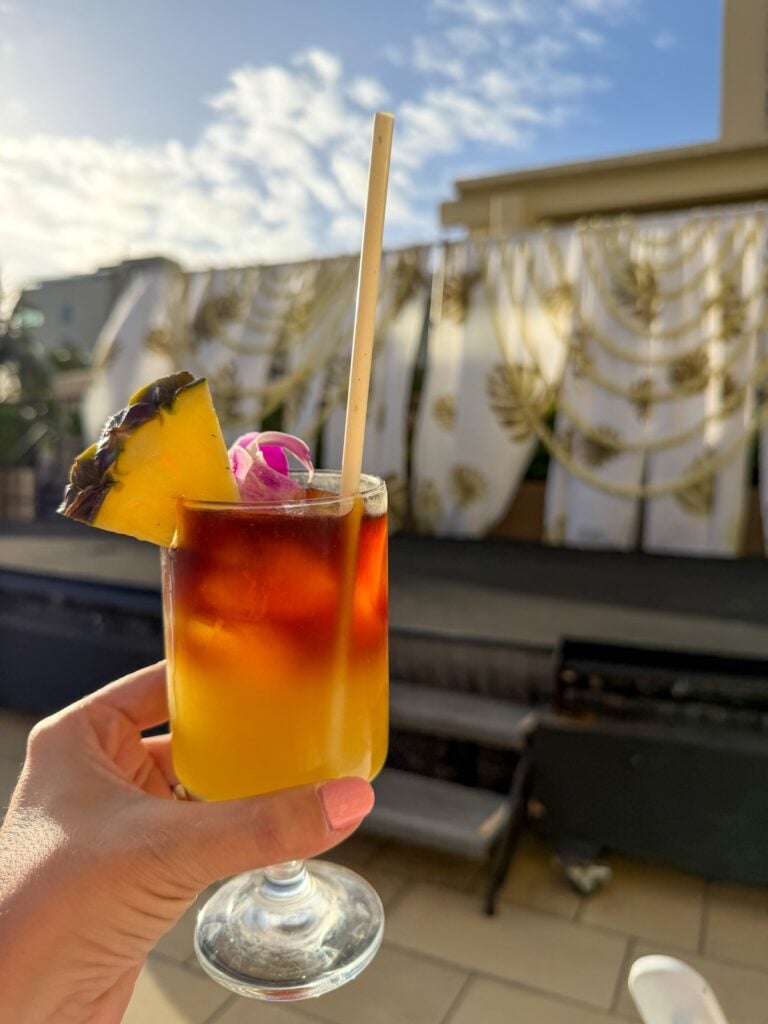
I’ve messed this up too. I once forgot to tip housekeeping after a week at the Hilton Hawaiian Village, and I felt guilty about it for months.
If my boys are with me, they are the ones handing the cash to the person. It’s the same with our luggage on the airport shuttles. I want them to get used to tipping when people do things for them. Now they even know to ask me for cash so they can tip someone.
Tips add up over a week, so count them when you’re working out what your trip will cost. My free Hawaii family budget planner is a good place to start, and my tipping in Hawaii post covers more situations.
What does being patient look like on a Hawaii trip?
Being patient means not getting loud about the wait when a restaurant is slow or a place is closed.
This happened to us at a restaurant in Kihei in February 2026, when I was on Maui with my oldest son. We were both hungry, and the service was super slow. He started complaining, so I pointed out the signs around the restaurant. They mentioned the increase in food costs and said they were short-staffed.
We chatted about how hard it is for a small business to keep up with demand when food costs keep going up and they can’t pay for enough staff.
We’ve also driven to a food truck only to find it closed because of staffing shortages.
I see visitors get loud when they complain about the wait at some places. I’m ashamed of them, being a fellow tourist.
How close can my kids get to sea turtles and monk seals in Hawaii?
Stay at least 10 feet from sea turtles and at least 50 feet from Hawaiian monk seals, on land and in the water. Those are NOAA’s viewing guidelines as of October 2026.
| Animal | Stay this far away | Guideline or law |
|---|---|---|
| Sea turtles | 10 feet | NOAA guideline |
| Hawaiian monk seals | 50 feet | NOAA guideline |
| Monk seal mothers with pups | 150 feet | NOAA guideline |
| Spinner dolphins | 50 yards | Federal law |
| Humpback whales | 100 yards | Federal law |
The turtle and monk seal distances are guidelines, but the animals are protected by law. In May 2026, a visitor was accused of throwing a rock at a monk seal off Lahaina. Hawaii’s Department of Land and Natural Resources put out a reminder that it’s illegal to disturb, harass, feed, or otherwise harm a monk seal, and that violations can mean fines or criminal penalties.
NOAA’s rule for all of them is to never touch, chase, or feed.
I’ve been to Hawaii more than 40 times, and we see turtles or monk seals on almost every trip. Anytime we do, I tell my kids to stay away. It’s been drilled into them.
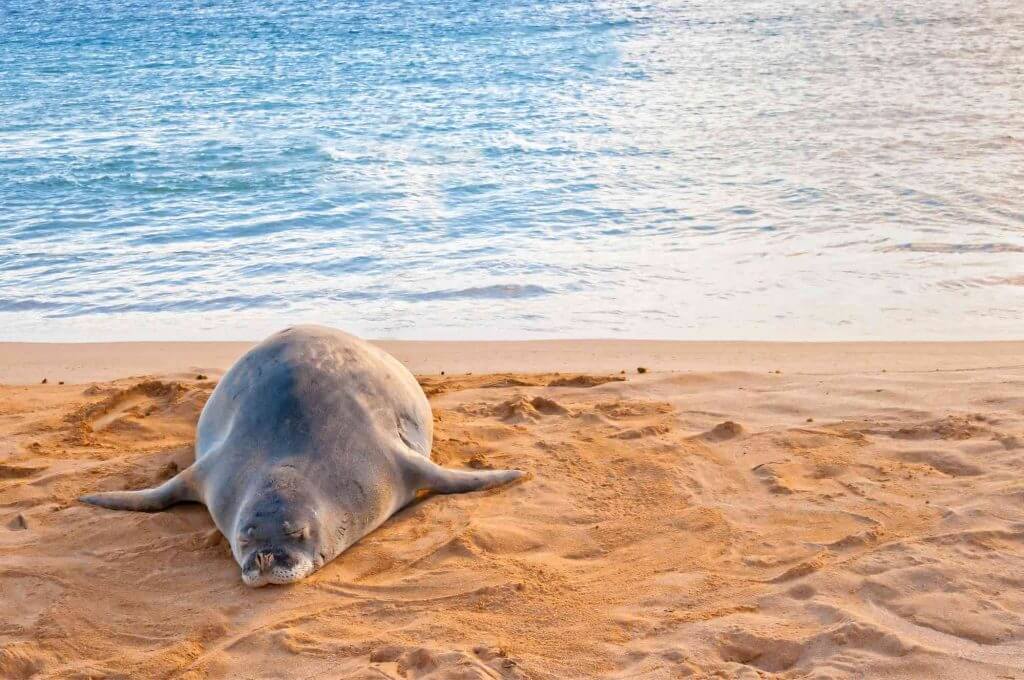
When my oldest was 5, we saw a monk seal at Poipu Beach on Kauai. There were cones set up, and a volunteer was telling people to stay back. We did walk closer from our spot on the beach, but we stayed well behind the cones. I told him the volunteer was protecting the monk seal, and that we could watch from a safe distance.
I’ve also watched a tourist hold their toddler super close to a turtle, like they were about to set the kid on it. A resident started yelling at them, and rightfully so.
If you see a seal or turtle that looks sick, injured, or stranded, call the NOAA Marine Wildlife Hotline at (888) 256-9840. For the rest of what I check before my kids get in the water, see Hawaii Ocean Safety for Kids.
Can we take shells, sand, or lava rocks home from Hawaii?
No. I tell my kids we can’t bring home sand, dirt, rocks, or shells. Everything in Hawaii needs to stay in Hawaii.
Part of that is the law. As of October 2026, Hawaii Revised Statutes 171-58.5 bans taking sand, dead coral, coral rubble, rocks, and soil from the shoreline. The sand that comes home stuck to your towels and beach toys doesn’t count.
That law doesn’t mention shells. Leaving those is my family’s rule.
My boys do understand it. Sometimes we take photos of cool shells. They had a hard time at first, because some shops sell shells. I think a lot of those aren’t actually from Hawaii.
If you want more of the mistakes I see visitors make, I have a post on 15 things not to do in Hawaii.
How do we visit a heiau or other sacred place with kids?
Ask permission before you go in, give thanks, stay off the rock walls and platforms, and don’t move rocks or leave anything behind.
You’re supposed to ask permission before visiting a heiau (a Hawaiian temple) or another sacred place. Hawaii State Parks’ guide to sacred places says to silently ask permission of the kūpuna (ancestors) and give thanks for the privilege of visiting.
The same guide says not to walk on or over the structures and not to move, add, or remove stones. If you aren’t sure about leaving an offering, leave nothing. That includes rocks wrapped in tī leaves, coins, and crystals.
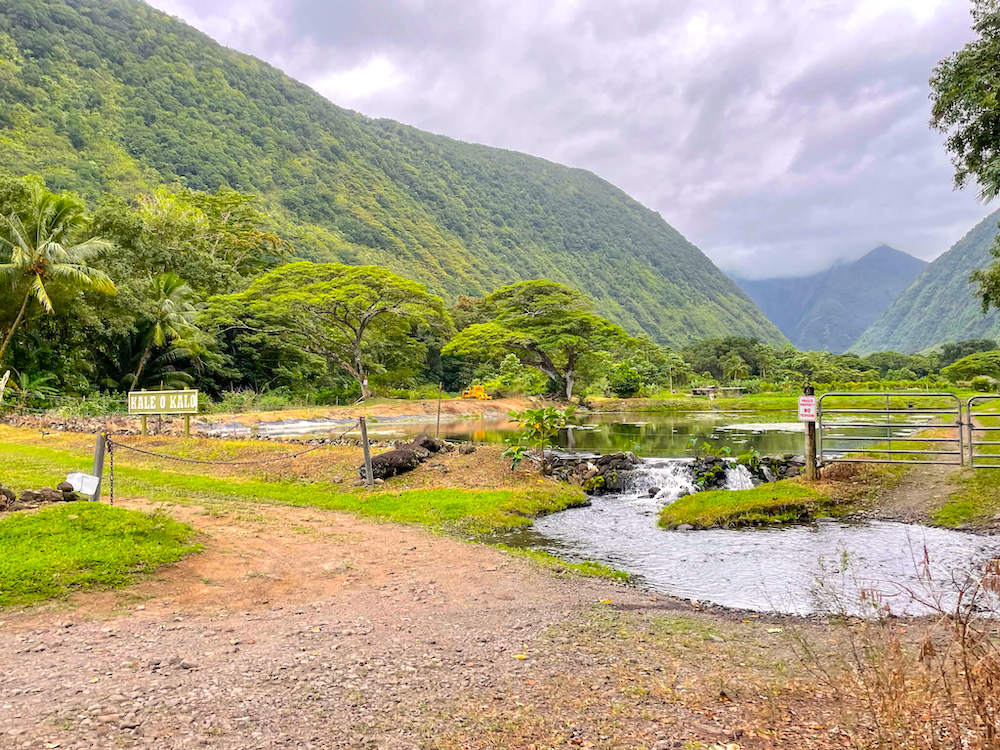
We’ve been fortunate enough to be with tour guides who asked permission. In November 2021, my youngest and I took the Waipiʻo Valley shuttle tour on the Big Island. He was 5. Our guide, Kaleo, did a Hawaiian chant asking permission to enter the valley before we drove down. It was good for my son to see that tradition.
I don’t do anything formal with my kids. I usually say something like, “I’m so thankful we are able to be at this place.”
How should my kids act at a luau or hula show?
They should watch the dancers, keep their voices down, and wait to hear whether photos and video are allowed.
I get really annoyed when the audience is talking loudly or not watching. As a dancer, it was always disheartening to look out and see that. Dancers get their energy from the audience.
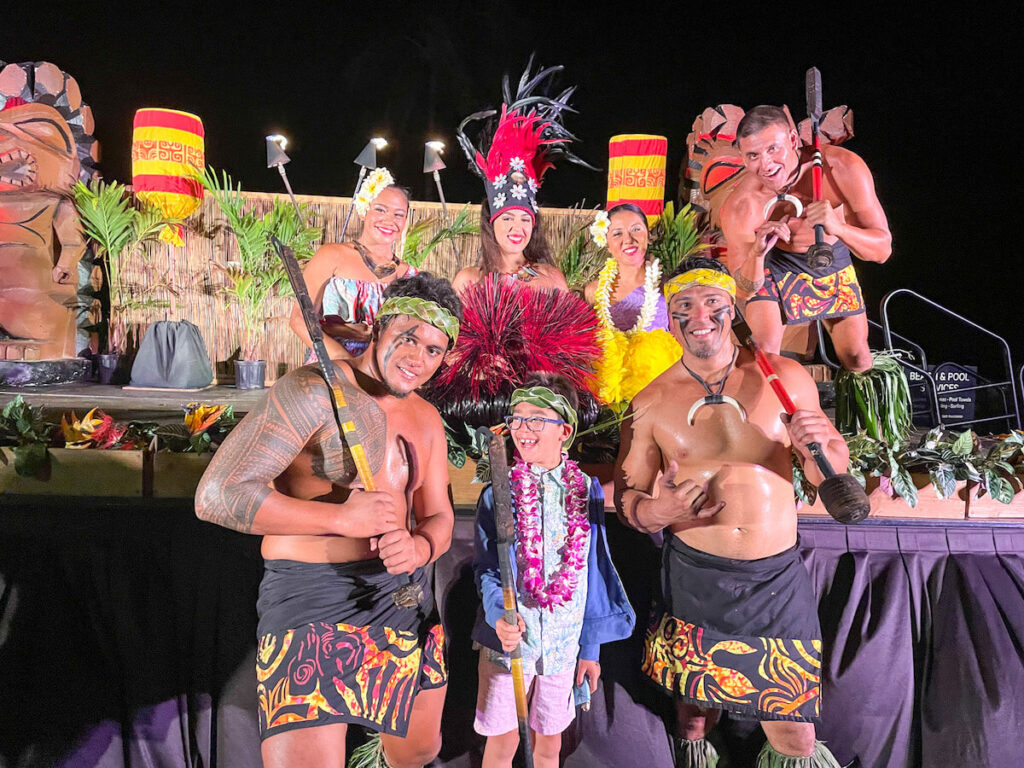
My kids have been going to luaus since they were toddlers, and they’re all about the hands-on activities. Before the show, I tell them what’s coming. It starts with ancient hula, then modern hula, and sometimes there’s Tahitian or fire dancing after that. If it’s your first one, read what to expect at a luau.
At a free show put on by a hula hālau (hula school), donate if they ask. Most of them do. I cover that in Where to Find Free Hula Shows in Hawaii.
I also have a list of children’s books about Hawaii you can read together before the trip.
What won’t I promote on this site?
I won’t promote hikes on private property, and I won’t geotag places that can’t handle a crowd.
A lot of hikes in Hawaii actually are on private property. Some guides will tell you to disregard the no-trespassing signs and go anyway. I’ve never promoted the Stairway to Heaven hike on Oahu, even though a lot of other influencers have.
If a hike or photo spot you saw online is on private property or past a no-trespassing sign, skip it.
I also won’t geotag places that are pull-offs on the road, places with limited parking, or anywhere in a residential area. I don’t want to be part of the problem by encouraging tourists to go there. Let people in Hawaii have some (mostly) tourist-free areas.
And I’ve turned down brands that have a rough history with residents. Working with them makes me feel icky.
FAQ
How can families be respectful visitors in Hawaii?
Families can be respectful visitors in Hawaii by shopping at resident-owned businesses, tipping, being patient with slow service, staying at least 10 feet from sea turtles and 50 feet from monk seals, and leaving sand, rocks, and shells behind. It also means staying off private property and asking permission before entering a heiau or other sacred place. You can do all of that and still enjoy the touristy stuff.
Is it bad to do touristy things in Hawaii?
No. If you’re visiting Hawaii, you’re a tourist, so almost anything you do there is touristy. A lot of residents have multiple jobs and spend their days working and taking care of their families. They aren’t on snorkeling tours or hanging at a resort pool.
How far do you have to stay from sea turtles in Hawaii?
NOAA’s guideline is at least 10 feet from sea turtles, on land and in the water, as of October 2026. For Hawaiian monk seals it’s at least 50 feet, and 150 feet for a mother with a pup. Never touch, chase, or feed them.
Is it illegal to take sand or lava rocks from Hawaii?
Yes, from the shoreline. As of October 2026, Hawaii Revised Statutes 171-58.5 bans taking sand, dead coral, coral rubble, rocks, and soil from the shoreline. The sand stuck to your towels and toys doesn’t count. My family leaves the shells too.
Do you tip housekeeping in Hawaii?
Yes. My family usually leaves about $5 a day, and more if we make a mess. I have my boys hand over tips whenever they’re with me, so they get used to it.
Do tourists pay a Green Fee in Hawaii?
Yes. As of January 1, 2026, Hawaii added a Green Fee to its hotel room tax, which brought the state’s rate to 11%. With county and other taxes, you’ll pay about 19% on lodging in 2026. It’s already in your hotel, vacation rental, or cruise bill, and the law splits the money between protecting natural resources, preparing for climate disasters, and managing the impact of tourism.

Planning a Hawaii trip with kids?
You’re going to be a tourist in Hawaii, and so am I, every time I go. I get into a lot more of my opinions on the Hawaii Travel Made Easy podcast, including the ones that surprise my clients.
And if you’d rather talk through your own trip with me, a Hawaii travel consultation is a one-on-one video call, $149 for 60 minutes or $199 for 90 minutes. I’m not a travel agent, so you book everything yourself. I help you figure out what fits your family.
 | About the author: Marcie Cheung is a Hawaii travel consultant for families who has visited Hawaii more than 40 times. She is the founder of Hawaii Travel with Kids and host of the Hawaii Travel Made Easy podcast. She offers one-on-one Hawaii trip planning consultations and itinerary reviews for families, couples, and honeymooners. |