Are you thinking about going to Hawaii this year? Find out some surprising reasons why your kids might not be on board!
This post about why your kids might hate Hawaii was written by Hawaii travel expert Marcie Cheung and may contain affiliate links, which means if you click on the link and purchase the item, I will receive an affiliate commission at no extra cost to you. All opinions remain my own.
Okay, real talk time. Nobody wants to hear this, but your kids might actually hate Hawaii.
I know, I know. It sounds impossible. We’re talking about paradise here – warm beaches, tropical flowers, mai tais for you and Dole Whip for them. How could anyone hate that?
But after 40+ visits to these islands and 20 years dancing hula, I’ve learned something as a Hawaii travel expert: family Hawaii vacations can go sideways fast.
And it’s usually not the kids’ fault.
Picture this: My 7-year-old planted himself on the floor at baggage claim in Honolulu and refused to move.
Not refused like “please don’t make me,” I mean full-on limp body, wouldn’t budge.
He’d been on a plane for six hours from Seattle, hadn’t slept, was overstimulated from airport chaos, and he was DONE.
People were staring. I wanted to melt into the floor.
Or there was the time we were at our hotel pool in Wailea (on Maui, beautiful resort, cost a fortune).
My son looked at me and said “I’m too hot, can we go back to the room?”
The POOL. He was too hot at the pool. Not the beach where you’re baking in the sand, the actual pool where he could cool off anytime.
But the water in Hawaii is warm, the air is humid, and for a kid from the Pacific Northwest who’s used to cold everything, it was too much.
And my personal favorite was when I’d planned this amazing day at the Polynesian Cultural Center.
We drove an hour from Waikiki, I’d booked tickets weeks in advance, and halfway through the day my kids asked if we could go back to the hotel so they could play video games online with their friends.
Not “can we leave in an hour,” but like right then.
I’d spent $300 on tickets.
This stuff happens. More than you’d think.
So Why Does This Happen?
The flight destroys them before you even start. We’re in Seattle, so it’s “only” five and a half hours to Honolulu. But that’s still brutal for kids.
They can’t sleep on planes like adults can. They get bored after 20 minutes of whatever activity you brought. Their ears hurt. They’re hungry but don’t want airplane food.
By the time you land, collect luggage, get the rental car, and drive to your hotel, it’s been like eight hours of travel. Adults are tired. Kids are wrecked.
If you’re coming from the East Coast? Add connections and you’re looking at 12+ hours.
I did a whole podcast episode about this because it’s such a common disaster: Surviving the Flight to Hawaii with Kids.
Then there’s the overscheduling problem. This was my biggest mistake on our first family trip.
I had spreadsheets. I’d researched every beach, every hike, every luau.
We were going to snorkel at Hanauma Bay, hike Diamond Head, visit Pearl Harbor, do a luau, drive to the North Shore, see the Dole Plantation, and about 47 other things.
All in five days.
You know what happened by day three? Total mutiny.
My kids were exhausted. They didn’t want to go anywhere. They wanted to sleep in, go to the pool, maybe walk to the beach if it wasn’t too far, and that was it.
But I’d already paid for half this stuff, so we pushed through. Which made everyone miserable.
The photos from that trip are hilarious now because you can see the defeat in everyone’s eyes.
If you’re already feeling stressed about planning, I do personal Hawaii travel consultations where I help families build realistic itineraries.
Because trust me, you need someone who’s been there to tell you “no, you can’t fit all that into one day.”
Food becomes this whole thing too. Hawaiian food is different. It’s a mix of Japanese, Portuguese, Chinese, Filipino, and native Hawaiian influences, which makes it amazing but also weird for picky eaters.
I’ve had kids beg me to order Uber Eats to the hotel room instead of going to dinner. They wanted room service mac and cheese.
One night we gave in because picking that battle felt pointless when everyone was already tired.
And the comfort thing is real but hard to explain. Kids can’t always tell you what’s wrong. They just know something feels bad.
Maybe it’s sunburn (Hawaii sun is way stronger than mainland sun). Maybe they’re dehydrated but don’t realize it.
Maybe they’re just hot in a way they’ve never experienced before because Pacific Northwest kids aren’t used to 85-degree weather with 70% humidity.
The “too hot at the pool” complaint is hilarious now but it was real in the moment.
Coming from Washington where pools are freezing and you only get in to prove you’re tough, a warm Hawaii pool was just… more warm.
Everything was warm. The air was warm. The water was warm. The ground was warm. There was no escape from warm.
How to Actually Make This Work
Okay, so how do you fix all this? Here’s what I’ve learned after dragging my family to Hawaii more times than anyone should admit.
The flight needs serious prep work. I pack a whole separate bag just for the plane. New stuff they haven’t seen yet works way better than bringing their regular toys.
Target dollar section is your friend here. Activity books, small Lego sets, sticker books, whatever.
Download movies and shows on a tablet before you leave (airplane WiFi is expensive and unreliable).
Pack way more snacks than seems reasonable – granola bars, crackers, gummy fruit, whatever they’ll actually eat.
And bring gum for takeoff and landing because the ear pressure thing is real and painful for kids.
Also everyone needs a change of clothes in the carry-on. Trust me on this. Spills happen, bathroom accidents happen with younger kids, airport food makes people sick sometimes.
Don’t be the family trying to get through 6+ hours in wet jeans.
I have a whole packing list for the flight that covers all of this in detail.
Rest days aren’t optional. This took me way too long to learn. If you’re in Hawaii for a week, you need at least two full days where the plan is “no plan.”
Sleep in. Order room service or go to the ABC Store and buy cereal and milk for the hotel room. Let kids play in the pool for hours. Walk to the nearest beach.
That’s it.
These unstructured days end up being the ones kids remember.
The morning my son caught his first wave body boarding at Poipu Beach on Kauai? That was a rest day.
We weren’t trying to get anywhere or do anything specific. We just walked to the beach and hung out for three hours.
Let them pick something. Before you book anything, sit down with your kids and ask what THEY want to do in Hawaii.
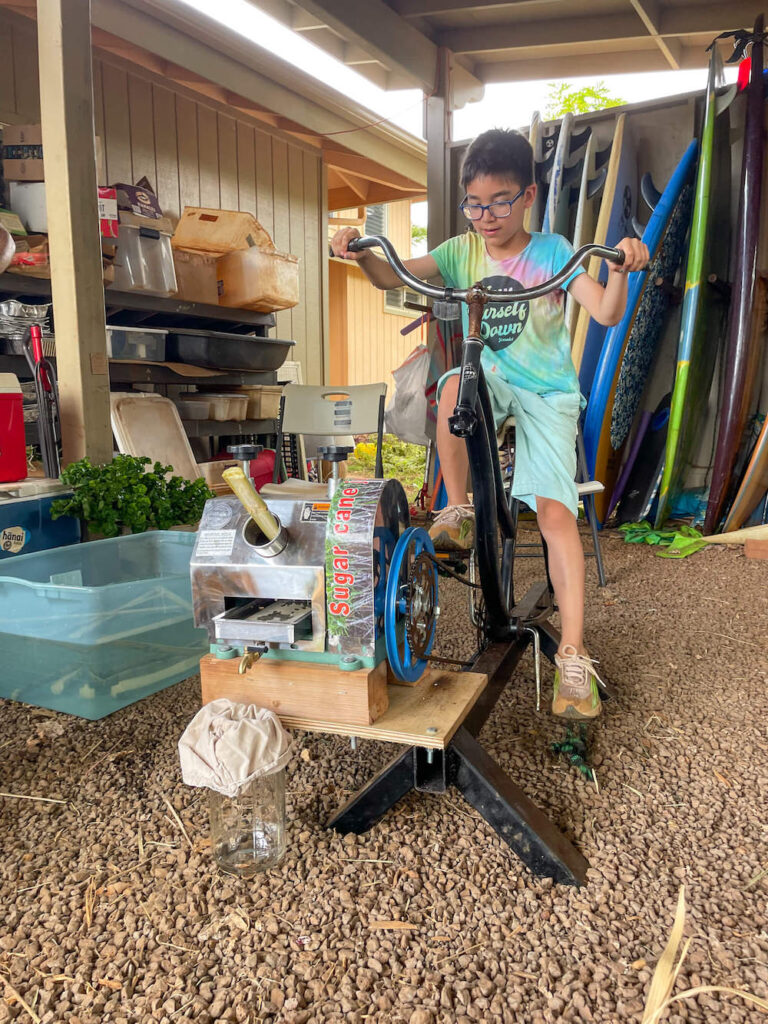
My kids always want to zipline, go to a luau, or swim with dolphins.
When they get ownership of at least one or two activities, they’re way more willing to go along with the boring adult stuff.
And honestly? Sometimes what they pick surprises you.
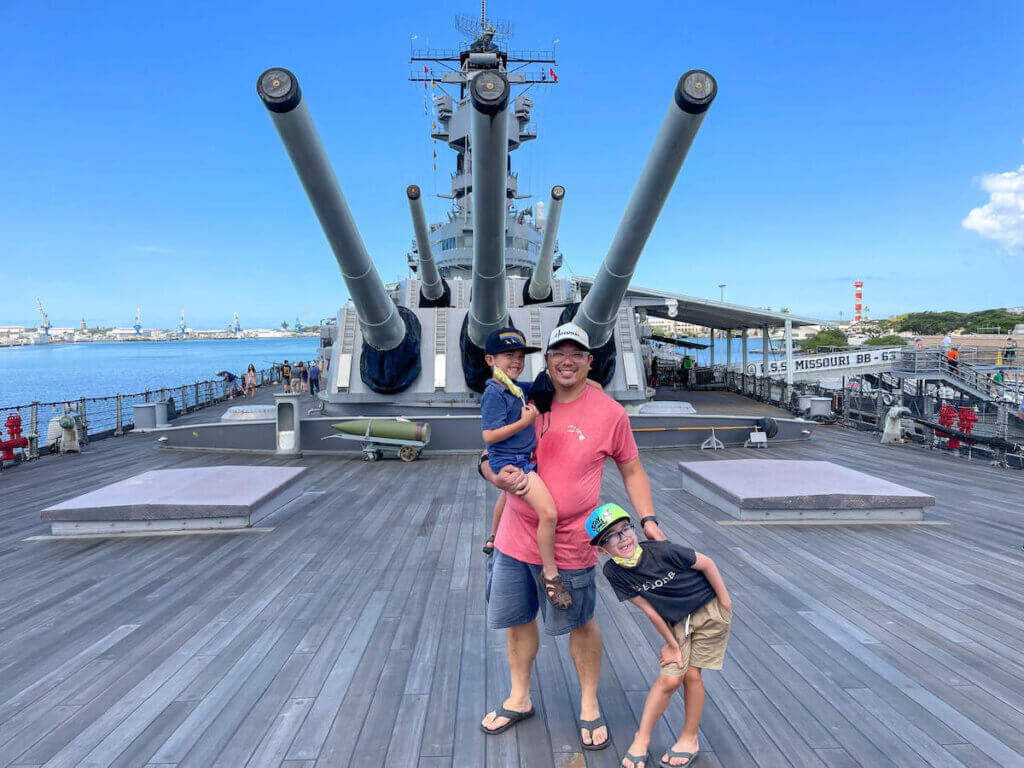
My younger son requested we visit the USS Missouri battleship at Pearl Harbor because he’d been reading about WWII.
I thought he’d be bored, but he loved it. Three hours exploring that ship and asking the docents questions.
Now let me tell you about activities that actually work for elementary age kids (5-12), because this matters more than you think.
The Toa Luau at Waimea Valley on Oahu’s North Shore is my favorite family luau.
It’s run by a Samoan family, usually under 200 guests (way smaller than places like Germaine’s), and your ticket includes admission to Waimea Valley where kids can swim under the waterfall before the 5pm luau starts.
They also have a 12:30pm show which is perfect for families who don’t want to drive back to Waikiki late at night. Tickets start around $135 for adults.
The food is served at your table (no buffet) and the fire knife dancing is legitimately cool. It’s about an hour drive from Waikiki but worth it.
On the Big Island, the Aloha Adventure Farms ATV tour in Holualoa is really hands-on.
Kids 16+ can drive their own ATVs while younger kids (as young as 3) ride as passengers in a guide-driven UTV.
You ride through a working Kona coffee farm and stop at different Polynesian villages where you do cultural activities – throw spears, try poi, learn about different island traditions.
My kids loved the drumming section where they got to play Tongan drums.
The Maui Pineapple Tour in upcountry Maui is surprisingly fun.
You ride through actual pineapple fields (it’s bumpy, bring sunscreen), taste fresh pineapple right off the plant, see how they’re grown and packaged, and everyone gets to take home an airport-ready pineapple.
Kids think it’s hilarious to carry a whole pineapple on the plane. Adults are like $95, kids 3-12 are around $65.
Want more activity ideas? I’ve written detailed guides for Oahu with kids, Maui with kids, Kauai with kids, and the Big Island with kids.
The specific beach and trail recommendations matter because not all beaches are good for kids.
Sun protection is non-negotiable and I’m going to sound like a broken record about this.
Hawaii sun is way stronger than mainland sun. We use reef-safe sunscreen (required by law in Hawaii now, can’t use the chemical stuff), reapply every 90 minutes, and everyone wears rash guards in the water.
Hats for everyone, even if they complain. Sunglasses for everyone. We take breaks in the shade or go inside to cool off when needed.
I have a full Hawaii packing list that covers all the gear we bring.
The Food Strategy
Look up restaurants before you go and screenshot several that have kid options.
We usually aim for places with rice, noodles, burgers, or chicken options because those are safe bets.
ABC Stores are everywhere in Waikiki and tourist areas – they sell cereal, milk, bread, peanut butter, fruit, basically everything you need to stock your hotel room with familiar foods.
I also try making Hawaiian recipes at home before our trips. Not because my kids will suddenly love poi (they won’t), but so stuff like macadamia nut pancakes or kalua pork isn’t completely foreign.
The more familiar things seem, the less resistance you get.
And sometimes you just have to cave.
If your kid wants chicken nuggets for the third night in a row, whatever. Vacation is not the time for food battles. Save your energy for bigger things.
Where You Stay Matters More Than You Think
Hotel location in Hawaii can make or break your trip. You want easy beach access – like walking distance, not “drive 20 minutes and find parking.”
Multiple pools help because kids get bored swimming in the same pool every day. A kitchenette or at least a mini fridge and microwave means you can store milk, cereal, leftovers, and snacks.
On-site restaurants with kids menus save you from having to find food at 7pm when everyone’s exhausted.
I use Expedia to book hotels because you can filter by all this stuff and they often have flight+hotel packages that save money.
The interface isn’t perfect but it’s better than checking every hotel website individually.
You’ll need a rental car for most Hawaii trips. Use Discount Hawaii Car Rental – they compare all the major companies and the rates are better than booking directly with Hertz or Budget.
Make sure you get a car big enough for everyone plus luggage plus all the beach gear you’re going to accumulate.
Photos Without the Fight
We book Flytographer for one 60-minute photo session during each Hawaii trip.
A local photographer meets you at a beach or other scenic spot, takes a ton of photos while you actually enjoy yourselves, and you get beautiful family photos without the stress of setting up tripods or making everyone pose 47 times.
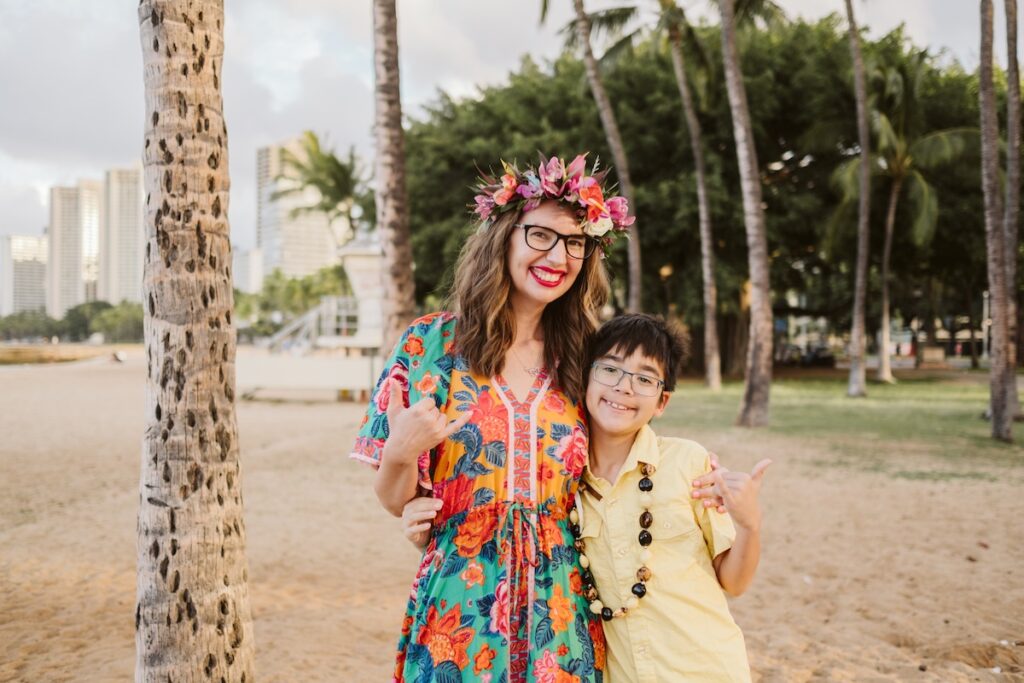
Use my link to save $20. It’s worth it just to have one set of photos where everyone looks happy and nobody’s crying.
The rest of the trip I take iPhone photos and don’t stress about it. Candid shots of kids playing in the waves or building sandcastles are better than forced smiles anyway.
My Worst Hawaii Planning Disaster
You want to know the trip where I really screwed everything up?
We flew into Honolulu on a morning flight from Seattle. Landed around 1pm local time.
By the time we got our rental car, drove 45 minutes to our hotel on the North Shore, and checked in, it was almost 3:30pm.
Everyone was tired from getting up at 4am Seattle time to catch our flight.
But I’d already bought tickets to Pearl Harbor for that afternoon because the timing “worked.”
We drove back to Honolulu (another 45 minutes), parked, went through security, and started the USS Arizona Memorial program.
Pearl Harbor is powerful and important and moving. It’s also quiet and requires respect and attention.
My jet-lagged, hungry, exhausted kids had none of those things to offer. They were cranky. They couldn’t sit still during the 23-minute documentary.
One of them kept asking when we could leave. We rushed through the memorial trying to keep them quiet and not disturb other visitors.
The whole thing was a disaster and nobody enjoyed it. We should have arrived, checked into our hotel, hit the pool, ordered pizza, and gone to bed early.
Then visited Pearl Harbor on day two or three after everyone had adjusted and rested.
But I was so focused on “maximizing our time” and “getting our money’s worth” that I ruined the experience for everyone.
That’s when I learned that Hawaii trips need breathing room. Arrival day should be light. Last day should be light. The middle can have adventures but also needs rest days built in.
If you’re overwhelmed trying to figure out pacing and what actually fits in a day, that’s exactly what my consultation calls are for. I’ve made all these mistakes so you don’t have to.
Cultural Stuff That Actually Works
The Polynesian Cultural Center is hit or miss depending on your kids. It’s huge (42 acres), it’s hands-on, and there’s a lot to do.
But it’s also expensive, far from Waikiki (hour drive), and can be overwhelming.
We had a good experience because my kids were really into trying the different activities – throwing spears in Fiji, husking coconuts in Samoa, learning hula in the Hawaii village.
But I’ve also heard from families whose kids got overstimulated and wanted to leave after an hour.
What works better for my family is smaller, more focused cultural experiences.
Farm tours where you learn about coffee or pineapple growing. Visiting a fish pond and learning about traditional Hawaiian aquaculture.
Watching a hula show at a smaller venue. The hands-on element matters way more than the educational lecture element.

A Planning Framework That’s Actually Realistic
Here’s roughly how I structure Hawaii trips now. This is for a 7-day trip but you can adjust:
Day 1 is arrival. Flight, car rental, check-in, pool, easy dinner (maybe even grab McDonald’s because who cares), early bedtime. No activities. No tours. Just get there and recover.
Day 2 is an easy morning activity (maybe walk to a beach, visit a farmers market) and then pool/beach afternoon. Dinner at a casual place. Everyone’s still adjusting to the time change and recovering from travel.
Day 3 is your first full adventure day. This is when you do the tour you’ve been excited about or the big activity you booked in advance. But only ONE thing. Not snorkeling plus a luau plus sunset at a specific beach. Just the one thing.
Day 4 maybe you do a morning at another beach or a short easy hike, then afternoon is free time at the hotel.
Day 5 is a full rest day. Sleep in, pool, beach near hotel, maybe drive to get shave ice. That’s the whole plan.
Day 6 is another adventure day if everyone’s feeling good. Or another chill day if people are tired.
Day 7 is departure so it’s light – maybe pack, hit the pool one more time, easy breakfast, head to airport.
See how that’s way less jam-packed than trying to do three activities per day? This pace works. The overscheduled pace doesn’t, even though it feels wasteful when you’ve flown all the way to Hawaii.
Not sure which island is even right for your family?
I have really detailed guides for Oahu families, Maui families, Kauai families, and the Big Island for families that break down what actually works best with elementary-age kids.
If you’re thinking about visiting multiple islands in one trip, check out my island hopping guide.
Short version: it’s doable but adds complexity and travel time that might not be worth it with young kids.
Free Planning Help
I put together a bunch of free email courses that walk through the planning process step by step. They’re actually helpful (not just sales pitches), and they’re free:
- How to Travel to Hawaii Like a Pro – 5-day course covering the basics
- How to Save Money in Hawaii – 5-day course on where you can actually cut costs without making the trip miserable
- How to Plan a Trip to Oahu – 7-day course
- How to Plan a Trip to Maui – 7-day course
- How to Plan a Trip to Kauai – 7-day course
- How to Plan a Trip to Big Island – 7-day course
I also cover all of this on my podcast Hawaii Travel Made Easy.
If planning feels overwhelming, start with episode 75: How to Plan a Hawaii Family Trip Without the Overwhelm. It’s basically this post in audio form but with even more examples.
What I Actually Want You to Know
Your kids can love Hawaii. They really can. But it won’t look like the Instagram version you’ve been seeing where perfectly-dressed children smile on perfect beaches at golden hour while parents sip mai tais.
Real Hawaii family trips are messier. Someone gets sunburned despite your best efforts. Someone has a meltdown at an inconvenient time.
You spend way too much money at the ABC Store buying more sunscreen and snacks. The hotel room gets covered in sand no matter how many times you sweep. Not everything goes according to plan.
But if you pace it right, let kids have downtime, pick age-appropriate activities, and don’t try to see everything in one trip, you’ll have those amazing moments.
The morning your kid catches their first wave. The evening at the beach watching sunset while they build sandcastles. The spontaneous stop for shave ice that turns into an hour of just hanging out.
That’s the stuff they’ll remember.
Stop trying to do it all. Start building in breathing room. And maybe reconsider scheduling anything important on arrival day.
Need help actually making this happen? Book a consultation call and we’ll build an itinerary that fits your family’s needs and your kids’ ages.

I’ve been doing this long enough (40+ visits, certified Hawaii Destination Specialist, professional tourist) to know what works and what sounds good but actually sucks.
Your kids don’t have to hate Hawaii. With realistic expectations and smart planning, it might become their favorite place too.
Related Posts:
- The #1 Mistake Every Parent Makes When Booking a Hawaiian Vacation (And How to Avoid It)
- Is Hawaii Overrated? What Families Wish They Knew Before Going
- 10 Hawaiian Experiences That Are Better Than Disneyland
- 10 Secrets No Travel Agency Will Tell You About Hawaii Family Vacations
 | About the author: Marcie Cheung is a Hawaii travel consultant for families who has visited Hawaii more than 40 times. She is the founder of Hawaii Travel with Kids and host of the Hawaii Travel Made Easy podcast. She offers one-on-one Hawaii trip planning consultations and itinerary reviews for families, couples, and honeymooners. |