Are you looking to visit Hawaii Volcanoes National Park with kids? Keep scrolling for my honest tips and tricks for exploring this Big Island Hawaii national park.
This post about Hawaii Volcanoes National Park with kids was written by Hawaii travel expert Marcie Cheung and contains affiliate links which means if you purchase something from one of my affiliate links, I may earn a small commission that goes back into maintaining this blog.
Planning a trip to Hawaii Volcanoes National Park with your kids?
I’ve been there three times now (including solo trips with each of my children), and I’m going to give you the real deal on what works and what doesn’t when you’re traveling with little ones.
Here’s what you need to know: this isn’t your typical national park visit. The weather is wildly different from the beach. The hikes can be tricky. And if you time it right, you might actually see ACTIVE LAVA (more on that in a second).
By the time you finish reading this, you’ll know exactly what to pack, which trails are actually doable with kids, and how to make this one of the most memorable parts of your Big Island vacation.
Want help planning your entire Big Island trip? I offer personalized Hawaii travel consultations where I can map out your perfect volcano day based on your kids’ ages and interests.

The Volcano Is ERUPTING Right Now
Okay, first things first. As of November 2025, Kilauea is actively erupting with spectacular lava fountaining episodes. This eruption started in December 2024 and has been putting on quite a show.
But here’s the catch: the volcano doesn’t fountain constantly. It goes through episodes about once a week, with pauses in between.
So you might see massive lava fountains shooting 1,500 feet into the air, or you might see a glowing crater. Both are worth seeing, but manage your expectations with your kids.
Don’t promise them rivers of flowing lava unless you’ve checked the USGS Hawaiian Volcano Observatory website that morning and confirmed there’s active fountaining.
I learned this the hard way when my five-year-old was SO disappointed we didn’t see “the lava shooting up like a fountain.”
The good news? Even when it’s not fountaining, you can usually see a red glow at night, especially from Volcano House. And honestly, the whole park is really cool even without active lava.
It’s a 2+ Hour Drive from Kona (Plan Accordingly)
Most families staying on the Big Island pick Kona or Waikoloa for their hotels. Makes sense! The beaches are gorgeous and the weather is perfect.
But here’s what nobody tells you: Hawaii Volcanoes National Park is on the complete opposite side of the island. You’re looking at a solid 2 hours from Kona, and closer to 2.5 hours from Waikoloa. Without stops.
I highly recommend downloading the Shaka Guide for the drive. It narrates your entire journey, tells you about scenic stops, and (this is key) alerts you when you’re about to hit a long stretch with no gas stations or restaurants.
Super helpful when you’ve got kids asking “are we there yet?” every ten minutes.
Book your rental car through Discount Hawaii Car Rental to get the best rates for your volcano adventure.
Pro tip: If you’re doing this as a day trip from Kona, leave EARLY. Like, 7am early. You’ll beat the crowds and have more flexibility if you need to head back for naps or meltdowns.
Pack Layers (Seriously, LOTS of Layers)
This might be the most important tip in this entire post. The summit of Hawaii Volcanoes National Park sits at 4,000 feet elevation, and it is 10-20 degrees cooler than the coast.
I cannot tell you how many families I saw shivering in their beach clothes, clearly miserable because they didn’t realize how cold it gets up there.
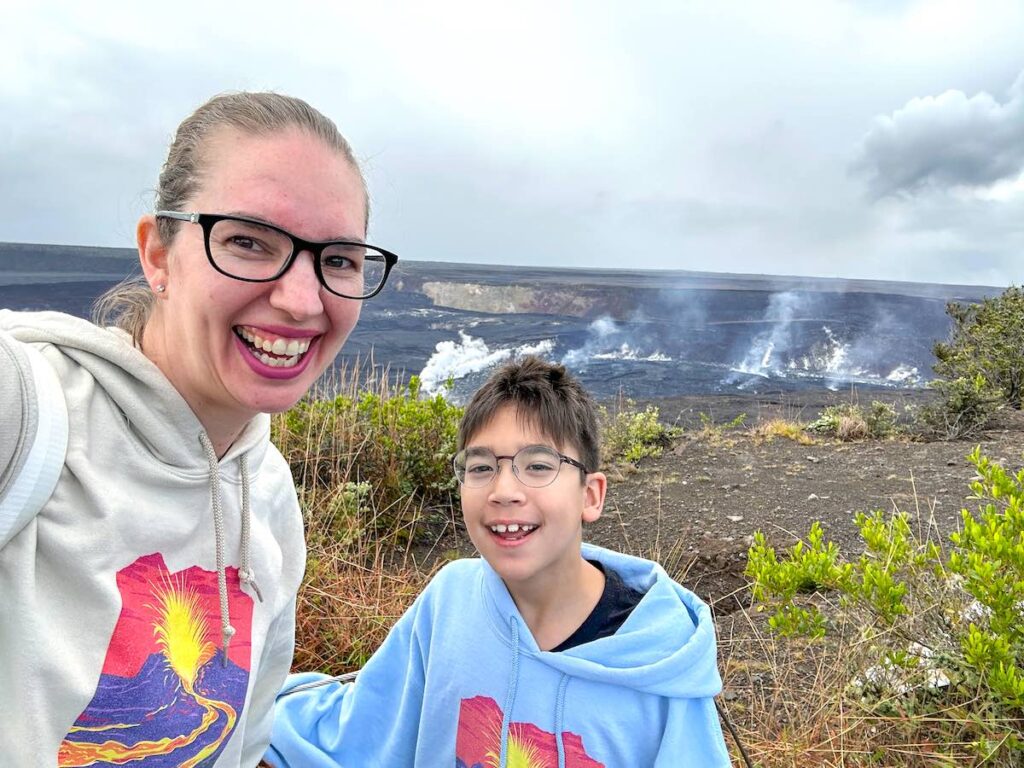
One mom was literally wearing a bikini top and shorts, trying to enjoy the view while her teeth chattered. Don’t be that family.
Pack sweatshirts, long pants, and even light jackets. Yes, really. In Hawaii. You’ll especially need them if you’re planning to see the lava glow at sunrise or sunset.
The temperature can change quickly too. You might be chilly when you arrive in the morning, comfortable by midday if you’re hiking, and freezing again by evening. Layers are your friend.
Stay Overnight at Volcano House (It’s Worth It)
Look, I’m going to be straight with you. If you want to see the lava glow properly, you need to be at the park either before dawn or after sunset.
And if you’re staying in Kona with kids? That means either getting up at 3am to drive over, or keeping them up way past bedtime and driving home in the dark on unfamiliar roads.
Neither option sounds fun to me.
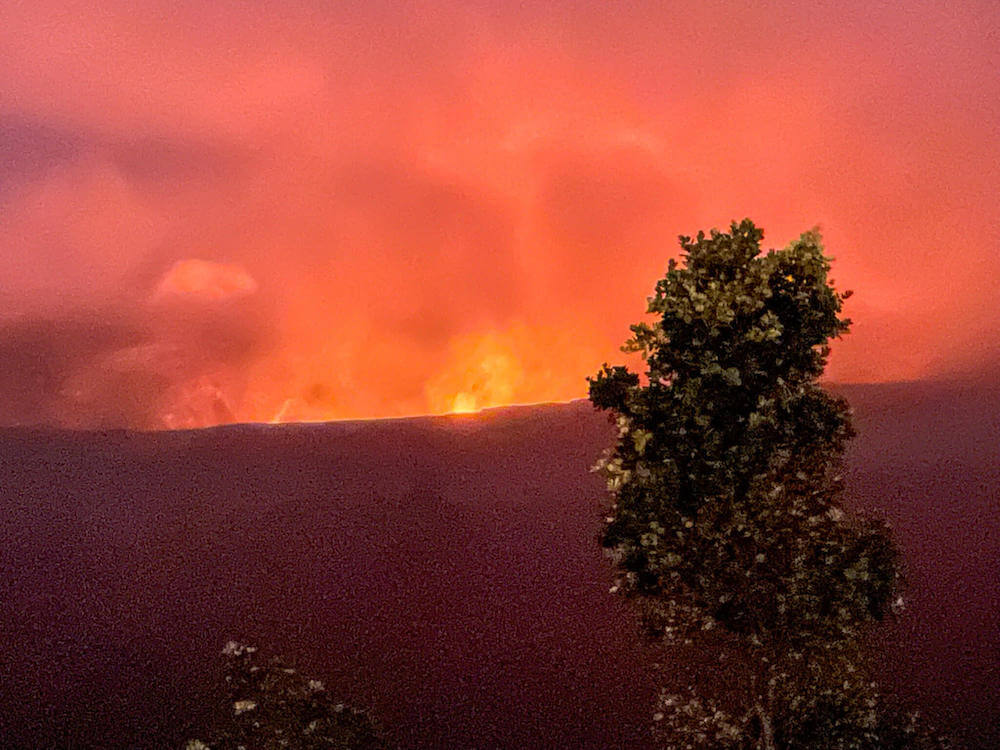
That’s why I always recommend staying at Volcano House for at least one night. Yes, it’s a splurge. Yes, the rooms are pretty basic. But you’re literally sleeping on the rim of an active volcano with crater views from your room.
I’ve stayed there on all three of my visits, and it’s always the highlight. You can walk out to the crater rim anytime, day or night.
You can grab breakfast and watch the sunrise over the caldera. And if the volcano decides to put on a show with fountaining, you’ve got a front-row seat.
Plus, you won’t be exhausted from driving back and forth, which means you can actually enjoy exploring the park at a slower pace.
If Volcano House doesn’t fit your budget, there are vacation rentals in nearby Volcano Village (just outside the park). Check Vrbo for options. You’ll still be close enough to get to the park easily.
For complete planning help, grab my Big Island Travel Guide for Families which includes a full section on Hawaii Volcanoes National Park logistics.

The Visitor Center Situation (Important Update for 2026)
Heads up: the main Kilauea Visitor Center is CLOSED for major renovations through early 2027. This is a big deal because it was the main hub for maps, ranger programs, and restrooms.
Here’s what you need to know:
There’s a temporary Welcome Center at Kilauea Military Camp (about 1.2 miles from the park entrance). It’s open 9am to 4:45pm daily. Rangers are there to answer questions and provide maps. You can also get park information and basic supplies.
The parking lot near the old visitor center is partially closed for construction. Don’t panic if it looks different than the photos you’ve seen online. Just follow the signs to the temporary parking areas.
Restrooms: There are vault toilets at Devastation Trail parking area and at the end of Chain of Craters Road. Plan your bathroom stops accordingly.
Kid-Friendly Hikes (And Which Ones to Skip)
Not all Hawaii Volcanoes National Park trails work well with kids. Many involve walking across sharp, uneven lava rock. If your kids trip on flat carpet, lava rock hiking probably isn’t their jam.
Here are the trails that actually work for families:
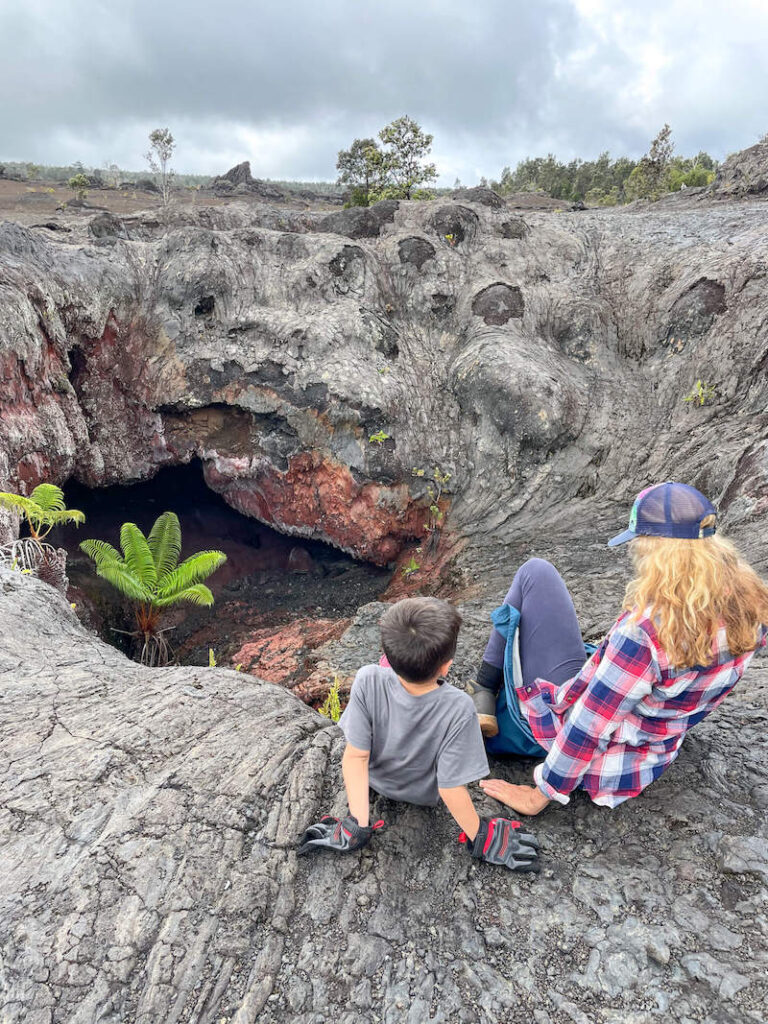
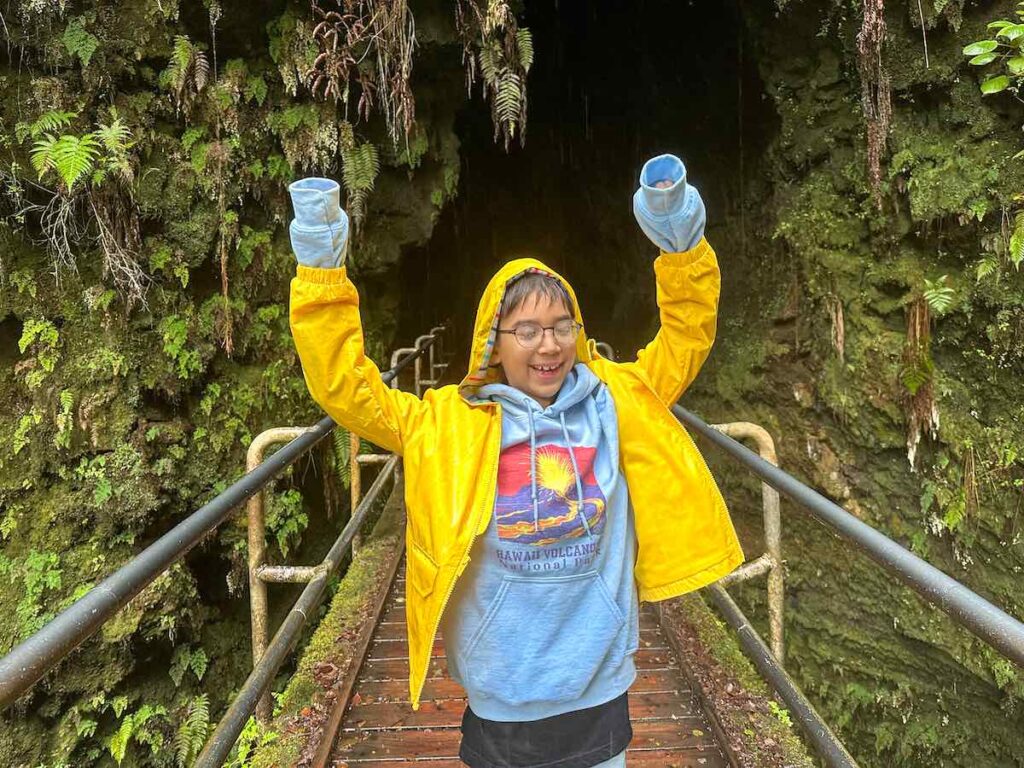
Thurston Lava Tube (Nahuku) – This is the absolute best for kids. It’s a paved path through a rainforest that leads to a massive lava tube you can walk through. Bring headlamps or flashlights to make it extra fun.
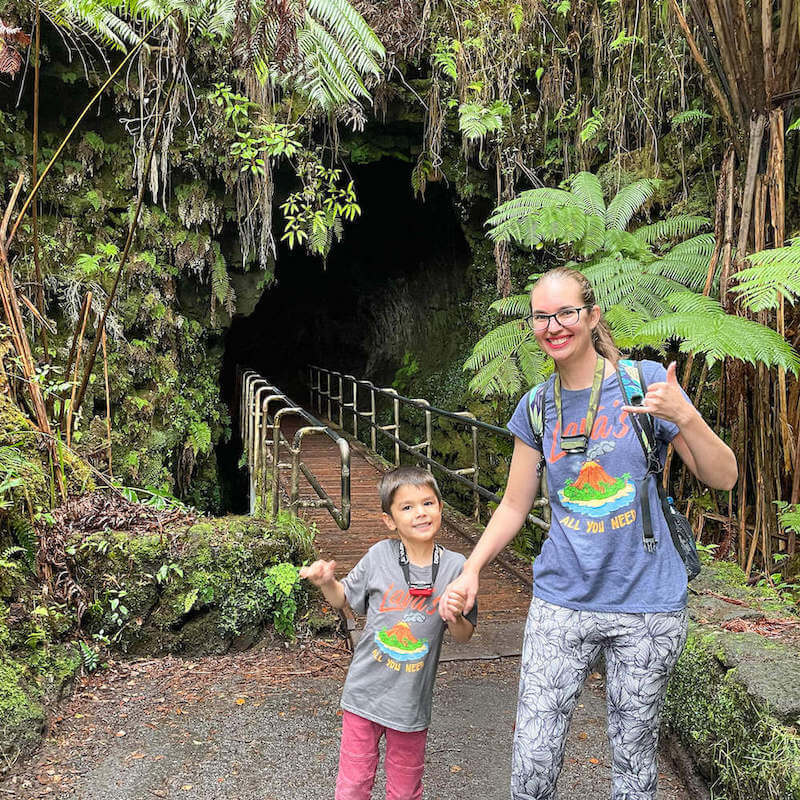
My kids loved pretending they were explorers in a cave. The whole thing is less than a mile round trip.
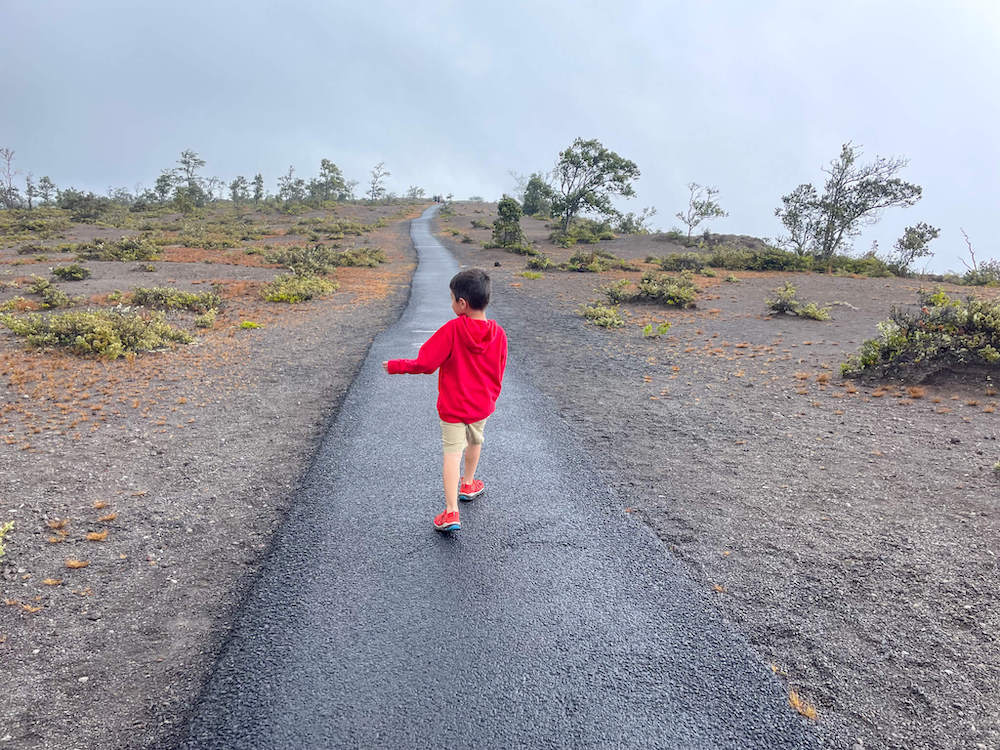
Devastation Trail – About 1 mile of mostly paved walkway through an area that was buried by volcanic eruption debris in 1959. It’s an easy walk and really shows kids the power of volcanoes. Stroller-friendly too.
Kilauea Iki Trail – This is for older kids or really adventurous families. It’s about 3 miles round trip and involves hiking across the floor of a crater. Parts are on rough lava rock. My older son loved it, but it was too much for my younger one at age five.
Sulphur Banks Trail – Paved path that starts near where the old visitor center was. You can smell the volcanic gases (rotten eggs smell, which kids find hilarious). Easy walk, maybe 20 minutes round trip.
Crater Rim Trail – There’s a nice paved section that goes from Volcano House to the Kilauea overlook. Perfect for strollers or baby carriers. Great views without much effort.
Skip these with young kids: Anything that involves extensive lava rock scrambling, the Mauna Loa trails (too long and exposed), and any trails the rangers tell you are currently closed or dangerous.
Shaka Guide Inside the Park: Useful But Not Perfect
I love the Shaka Guide for the drive TO the park. Inside the park? It’s hit or miss.
The Hawaii Volcanoes National Park Shaka Guide gives good historical and geological information as you drive around. But with all the construction and changes from the 2018 eruption, some of the directions and site recommendations are outdated.
For example, it might tell you to visit something that’s currently closed or send you to a parking area that’s full of construction equipment.
I’d say it’s still worth having for the educational content, but don’t rely on it as your only navigation tool. Check the park map and ranger recommendations too.
Holei Sea Arch: You Can See It, But Not Up Close
Everyone has seen those gorgeous photos of the Holei Sea Arch at the end of Chain of Craters Road. It’s still there!
But the close-up overlook has been closed since 2020 because of unstable ground and cracks in the cliff.
You can still see the arch from a safe distance at the end of the road. There’s a viewing area set back from the cliff edge. It’s not quite as dramatic as the old viewpoint, but it’s still beautiful and definitely worth driving down for.
The whole Chain of Craters Road drive is really scenic. You’ll pass multiple craters, old lava flows, and eventually end up at the coast with beautiful ocean views. My kids loved spotting the different colors in the lava rock.
Tell Your Kids They’re NOT in Danger
When I told my five-year-old we were staying “on a volcano,” he completely freaked out. He thought we’d be sleeping on the edge of a crater with lava shooting everywhere and that we might fall in.
He’d only seen volcanoes in cartoons, where they’re these giant mountains spewing lava in every direction.
Take a few minutes to explain what Kilauea actually looks like. Show them photos of the crater. Explain that scientists watch it 24/7 and that the park would close if there was any danger.
Let them know the lava stays in specific areas and everything is roped off and safe.
It made such a difference once my son understood we weren’t in any danger. He went from terrified to excited.
Check the Weather Before You Go
Remember how I said the climate is completely different up at the volcano? That means it can be rainy, foggy, and cloudy when the coast is perfectly sunny.
On my first visit, we drove up in pouring rain. We trekked out to several viewpoints hoping to see something through the fog. We’d get tiny glimpses when the clouds shifted, then it would close back in.
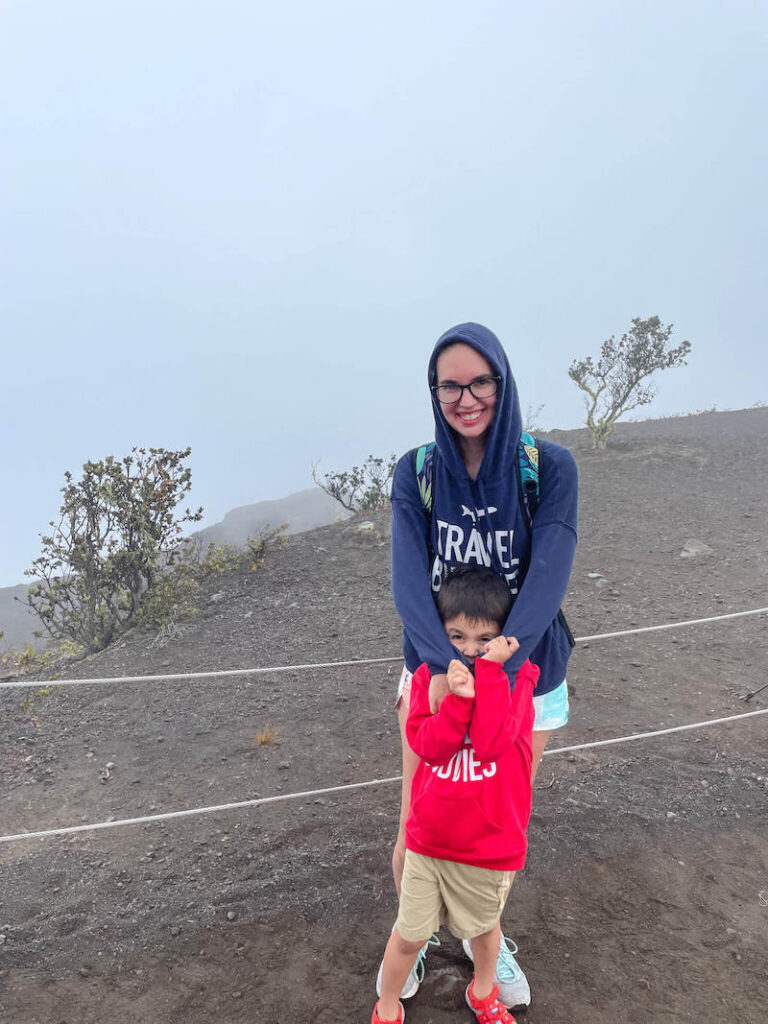
The family next to us had driven all the way from Kona just for the day and couldn’t see anything. They were so disappointed.
If you have flexibility in your schedule, check the weather forecast for “Volcano, HI” and pick a clear day. If you’re staying overnight at Volcano House, you can wait for a clear window.
But if you’re locked into a specific day, still go! Even if the views are limited, you can do the lava tube, hike some trails, and visit the gift shops. It’s just better when it’s clear.
I talk more about timing your volcano visit in Episode 53 of my podcast Hawaii Travel Made Easy where I share my best planning strategies.
Gift Shop Strategy: Skip the Visitor Center, Go to Volcano House
The temporary Welcome Center has a small selection of books and pins, but if you want actual volcano souvenirs, head straight to Volcano House.
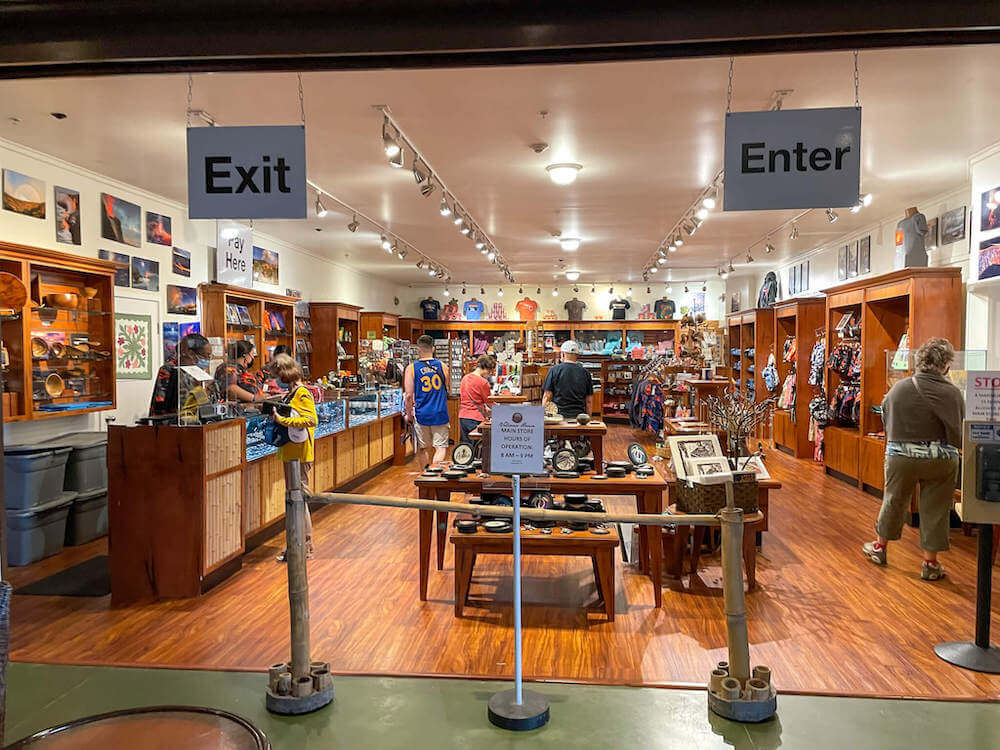
They have TWO gift shops in the main lobby, and they’re packed with volcano-themed everything. T-shirts, sweatshirts, toys for kids, books, jewelry, you name it. This is where you want to budget your souvenir money.
My kids each picked out a volcano rock specimen kit and a lava tube figurine. They played with them for months after we got home.
Where to Eat: Uncle George’s Lounge Over The Rim
Volcano House has two restaurants. The Rim is the fancy one that requires reservations. Uncle George’s Lounge is the casual option with the exact same view.
Unless you’re celebrating something special, I’d skip The Rim with kids and go straight to Uncle George’s.
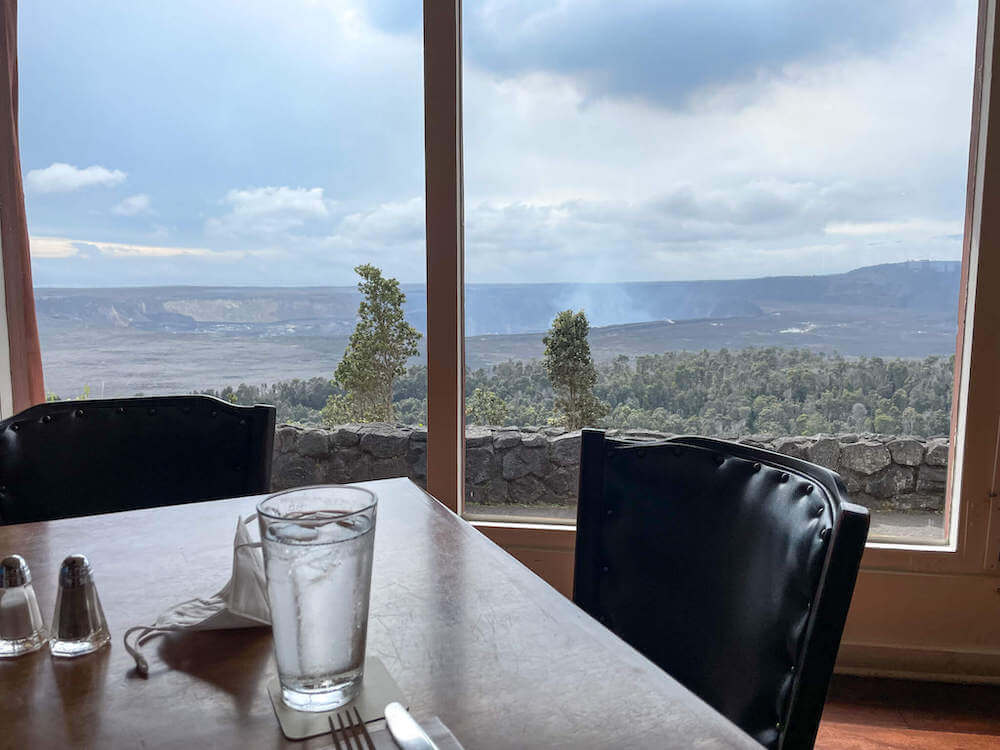
They don’t take reservations, so get there early (like 5pm) and put your name on the waitlist. Then take the kids outside to walk around while you wait.
The food is really good (they share a kitchen with The Rim), the atmosphere is way more relaxed, and kids can be kids without you worrying about bothering other diners.
Plus, if you snag a window seat, you’ve got that amazing crater view right there.
They have a great kids’ menu and an espresso bar in the morning if you need caffeine before tackling the park.
Alternative: Pack snacks and sandwiches in a cooler and picnic at one of the scenic spots. There aren’t a lot of food options inside the park, so having your own supplies gives you more flexibility.
Drive the Chain of Craters Road (Don’t Skip This)
The Chain of Craters Road is an 18-mile drive from the summit area down to the coast. It’s one of the best things you can do with kids at the park.
You’ll drive past multiple volcanic craters, walk on old lava flows, and end up at the ocean with stunning views. There are plenty of places to stop, get out, and explore.
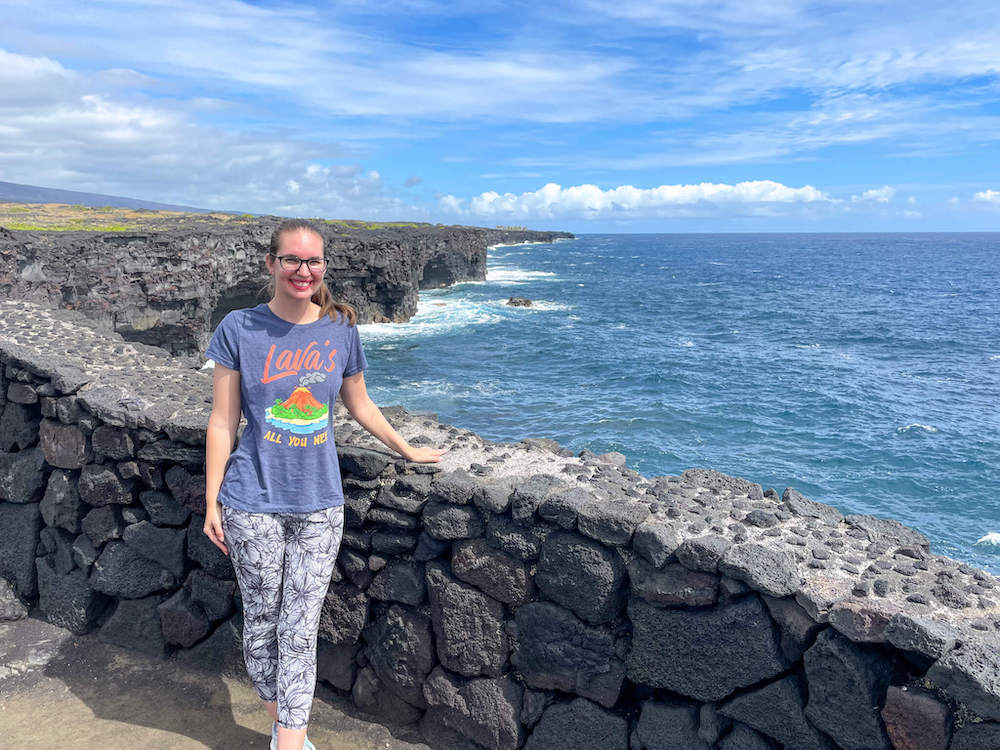
My kids loved running around on the lava rock (in safe, designated areas of course).
The end of the road has that Holei Sea Arch viewpoint I mentioned, plus some really cool spots where you can see where lava met the ocean.
Look for the area with the rock wall along the cliff. It’s the safest spot for kids because there’s a barrier between them and the drop-off.
The whole drive takes 2-3 hours if you stop at the main points. Bring water and snacks because there are no services along the way. There are vault toilets at a couple of spots.
Should You Book a Tour?
I’m usually a “figure it out yourself” kind of traveler, but Hawaii Volcanoes National Park is one place where a tour actually adds a lot of value, especially with kids.
My favorite tour option is through Friends of Hawaii Volcanoes National Park. They’re a nonprofit that supports the park, and their guides are fantastic. You can book a private tour customized to your family’s interests and your kids’ ages.
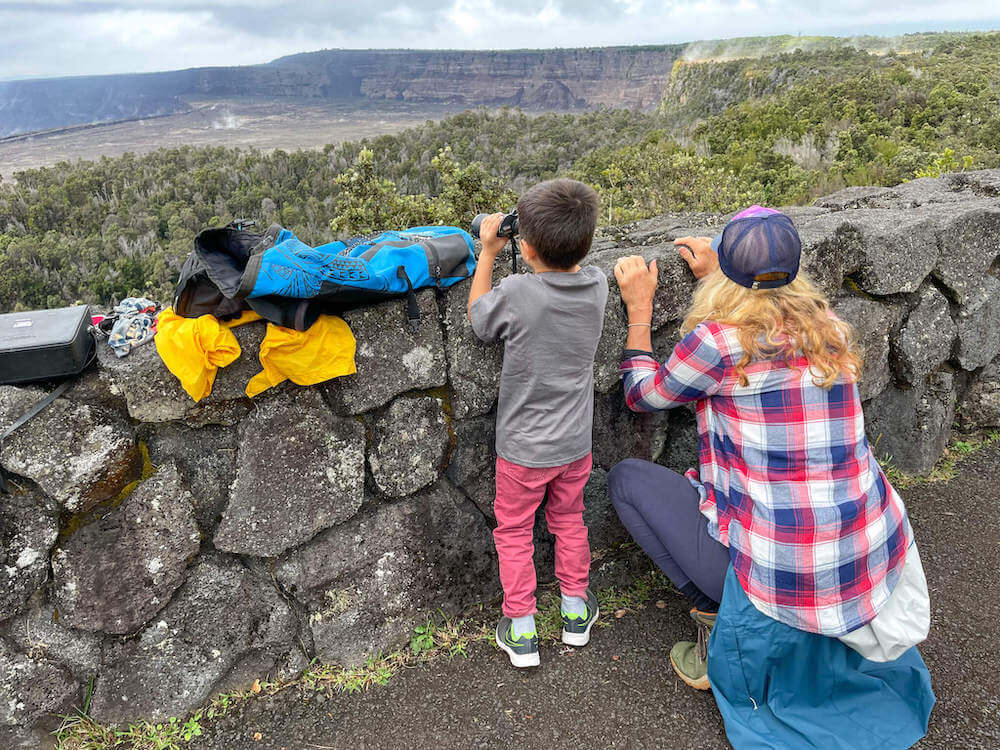
I did a 4-hour private tour with my five-year-old, and the guide was phenomenal at keeping him engaged.
She knew exactly which spots would interest him, told stories that held his attention, and answered his approximately 847 questions with patience and enthusiasm. We saw and learned so much more than we would have on our own.
Tours range from $350-500 for 2-6 people depending on length. Worth every penny in my opinion.
Other tour options:
Big Island in a Day: Volcanoes, Waterfalls, and Sightseeing – This is great if you’re staying in Kona and want to see multiple Big Island highlights in one long day. Good for kids 4+. Check rates and availability on Viator.
For more volcano tour options, check out my post on the best Big Island volcano tours.
What to Pack: The Essential List
After three trips to the volcano, here’s what I always bring:
Sturdy shoes – Athletic shoes work fine for the paved trails. If you’re doing lava rock hiking, go with actual hiking shoes. The ground is sharp and uneven.
Layers of clothing – I already harped on this, but I’m saying it again because it’s THAT important. Long pants, long sleeves, sweatshirts. You can always take layers off if you get warm.
Rain jackets – These packable rain jackets have saved us multiple times. They’re lightweight, fold up tiny, and work great for Hawaii’s sudden rain showers.
Sun hats – Most of the park has zero shade. You need sun protection even when it’s cloudy and cool.
Reef-safe sunscreen – Reapply throughout the day, especially if you’re out on the lava rock with no shade.
First aid kit – It’s really easy to trip and get scraped up on lava rock. Pack a basic first aid kit with bandages, antibiotic ointment, and an instant ice pack.
My son sprained his elbow when he tripped, and I was SO grateful to have ice and bandages in the car.
Flashlights or headlamps – Essential for the lava tube, and helpful if you’re out at sunrise or sunset to see the lava glow. Headlamps are great because they leave kids’ hands free.
Portable charger – I use my phone for photos, GPS, and park information. It drains fast. A portable battery pack is a lifesaver.
Snacks and water – Way more than you think you’ll need. There are very limited food options in the park.
Want a complete packing guide? Download my Big Island packing list for families.
Park Entrance Fee Info
As of 2025, it costs $30 per vehicle to enter Hawaii Volcanoes National Park. Your pass is good for 7 days.
If you’re visiting multiple national parks in Hawaii, get the Tri-Park Annual Pass for $55. It covers Hawaii Volcanoes, Haleakala on Maui, and Pu’uhonua o Honaunau for one year.
The park accepts credit and debit cards at the entrance station. They stopped taking cash in 2023.
Important: The park is open 24 hours a day, every day. So if you’re staying overnight, you can drive in and out as much as you want with your pass.
Is It Safe to Visit With Kids During an Eruption?
Yes! When the volcano is erupting within the park, scientists and park rangers monitor it constantly. They close areas if there’s any danger.
The current eruption is confined to Halemaumau crater, which is easily viewed from multiple safe overlooks. You’re never close enough to be in danger.
The main concerns during an eruption are:
- Volcanic gases (which can be an issue if you have asthma or breathing problems)
- Traffic and parking (the park gets PACKED when there’s an active eruption)
Check the park’s website or call ahead if you have specific health concerns. And be prepared for crowds if the volcano is really active.
Make Time for These “Hidden” Spots
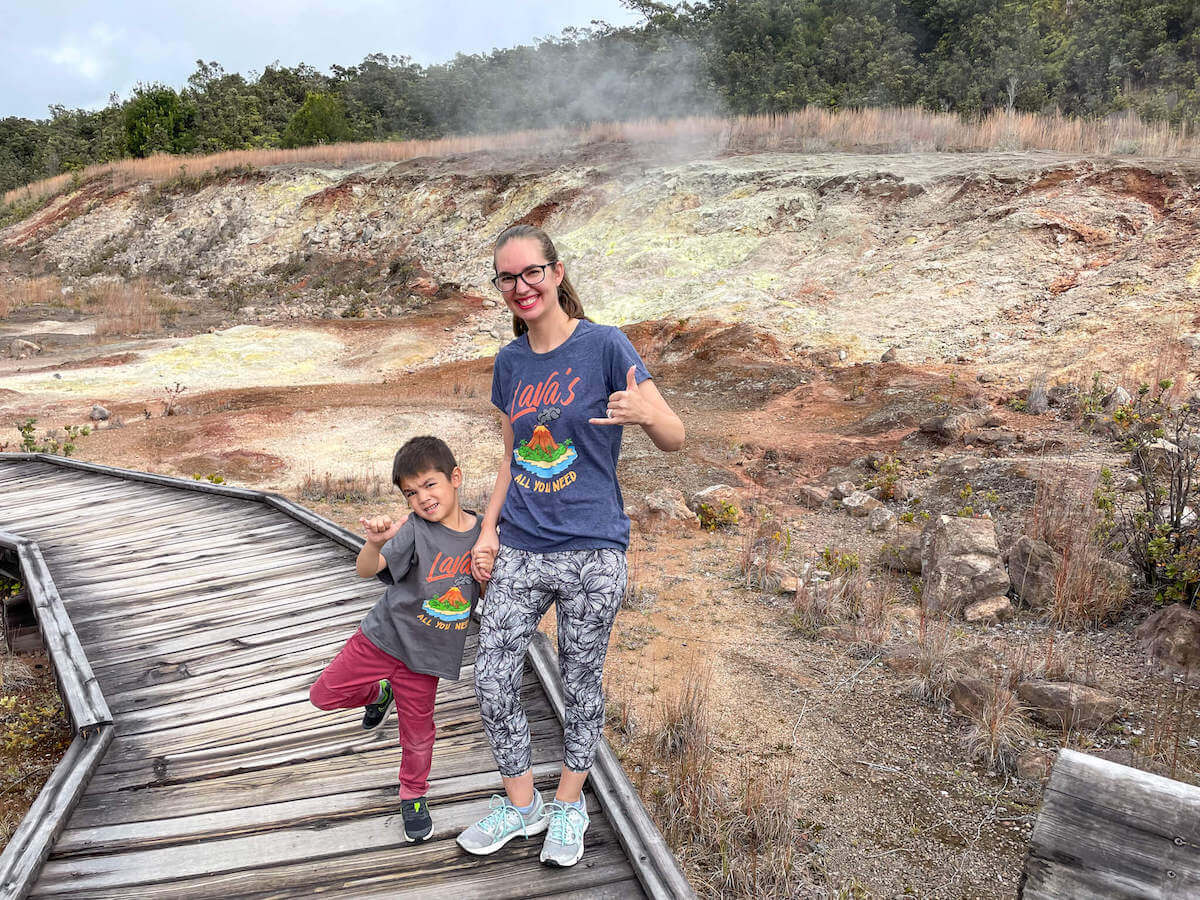
Steam Vents – Between where the old visitor center was and the Volcano House, there are several spots where you can see steam rising from the ground. Kids are fascinated by this. It’s volcanic heat meeting groundwater.
Volcano House Meditation Room – Inside Volcano House (you don’t have to be a guest to go in), there’s a quiet room with floor-to-ceiling windows overlooking the crater. It’s a peaceful spot to just sit and watch.
Kahuku Unit – This is a separate section of the park about 45 minutes south on Highway 11. Most people skip it, but if you have time, it offers a completely different landscape and some great family-friendly walks. Way less crowded too.
My Biggest Hawaii Volcanoes National Park Mistakes (So You Can Avoid Them)
Mistake #1: Not checking the weather and driving all the way there on a foggy day with no views.
Mistake #2: Packing only beach clothes and freezing the entire time.
Mistake #3: Telling my kid we’d definitely see “lava” without checking if it was actively erupting that day. Cue major disappointment.
Mistake #4: Not bringing enough snacks and water, then having hangry kids miles from any food.
Mistake #5: Trying to do too much in one visit and exhausting everyone.
Learn from my mistakes!
Resources for Planning Your Visit
Before you go, check out these helpful resources:
- My complete guide to Hawaii Volcanoes National Park with even more details
- Episode 53 and Episode 14 of Hawaii Travel Made Easy podcast where I share more volcano planning tips
- My Volcano House hotel review if you want all the details on staying there
- This volcano experiment for kids is a fun thing to do before your trip to get kids excited
Want a complete done-for-you Big Island itinerary? My Big Island Travel Guide for Families includes daily schedules, kid-friendly activities, and all my insider tips.
Or take my free 7-day email course on planning a Big Island trip where I’ll walk you through exactly how to plan your volcano day.
Book Your Memories: Don’t Forget the Photos
One of my biggest regrets from our first volcano trip was not getting professional family photos with the crater in the background. The lighting at sunset is gorgeous.
For your next visit, consider booking a session through Flytographer. They connect you with local photographers who know all the best spots in the park.
You’ll get gorgeous family photos AND you’ll all be in them (instead of just having selfies). Save $20 when you use my link.
The Bottom Line on Visiting Hawaii Volcanoes National Park with Kids
Look, I’ve spent over 40+ trips to Hawaii as a professional tourist and Hawaii travel expert, and Hawaii Volcanoes National Park is absolutely one of my favorite places to take kids on the Big Island.
Yes, it requires more planning than a beach day. Yes, you need to pack differently. And yes, you might need to adjust your expectations based on whether the volcano is fountaining that day.
But where else can your kids walk through a lava tube, see an active volcanic crater, and learn about how islands are literally being created right in front of them?
It’s one of those experiences that kids remember forever. My kids still talk about “the glowing volcano” and ask when we can go back.
Just pack those layers, manage expectations about lava activity, and give yourself plenty of time to explore without rushing. And seriously, consider staying overnight at Volcano House if you possibly can. Waking up on the rim of an active volcano is something special.
Need help planning your entire Big Island trip? I offer personalized Hawaii travel consultations where I can help you figure out the perfect Big Island itinerary for your family, including how many days to spend at the volcano and what else to do on the island.
You’ve got this! And trust me, the effort is worth it when you see your kids’ faces light up at the lava glow or hear them exclaim “WOW!” in the lava tube. Those are the moments that make family travel so good.
Want more Hawaii Volcanoes National Park content? Read my ultimate guide to Hawaii Volcanoes National Park, Volcano House review, the best volcano tours on the Big Island, and check out this volcano experiment for kids to do before your trip.
P.S. Join our Hawaii Travel with Kids Facebook group to get connected with other families planning a trip to Hawaii!
 | About the author: Marcie Cheung is a Hawaii travel consultant for families who has visited Hawaii more than 40 times. She is the founder of Hawaii Travel with Kids and host of the Hawaii Travel Made Easy podcast. She offers one-on-one Hawaii trip planning consultations and itinerary reviews for families, couples, and honeymooners. |