Are you looking for kid-friendly Hawaii Big Island national parks? Keep scrolling to read my tips for exploring Pu’uhonua o Honaunau National Historical Park with kids, more commonly called the Hawaii Place of Refuge.
This post about Hawaii Place of Refuge: Pu’uhonua o Honaunau National Historical Park was written by Hawaii travel expert Marcie Cheung and contains affiliate links which means if you purchase something from one of my affiliate links, I may earn a small commission that goes back into maintaining this blog.
I’ll never forget the first time I walked through Pu’uhonua o Hōnaunau National Historical Park with my boys.
The moment we stepped onto those ancient lava rocks, something shifted. The air felt different.
My usually chatty kids went quiet, not out of boredom, but because they could feel it too. This place carries something you can’t fake or manufacture.
You know how sometimes you visit a historic site and it just feels like… a museum? This isn’t that.
This is where Hawaiians literally ran for their lives.
Where broken laws meant death, unless you could make it past that massive stone wall and into the arms of sanctuary.
Where defeated warriors swam miles through shark-infested waters because this was their only shot at survival.
And here’s what most tourists miss: this isn’t just ancient history locked behind glass. Hawaiian families still use this site for ceremonies and spiritual practices.
You’re not just looking at the past. You’re standing in a place that’s still sacred, still active, still protecting people’s souls.
What Makes Pu’uhonua o Hōnaunau So Different From Other Big Island Attractions
Look, I’ve been to Hawaii over 40 times. I’ve done the snorkel tours, the helicopter rides, the sunset cruises.
They’re fun.
But nothing has made me understand Hawaiian culture the way this place has.
The ancient kapu system wasn’t like our modern laws.
Breaking kapu could mean you made eye contact with a chief, your shadow touched royalty, or a woman ate certain foods.
The punishment? Death. No trial, no appeal, just death.
But if you could outrun your pursuers and reach Pu’uhonua o Hōnaunau, everything changed.
A kahuna (priest) would perform a ceremony, and you were forgiven. Completely. You could return to your village and your life like nothing happened.
Think about that for a second. This place literally saved lives.
The First Thing That Hits You (And It’s Not What You Expect)
When we arrived, I expected my 5-year-old to be antsy. National parks and little kids don’t always mix well. But something about this place grabbed his attention immediately.
Maybe it’s the tikis. These aren’t the cheesy tiki torches from backyard luaus.
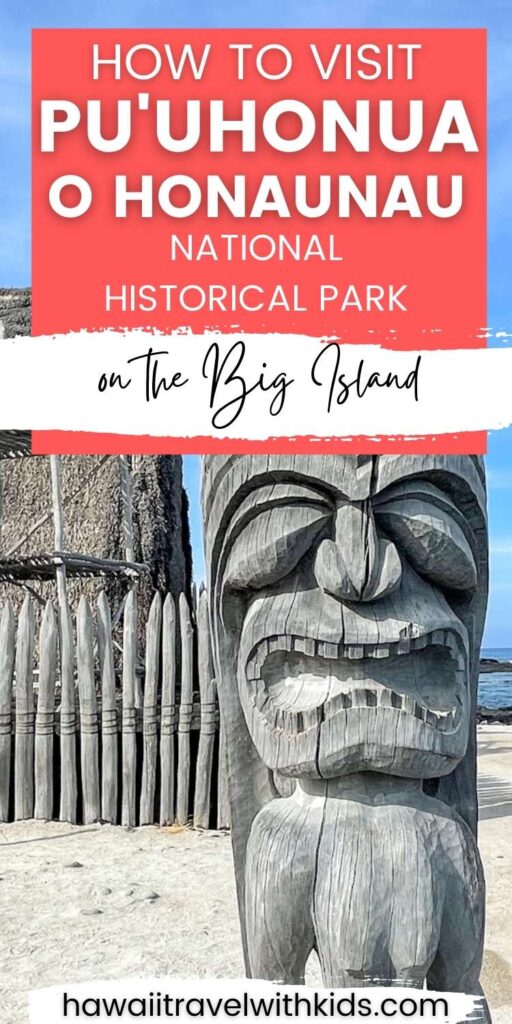
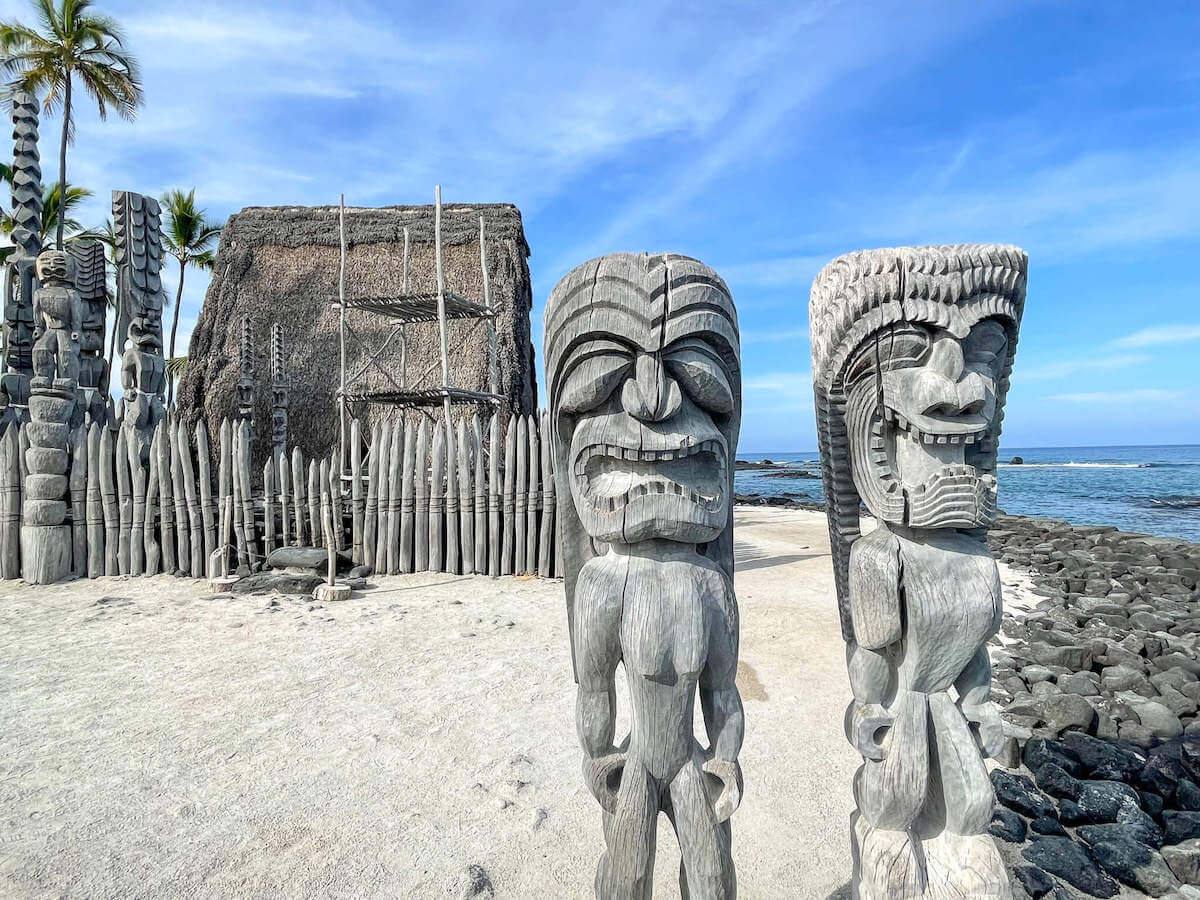
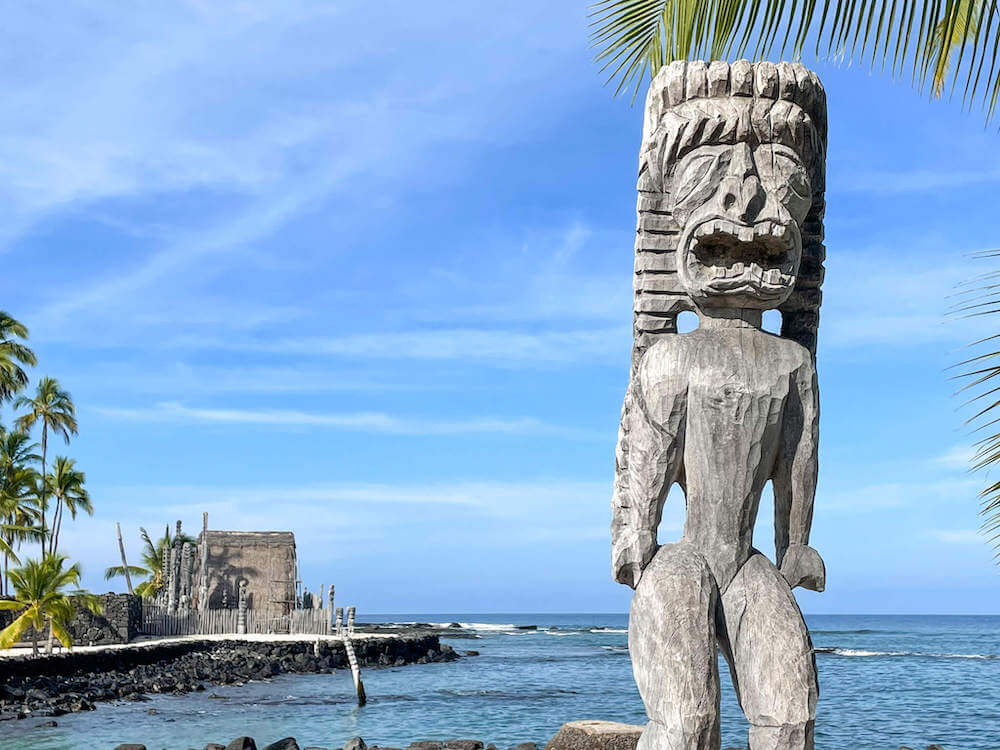
These are powerful ki’i (wooden god images) that guard Hale o Keawe, the royal mausoleum that once held the bones of 23 chiefs. They’re tall, fierce, and honestly a little intimidating.
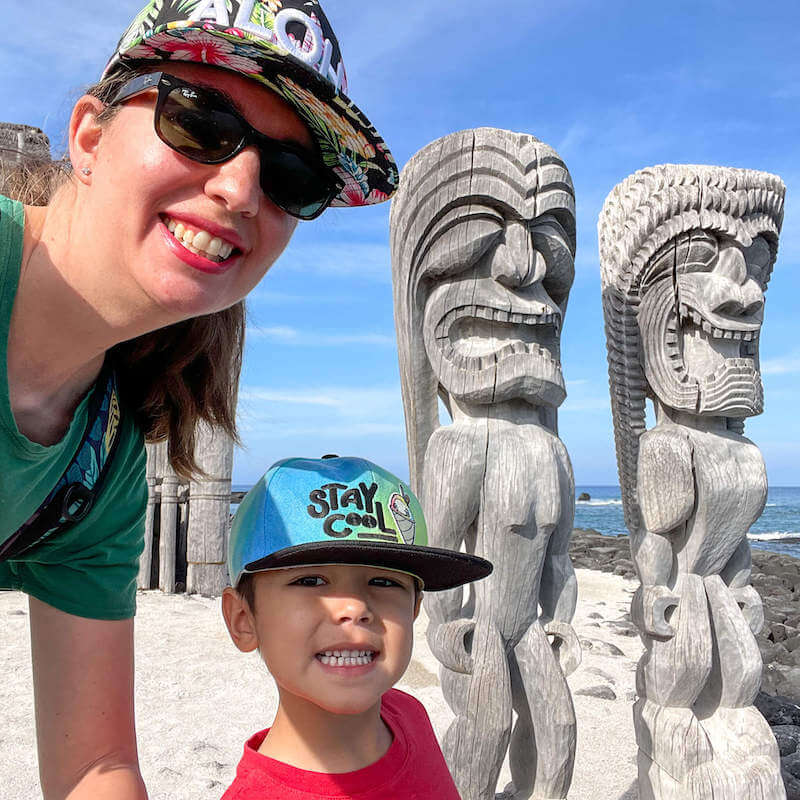
My boys stood in front of them, completely still, for way longer than they’d ever stand still for a photo op. They felt the mana (spiritual power) even if they didn’t have words for it.
The Great Wall is the other thing that stops you in your tracks. This thing is 12 feet tall, 18 feet thick, and 965 feet long.
It was built over 400 years ago without any modern tools, and it’s still standing. It marked the boundary between certain death and absolute safety.
Why Your Kids Will Actually Pay Attention Here
I’m going to be honest with you. My kids have walked through plenty of historic sites where they just wanted to get back to the pool. This was different.
The park has this incredible audio presentation that runs from the visitor center through a covered walkway.
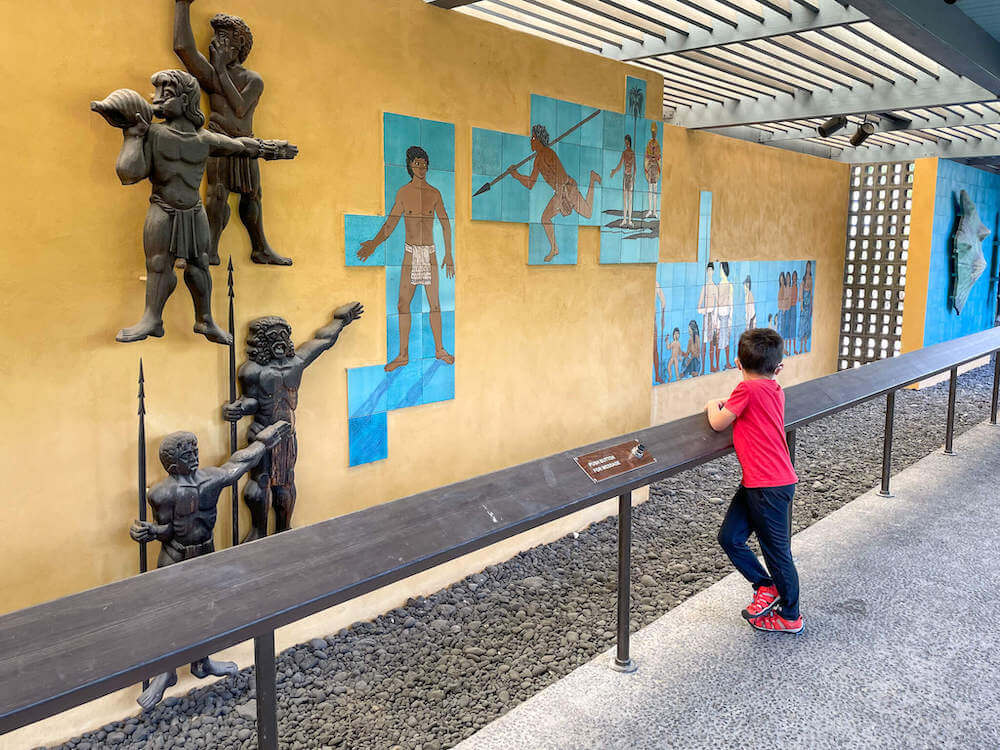
There are buttons everywhere. My kids loved it because they could push the buttons and hear stories about Hawaiian history and culture.
The audio only plays near each button, so it’s not this cacophony of overlapping sounds. It’s actually really well done.
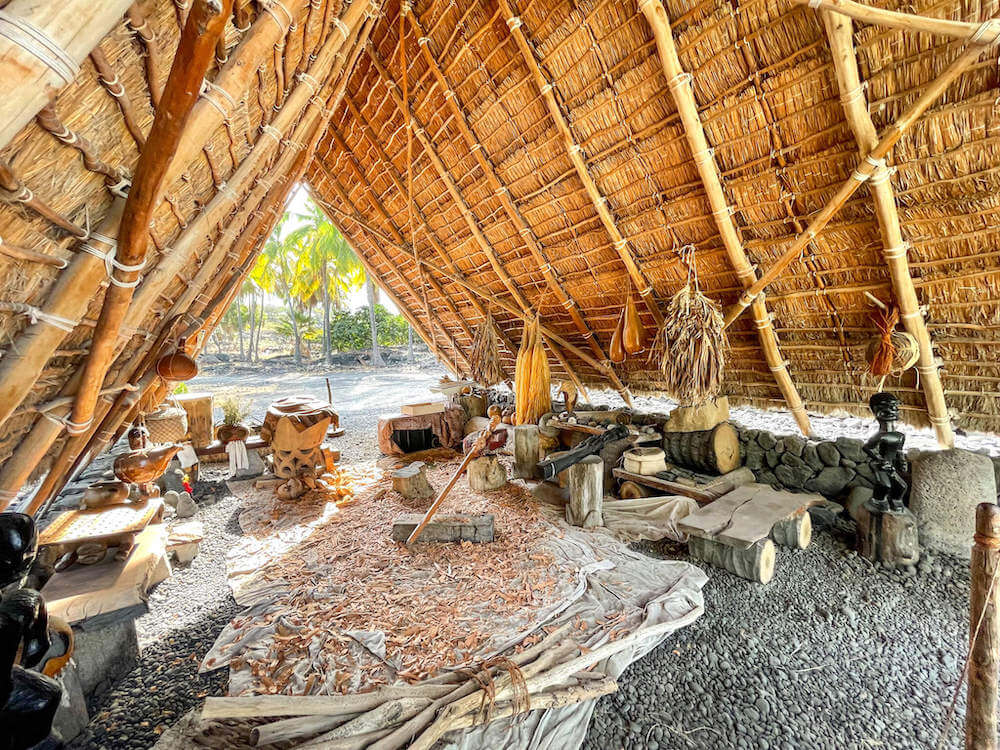
We also found several traditional Hawaiian structures throughout the park. Two of them are right next to each other—one filled with artisan items and traditional instruments, another housing a massive canoe.
My boys could walk through them, see what life was like for ancient Hawaiians, and actually touch some of the displays (the appropriate ones, obviously).
There’s also a konane board—Hawaiian checkers played with black and white stones on a large stone surface.
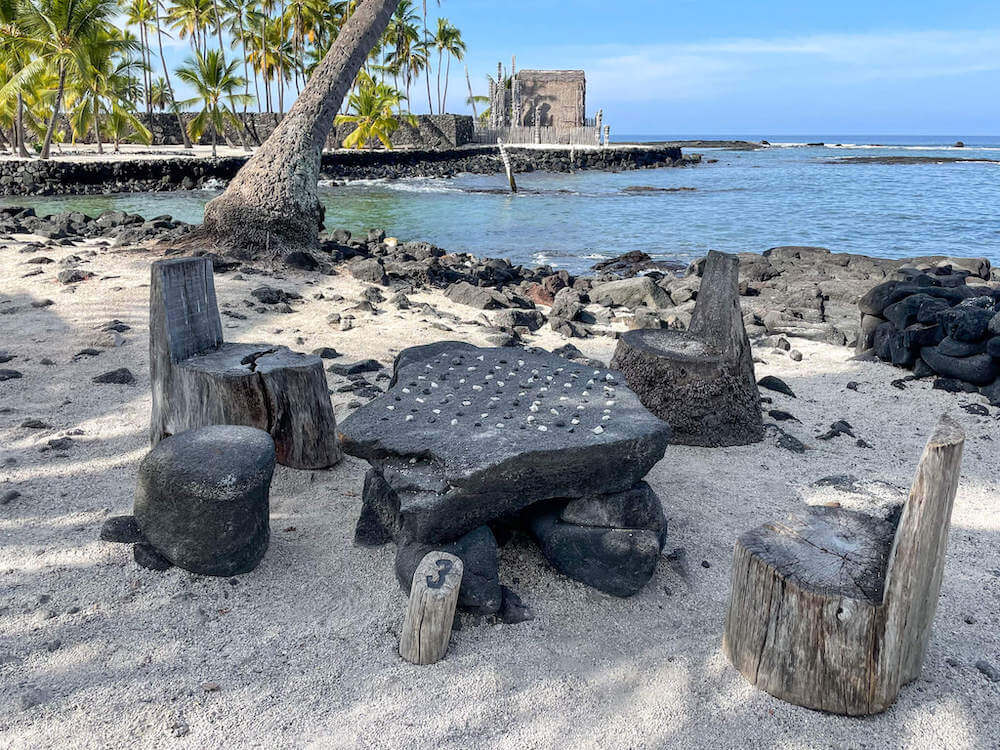
My oldest wanted to know all the rules. It blew his mind that kids in Hawaii have been playing this game for hundreds of years.
The Spiritual Weight of This Place (And How to Approach It Respectfully)
Here’s something I need you to understand before you visit: this isn’t Disneyland.
Pu’uhonua o Hōnaunau is still used for Hawaiian religious and cultural practices.
When you walk through here, you’re walking on ground that Hawaiian families consider sacred. Their ancestors’ bones were housed here. Their spiritual leaders performed ceremonies here.
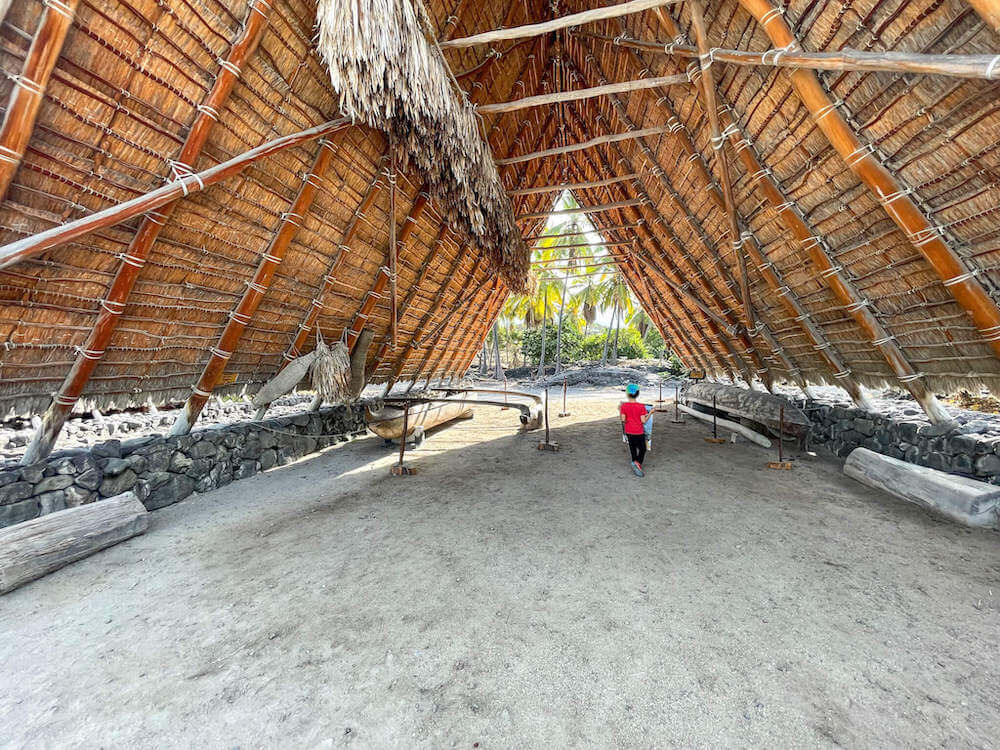
People still come here to connect with their heritage.
So yeah, take photos. Let your kids explore. But remember you’re a guest in someone’s church.
Don’t climb on the stone walls. Don’t touch the tikis. Don’t treat it like a playground.
When we visited, I watched a park ranger gently but firmly redirect a family who was being too loud and disrespectful near Hale o Keawe.
The ranger explained why this area required more reverence, and the family totally got it.
My kids asked great questions. “Why did they put bones here?” “What happens if someone touches the wall?” “Can we still run here if we break a rule?”
The rangers are so patient and knowledgeable. They want your family to learn.
What You Actually Need to Know Before You Go
Where to Stay
Pu’uhonua o Hōnaunau is about 40 minutes south of Kona, so most families stay somewhere along the Kona coast.
You’ve got tons of options from budget condos to luxury resorts.
I’ve found the best deals by searching hotels in Kona on Expedia because you can filter by family-friendly amenities, compare prices, and read real reviews.
If you want to be close to the park, look for accommodations in the Captain Cook or Kealakekua area. If you want more restaurant and activity options, stay in Kailua-Kona proper.
Hours and Fees
The park opens at 8:15 a.m. and closes at sunset (which varies throughout the year, so check before you plan a sunset visit). The visitor center is open 8:30 a.m. to 4:30 p.m. daily.
Entry costs $20 per vehicle and that pass is good for seven consecutive days.
You can also use your America the Beautiful Pass, or buy the Hawaii Tri-Park Pass ($55) if you’re planning to visit Hawaii Volcanoes National Park and Haleakalā too.
The park only accepts credit or debit cards now, no cash.
Best Time to Visit
We went at 8:30 a.m. and there were already families there. By the time we left around 9:30 a.m., the parking lot was way more crowded.
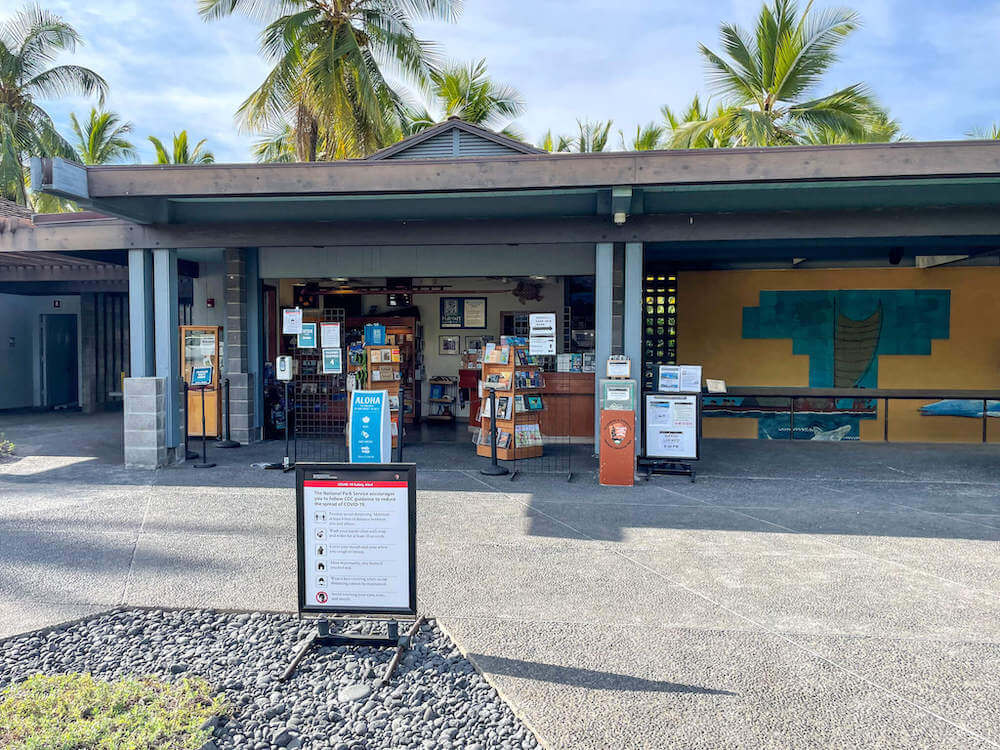
If you can swing it, get there right when they open. The light is better for photos anyway, and it’s not as hot.
If you’re thinking about visiting during golden hour for photos, that could be gorgeous. Just make sure you leave enough time to actually explore before sunset.
The Stuff You Should Absolutely Pack
Sturdy hiking shoes or water shoes—you’re walking on lava rocks that are uneven and sometimes sharp.
These water shoes on Amazon work great because you can wear them at Two Step Beach too.
Sun hats for everyone. There’s not a ton of shade. I love these kids’ sun hats because they have chin straps that actually stay on.
Way more water than you think you need. We brought two bottles per person and wished we’d brought more. Consider a reusable water bottle with a filter so you can refill at the park.
Reef-safe sunscreen because you might head to Two Step Beach next (and you should). Hawaii has strict rules about reef-safe sunscreen, so make sure yours is compliant.
Snacks if you’ve got little ones. There’s no food for sale in the park. We always pack these portable snack containers so nothing gets crushed.
A baby carrier if you have a toddler. Skip the stroller completely. The paths are super uneven and we saw one family really struggling. A comfortable hiking carrier will make your life so much easier.
And download the National Parks App before you go.
It has great information about all the exhibits and why they’re significant to Hawaiian culture. It was super helpful when my kids asked questions I couldn’t answer.
The Junior Ranger Program Your Kids Will Actually Want to Complete
Most national parks offer Junior Ranger programs, and Pu’uhonua o Hōnaunau is no exception.
They have booklets available at the visitor center (or you can download them ahead of time from the park’s website).
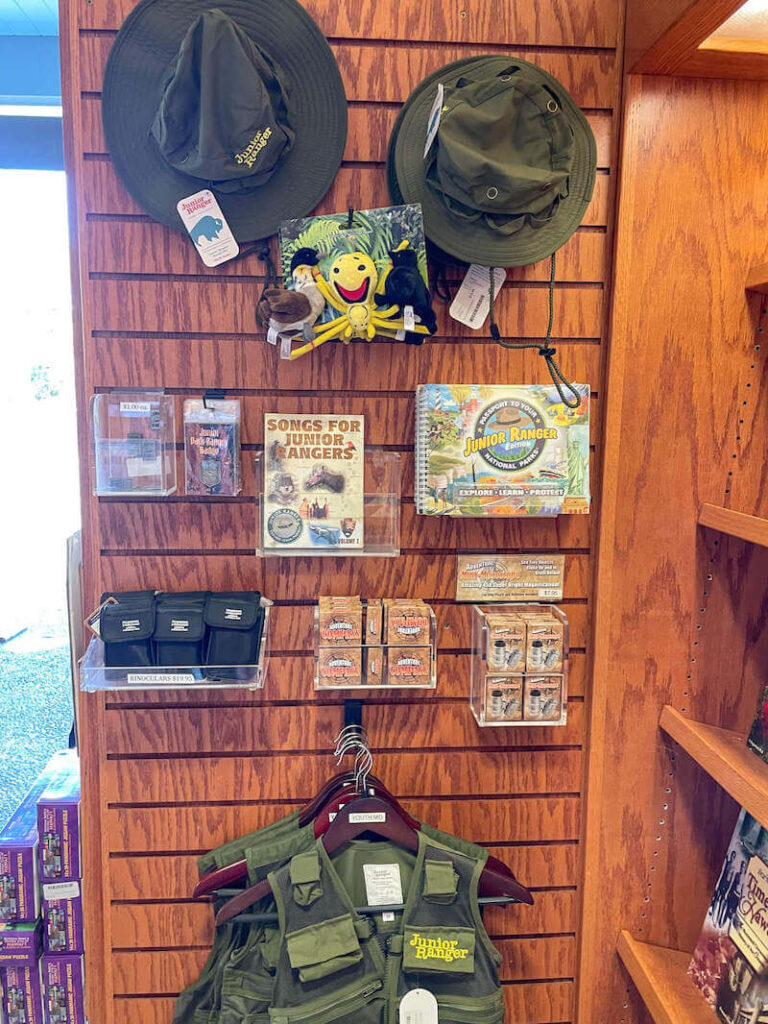
What’s cool is they have different books based on age, so both your 5-year-old and your 12-year-old can participate at their own level.
They do activities throughout the park, learn about Hawaiian culture, and earn a badge at the end.
My 5-year-old also convinced me he “needed” a compass from the gift shop. It was actually kind of a hit. He used it the entire rest of our trip.
The Other Big Island National Parks You Should Know About
Since you’re already visiting one national park, you might want to hit the others too. The Big Island has four national park sites:
Hawaii Volcanoes National Park is the big one. This is where you can see active volcanoes (when they’re erupting), walk through lava tubes, and see actual flowing lava if you time it right.
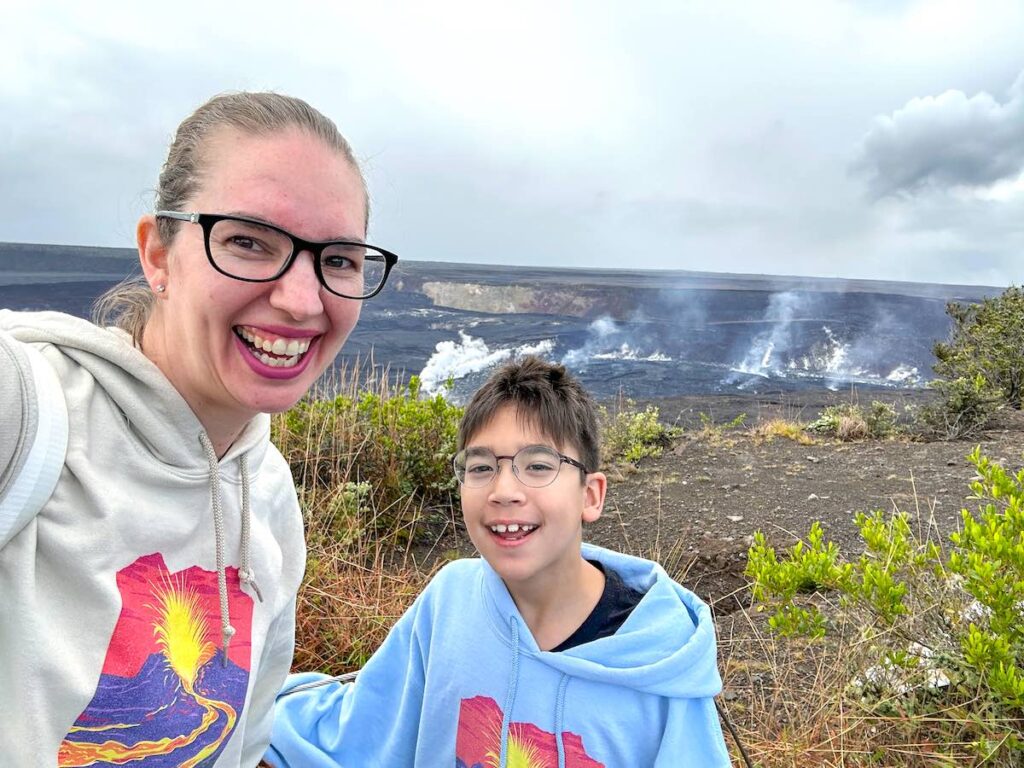
It’s about a 2.5-hour drive from Kona, and honestly, it deserves its own full day.
If you go, book a night or two at the historic Volcano House Hotel right inside the park. Or browse hotels near Hawaii Volcanoes National Park on Expedia.
You can also book guided volcano tours through Viator if you want an expert to show you around.
Kaloko-Honokohau National Historical Park is only 10 minutes from the Kona Airport, which makes it perfect for your first or last day.
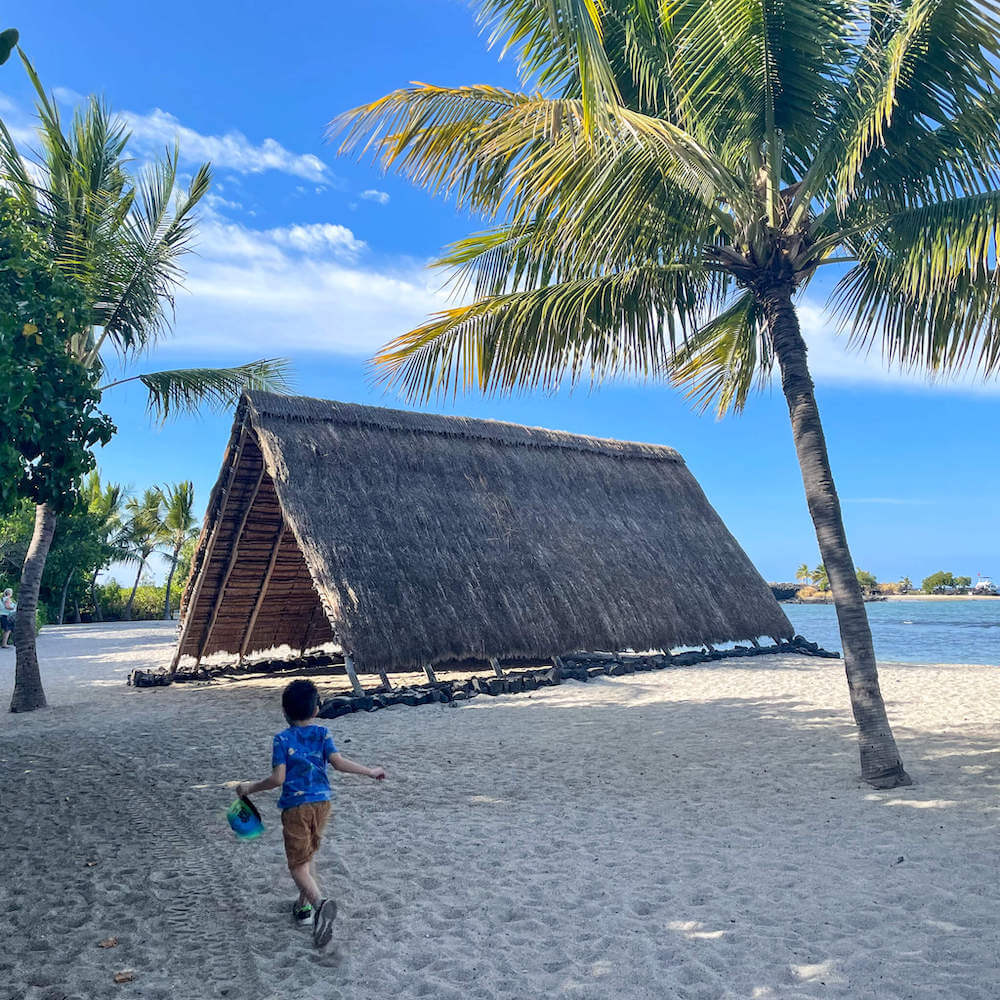
You can see ancient Hawaiian structures, a heiau, petroglyphs, and more lava rock formations. It’s a great introduction to Hawaiian history.
Pu’ukohola Heiau National Historic Site is where King Kamehameha built a massive temple to unify the Hawaiian Islands. It’s powerful and historically significant.
Want the full breakdown of all the national parks in Hawaii? I’ve got a complete guide here.
What to Do After You Leave (Because You’re Already in Honaunau)
Right next to the national park is Two Step Beach (also called Pae’a or Honaunau Bay).
This is hands-down some of the best snorkeling on the Big Island.
It’s called Two Step because there are actual lava rock steps that make getting in and out of the water super easy, even with fins on.
The coral is healthy, the fish are abundant, and you might see sea turtles.
Sometimes spinner dolphins hang out in the bay too (though you have to stay at least 150 feet away from them—it’s the law).
Fair warning: there’s no sandy beach here, just lava rocks. And it can get crowded.
There’s a small parking lot that fills up fast, or you can park along the road. There are porta-potties and some picnic tables.
Pro tip: This whole area is absolutely stunning for photos.
If you want professional family photos with the tikis, the ocean, or at Two Step, I highly recommend Flytographer.
They’ll connect you with a local photographer who knows all the best spots, and you can save $20 when you use my link.

Just up the road is the Painted Church—St. Benedict’s Catholic Church with these incredible murals covering every surface inside. It’s free to visit and makes for stunning photos. It takes maybe 15 minutes to see.
And if you’re hungry (and you will be), head to Ka’aloa’s Super J’s on Highway 11. This is a tiny family-run spot that serves some of the best Hawaiian food you’ll find anywhere.
Their laulau (pork wrapped in taro leaves) is steamed for 8-10 hours and it’s incredible. They also have kalua pork and cabbage, lomi salmon, and mac salad.
They’re open Monday and Wednesday through Saturday from 10 a.m. to 3 p.m., and they can sell out before closing, so go early.
You’re also close to the Captain Cook monument and Kealakekua Bay if you want to keep exploring.
Since you’ll be driving between all these spots, make sure you’ve got a reliable rental car.
I always book through Discount Hawaii Car Rental because they compare all the major companies and consistently have the best rates.
Common Questions About Visiting the Place of Refuge
Is it worth driving from Kona?
Absolutely. It takes about 40 minutes from Kona without traffic, maybe an hour during evening rush hour when people are heading home from work.
But this is one of the most culturally significant sites on the Big Island. If you want to actually understand Hawaiian history beyond what you see at a luau, you need to come here.
How long should we spend at the park?
We spent about an hour, which felt right for our 5-year-old’s attention span. If you have older kids or you really want to do the Junior Ranger program, plan for 90 minutes to 2 hours.
If you want to hike the 1871 Trail (a 2-mile round trip coastal trail with historic sites), add more time.
Can we swim at the park?
No, but Two Step Beach is literally right next door. Do the national park first, then go snorkel.
Is there food in the park?
Nope. Bring snacks and water.
Will my toddler enjoy this?
Honestly, it depends on your toddler. Mine loved pushing the audio buttons and looking at the tikis. But this isn’t an interactive playground.
If your toddler needs constant stimulation, it might be tough. Bring a carrier instead of a stroller though, for sure.
Why This Place Matters More Than Most Tourist Attractions
I’m a professional tourist and a Hawaii travel expert. I’ve been visiting Hawaii for over 30 years, I’m a Certified Hawaii Destination Specialist, and I’ve danced hula for more than 20 years.
I say all that because I want you to understand: I’ve seen a lot of Hawaiian cultural sites.
This one is different.
Most tourist attractions in Hawaii offer a sanitized, comfortable version of Hawaiian culture. Beautiful dances, delicious food, friendly aloha spirit. And that’s all real and wonderful.
But Pu’uhonua o Hōnaunau shows you the weight of Hawaiian culture.
The kapu system that governed every aspect of life. The sacred power of ali’i (chiefs). The spiritual mana that protected this refuge. The life-or-death stakes of ancient Hawaiian society.
It’s not always comfortable. It’s not always easy to explain to kids why breaking certain laws meant death. But it’s real.
And your kids will learn more about Hawaiian history and culture here than at any luau show.
When we left, my oldest asked if we could come back the next time we visit Hawaii. That’s never happened before at a historical site. Never.
How to Plan Your Big Island Trip (Because This Shouldn’t Be Your Only Stop)
If you’re feeling overwhelmed trying to plan your Big Island vacation, I get it. There’s so much to see and do, and it’s easy to either overpack your schedule or miss the best stuff entirely.

I offer personalized Hawaii travel consultations where I help families plan trips that actually work for their kids’ ages, interests, and travel style.
I’ve been to Hawaii over 40 times, my mom lives on Kauai, and I know what actually works for families versus what just looks good on Instagram.
Or if you want to DIY your planning, grab my Big Island Travel Guide. It includes detailed daily itineraries, kid-friendly activities, insider tips, and all the stuff I’ve learned from dozens of Big Island trips with my own boys.
I also have a free email course: How to Plan a Trip to the Big Island. Seven days of emails that walk you through everything you need to know.
One Last Thing About Visiting Sacred Hawaiian Sites
I want to leave you with this: when you visit Pu’uhonua o Hōnaunau, you’re being invited into something sacred.
The Hawaiian families who still use this site for spiritual practices are sharing their most important cultural heritage with you. They’re trusting you to respect it, learn from it, and carry that respect forward.
So yes, take photos. Ask questions. Let your kids explore. But do it with the understanding that this place meant life or death for real people. It still holds spiritual power for real families. It deserves your respect.
When you approach it that way, it stops being just another tourist stop on your Big Island itinerary. It becomes the kind of experience that changes how your family understands Hawaii.
And honestly? That’s the kind of travel that matters.
Planning your Big Island adventure? Check out my other Big Island guides: macadamia nut factory tours, swimming with dolphins, ATV tours, luau reviews, and the best volcano tours.
 | About the author: Marcie Cheung is a Hawaii travel consultant for families who has visited Hawaii more than 40 times. She is the founder of Hawaii Travel with Kids and host of the Hawaii Travel Made Easy podcast. She offers one-on-one Hawaii trip planning consultations and itinerary reviews for families, couples, and honeymooners. |